When to Throw Out Plastic Food Containers: 7 Signs
Last reviewed: by the MicroPlastics Research Desk. Submit a correction or see our editorial standards.
Quick answer

Check the brand in your cupboard
Scan the label to see its packaging, what drives its contact score, and a lower-plastic swap.


Free · 3 scans · iOS and Android
Key Takeaways
- Retire on condition, not on a date. No maker we read gives a number of years.
- Heat is the biggest single factor. In one 2023 study, microwaving released far more particles than fridge or counter storage.
- Wear makes it worse. EFSA’s 2025 review named abrasion and friction as the main drivers of particle release, worsened by aging.
- Stains are not automatically a hazard, but staining means hot, oily or acidic food has worked into the surface.
- “Microwave safe” is about the container surviving, not about zero particle release.
- Downgrade before you discard. A slightly worn container can still hold dry goods or nonfood items.
What the container studies measured
- microplastics per cm² of plastic in 3 minutes of microwaving
- 4.22 million
- maximum for some containers, water or 3% acetic acid; plus 2.11 billion nanoplastics per cm²
- Hussain et al., Environ Sci Technol 2023
- of fridge or room-temperature storage also released millions to billions of particles
- 6+ months
- same study; far less than microwaving
- Hussain et al. 2023
- particles added by one PP lunch box: cold pre-wash vs hot intensive cycle
- 14 vs 166
- 15 min room temperature vs 164 min at 70°C; particles in dishwasher water
- Sol et al., Environ Sci Pollut Res 2023
- reviewed by EFSA on particle release from food-contact materials
- 122 studies
- abrasion and friction named the main driver; exposure could not yet be estimated
- EFSA 2025 literature review
When should you throw out plastic food containers?
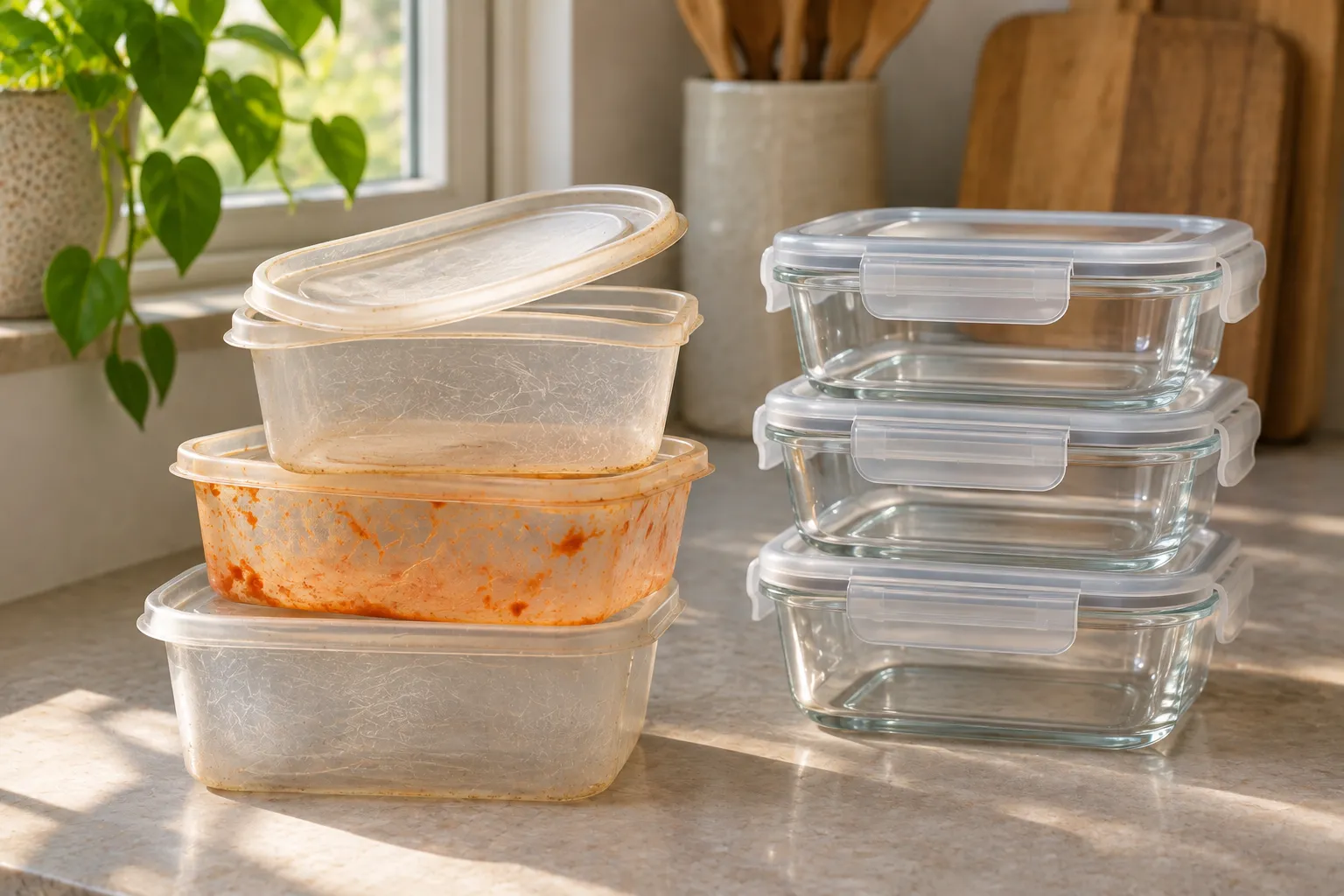
Throw a container out when the plastic is visibly damaged or the lid has stopped sealing. Cloudy or crazed walls, scratches deep enough to catch a fingernail, warping, cracks, melted patches, and stains or smells that survive washing all mean the surface has broken down. A loose lid is a food-safety issue on its own because it lets air and fridge odors in.
No manufacturer we checked publishes a replacement schedule. Rubbermaid’s care sheets and Pyrex’s lid instructions tell you how to avoid damage, not when to give up. That leaves condition as the test. A container used only for cold leftovers and washed by hand can stay sound for years; one that goes through the microwave and a hot dishwasher cycle daily wears out much faster.
The 7 signs it is time to replace a plastic container
- Crazing or cloudiness. A network of fine cracks or a milky haze in once-clear plastic means heat and detergent have damaged the surface. Hold it up to a window to see it.
- Deep scratches. Knife marks and fork gouges you can feel with a fingernail. Rubbermaid’s care sheets warn that knives can scratch or scuff the container surface.
- Warping. Set the base on a flat counter. If it rocks, or the lid no longer lines up with the rim, heat has deformed it.
- Cracks or splits. Corners and lid hinges crack first. Rubbermaid notes that plastic gets less flexible when frozen and may break if dropped.
- Stains or odors that will not wash out. Orange from tomato sauce and yellow from turmeric are the usual ones. Rubbermaid says its TakeAlongs line may stain with both.
- Melted or bubbled spots. Usually from contact with a dishwasher heating element, a hot pan or a long microwave run with fatty or sugary food. Replace at once.
- A lid that no longer seals. Stretched rims, a torn gasket or snaps that will not click. Food spoils faster and spills in the bag.
Signs it is time: what each one means
Container damage, likely cause and what to do
- Sign
- Crazing, cloudy haze
- Usual cause
- Repeated heat and dishwasher detergent
- What to do
- Replace for food; can hold dry goods
- Sign
- Deep scratches
- Usual cause
- Cutting or scraping inside the container
- What to do
- Replace if used hot; cold storage at most
- Sign
- Warped base or lid
- Usual cause
- Microwave or bottom-rack dishwasher heat
- What to do
- Replace
- Sign
- Cracks
- Usual cause
- Age, freezing, drops
- What to do
- Replace
- Sign
- Stains or lingering smell
- Usual cause
- Hot tomato, curry, oil worked into the surface
- What to do
- Try a soak; replace if it persists and bothers you
- Sign
- Melted or bubbled patch
- Usual cause
- Direct heat source or overheated fatty food
- What to do
- Replace now
- Sign
- Lid will not seal
- Usual cause
- Stretched rim, worn gasket, warping
- What to do
- Replace lid if sold separately, or both
Do old plastic containers release more microplastics?
Wear and heat are the two things studies keep linking to particle release, and old containers usually have both. The European Food Safety Authority’s 2025 literature review screened research on particles coming off food-contact materials and included 122 studies. It named mechanical stress, meaning abrasion, friction and cutting, as the main driver, worsened by material aging. It also said there was not yet enough reliable data to estimate how much people are exposed to from containers, and that some studies may overstate release because of contamination or misidentified particles.
No study we found compared a ten-year-old container with a new one of the same model. So the link between crazing and higher release is an inference from the mechanism, not a measured result. It is still a reasonable reason to retire a damaged container, especially one you heat. Our container evidence guide covers the wider research.
Does microwaving plastic containers wear them out faster?
Yes. Heat is the biggest single factor in the research, and it is also what warps, stains and crazes containers. In a 2023 University of Nebraska study, Hussain and colleagues tested polypropylene containers and a polyethylene reusable pouch with water and with 3% acetic acid standing in for acidic food. Microwave heating released the most particles of any use they tested. Some containers released up to 4.22 million microplastics and 2.11 billion nanoplastics from each square centimeter of plastic in 3 minutes. Fridge and room-temperature storage for over six months also released millions to billions, far fewer than the microwave.
Those are maximums under lab conditions, not a typical lunch. The team also exposed human kidney cells in a dish to a high concentration of the extracted particles and saw most of them die; that is a cell finding, not evidence of harm in people. The practical reading is simple: reheat in glass or ceramic, and keep plastic for cold storage. Our microwave study breakdown goes through the method.
Does the dishwasher damage plastic containers?
Hot cycles shed more and age the plastic, so the top rack and a shorter, cooler cycle help. In a Spanish study, Sol and colleagues washed a polypropylene lunch box in a home dishwasher. It added 14 ± 3 particles on a 15-minute room-temperature pre-wash and 166 ± 12 on a 164-minute intensive cycle at 70 °C. Detergent increased release from the dishwasher’s own plastic parts by 35 to 54% but did not add release from the lunch boxes. Those particles went down the drain, not into food. The longer-term cost is the wear itself. Rubbermaid’s care sheets also warn to keep containers away from the heating element to avoid melting. See dishwashers and plastic containers.
Can you get stains and smells out before deciding?
Often you can lighten them, and it is worth one try before you throw a sound container away. These are common household methods, not ones we tested: soak the container in warm water with dish soap for an hour, then scrub with a paste of baking soda and water on a soft sponge. For odors, leave a baking soda solution in it overnight with the lid off. Many people set tomato-stained containers in direct sun for an afternoon, which can fade the orange. Avoid bleach and abrasive powders on the inside; they roughen the surface you are trying to keep smooth.
If the stain fades but the container is cloudy or scratched underneath, the cleaning has not changed the verdict. If the stain stays but the plastic is clear, smooth and seals, it is a cosmetic problem. Keep it for cold storage and send tomato and curry leftovers to glass next time. Rubbermaid markets its Brilliance line as designed to resist tomato stains while still saying turmeric curry may stain it, which tells you how stubborn turmeric is.
What about very old containers and takeout tubs?
Treat both as cold-storage containers at best. Hard, clear containers from decades ago may be polycarbonate, marked #7 or PC, which is made from bisphenol A (BPA). Most current reusable lines say BPA-free, and Rubbermaid’s sheets describe the TakeAlongs and Brilliance lines that way. If you cannot read the code on an old container and it has seen years of hot use, it is a sensible one to retire. Our BPA-free explainer covers what that label does and does not tell you.
Thin takeout tubs and deli containers are built for one trip from the restaurant to your fridge. They are lighter and thinner than reusable lines, they warp and crack sooner, and makers rarely publish reuse or reheating instructions for them. Reusing a few for cold leftovers or freezer soup is common; heating food in them is the use to drop first. See takeout soup containers.
What do “microwave safe” and resin codes tell you?
“Microwave safe” and “dishwasher safe” mean the container should survive that use without melting or failing; they are not a promise of zero particle release. Makers also attach conditions. Rubbermaid’s TakeAlongs care sheet says the line is for reheating, not cooking, sets a 212°F short-term limit, and says to avoid reheating food high in salt, oil, fat or sugar. Its Brilliance sheet uses 165°F and says to open the latches to vent. Read more in what “microwave safe” means.
The number in the recycling triangle names the plastic. Most reusable containers are #5 polypropylene; some clear premium lines use a copolyester such as Tritan, which falls under #7. The code tells you the material, not the container’s age or condition. Our recycling numbers guide explains each one.
What do container makers say about care?
Maker care guidance for plastic containers and lids (first-party documents)
- Maker and line
- Rubbermaid TakeAlongs
- Microwave
- Reheat only; 212°F short-term limit; lid off or resting loosely
- Dishwasher and handling
- Secure away from the heating element; no knives inside
- Staining and replacement
- May stain with tomato or turmeric; no replacement schedule
- Maker and line
- Rubbermaid Brilliance
- Microwave
- Reheat only; 165°F short-term limit; open latches to vent; remove lid after to protect the seal
- Dishwasher and handling
- Secure away from the heating element; no knives inside
- Staining and replacement
- Designed to resist tomato stains; turmeric curry may stain
- Maker and line
- Pyrex plastic lids
- Microwave
- Vent or remove lid at least ¼ inch to avoid warping
- Dishwasher and handling
- Top rack only; never in an oven or on a stovetop
- Staining and replacement
- Snapware: large sizes may leak after prolonged microwave use
- Maker and line
- Glad
- Microwave
- Not covered in the FAQ we reviewed
- Dishwasher and handling
- Not covered
- Staining and replacement
- No GladWare replacement guidance found
The pattern across these documents: vent the lid, keep heating short, keep greasy or sugary food out of the microwave in plastic, use the top rack, and do not cut food inside the container. Brand-specific guides cover Rubbermaid and Tupperware.
Use the App
Which of your containers are worth keeping?
Scan a container or its packaging. The app records the declared resin, the maker's microwave and dishwasher limits, and saves each container so you can note its condition and plan replacements.
How to make plastic containers last longer
- Reheat in a plate or glass bowl, not the plastic container. This alone prevents most warping, staining and crazing.
- Let food cool before you pack it. Hot tomato sauce and curry stain warm plastic most.
- Never cut or scrape inside. Plate the food first.
- Hand wash, or use the top rack on a normal rather than a sanitize or intensive cycle.
- Skip abrasive scrubbers on the inside. A soft sponge and dish soap are enough.
- Leave headroom when freezing and let frozen containers warm a little before flexing the lid.
- Air-dry with lids off so seals do not trap moisture and smells.
What should you replace plastic containers with?
Glass or stainless steel for anything you heat or store for days, and keep a few sound plastic ones for cold, dry or travel use. Glass handles the microwave and oven (base only) and shows stains less. Stainless steel is light and nearly unbreakable for lunches but cannot go in the microwave. Most glass sets still use plastic lids, so the same lid rules apply: vent them, top rack, no oven. Our plastic-free food storage guide compares specific sets.
Decision table: keep, downgrade or replace
- Your container
- Clear, sealing, no deep scratches
- Do this
- Keep for cold storage; reheat elsewhere
- Replace with
- Nothing yet
- Your container
- Stained but otherwise sound
- Do this
- Keep for cold food if the stain does not bother you
- Replace with
- Glass for tomato and curry dishes
- Your container
- Cloudy, crazed or scratched
- Do this
- Downgrade to dry goods, screws, craft supplies
- Replace with
- Glass for leftovers
- Your container
- Warped, cracked or melted
- Do this
- Retire; recycle only if your program takes that resin
- Replace with
- Glass or stainless
- Your container
- Lid will not seal, base fine
- Do this
- Buy a replacement lid if the line sells one
- Replace with
- Matching lid, or a glass set
- Your container
- Used for daily microwave lunches
- Do this
- Move reheating to glass or ceramic
- Replace with
- Glass meal-prep containers
Should you replace the lid and the base together?
Not always: lids usually fail first, and a sound base can take a new lid if the line sells one. Lids take the most stress. They flex every time you open them, their seals hold moisture, and in the microwave they are the part nearest the steam. Rubbermaid’s Brilliance sheet tells you to remove the lid after microwaving to protect the wiper seal, and Pyrex says to vent its plastic lids to avoid warping. Glass bases with cracked or warped plastic lids are the easiest case: keep the glass, replace the lid. For Snapware, the Pyrex warranty page says it will replace a lid and vessel found to have a defect in materials or workmanship, so a failed seal on a newer set is worth a claim before you buy new. Wear from normal use is a different matter from a defect, and warranty terms decide which applies.
What the evidence does not establish
- A lifespan in years for any container. No maker we checked publishes one.
- A measured release from your container. The figures above are lab maximums for the products tested.
- That stains themselves are harmful. They show wear and absorption, not a measured hazard.
- A human health outcome from container particles. The cell result is a lab dish at high concentration.
What the MicroPlastics app checks
- The declared resin of a scanned container or lid, such as polypropylene or Tritan.
- The maker’s microwave, dishwasher and freezer instructions where published.
- Glass and stainless alternatives in a similar size.
- Product information only: the app does not inspect wear or measure particles.
Frequently Asked Questions
How often should you replace plastic food containers?
Is it bad to use stained plastic containers?
Do scratched plastic containers release more microplastics?
Can you still use a warped plastic container?
Is it safe to microwave old plastic containers?
What can I do with old plastic containers?
Sources
- Hussain KA, Romanova S, Okur I, et al. (2023). Assessing the release of microplastics and nanoplastics from plastic containers and reusable food pouches: implications for human health. Environmental Science & Technology.
- Sol D, Menéndez-Manjón A, Carrasco S, et al. (2023). Contribution of household dishwashing to microplastic pollution. Environmental Science and Pollution Research 30.
- European Food Safety Authority (2025). Literature review on micro- and nanoplastic release from food contact materials during their use (EN-9733). EFSA Supporting Publications.
- Newell Rubbermaid (2014). Rubbermaid TakeAlongs product line: care and use (revised November 10, 2014). Rubbermaid.
- Newell Rubbermaid (n.d.). Rubbermaid Brilliance product line: care and use. Rubbermaid.
- Pyrex (2026). Product warranties, safety and usage (retrieved November 13, 2026). Pyrex.
- Glad (2026). Frequently asked questions (retrieved November 13, 2026). Glad.
Your next product question
Start with the leftover container you reheat most.
Identify the exact line's declared resin and its microwave, dishwasher and freezer instructions. An assessment cannot judge wear on your container or supply a replacement date.
Use the exact product name, model and label to check the information behind an assessment. A photo does not measure particles or personal health risk. The examples above are research subjects, not a verified app-coverage list.
Build a product-routine reading plan →Related Research
Does Bone Broth Have Microplastics? Cartons, Pots and Lead
No study has counted microplastics in bone broth. What cartons, tubs, glass jars and frozen pouches put in contact with broth, stockpot vs slow cooker vs Instant Pot, what meat studies found, and the separate lead question.
Read moreKeurig Dr Pepper and Microplastics: K-Cups, Water and Soda
No KDP product has a published brand-named microplastic count. K-Cups are #5 polypropylene, Core bottles are 100% rPET, and the 2022 Canada and 2024 SEC penalties were about recycling claims, not coffee.
Read moreDoes Kellogg’s Cereal Have Microplastics? Liners, Pringles and Tests
We found no microplastic test of a named Kellogg’s cereal. What its HDPE-core liners and Pringles tubes are made of, why the 2010 liner recall was chemical, who owns Kellogg’s now, and what to do.
Read moreAre Insulated Food Jars Safe? Lids, Gaskets and Lead
A stainless vacuum food jar is a good hot-lunch choice. We trace what touches the food (the plastic lid and gasket), what Stanley, Thermos and Klean Kanteen say about lead in the vacuum seal, and how to preheat and clean one.
Read moreAre Silicone Baking Mats Safe? Mats vs Parchment for Baking
Silicone mats release siloxane molecules, mostly when new and into fatty food, not a counted particle load. Heat limits for Silpat and parchment, when to replace a fiberglass-reinforced mat, and when a greased bare pan is the better liner.
Read moreThanksgiving Dinner Plastic Swaps: What to Change, What to Keep
A whole-meal plan for Thanksgiving: swap the nylon oven bag, plastic carving board and microwave reheating in plastic; keep foil pans and an intact nonstick pan; brining bags and paper plates are low priority.
Read more