Best Plastic-Free Food Storage 2026: Glass, Steel & Silicone Ranked
Last reviewed: by the MicroPlastics Research Desk. Submit a correction or see our editorial standards.
Quick Answer
Different container in your kitchen? Review its confirmed or estimated material and Product Contact Signal, then compare a lower-contact option.
Scan my product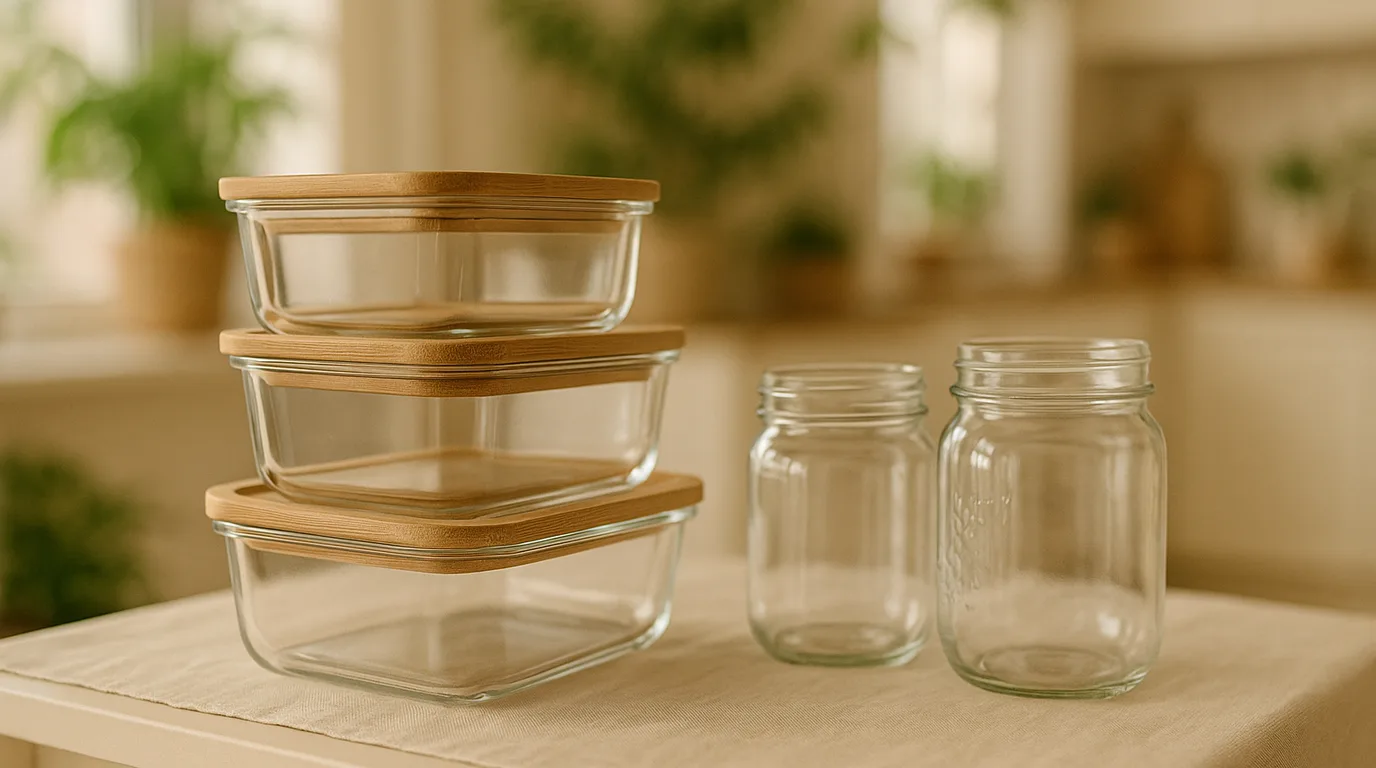
Key Takeaways
- Microwaving plastic is the worst case measured: up to 4.22 million microplastic and 2.11 billion nanoplastic particles per cm² in 3 minutes from the highest-releasing container (Hussain et al. 2023). Six months of fridge or room-temperature storage also released particles.
- Glass has no plastic to shed, but most glass sets come with plastic lids. Keep the lid out of the microwave and off hot food.
- Of the glass brands checked, only OXO sells its containers for freezer-to-oven use; they are borosilicate. Pyrex and Anchor Hocking say to thaw first.
- Stainless steel is best for packed lunches: LunchBots, PlanetBox, ECOlunchbox and U-Konserve. Grades differ: most use 304 (18/8); ECOlunchbox's Three-in-One is 201.
- Silicone is not plastic, but it can release siloxanes into fatty food at high heat, most in the first uses. Use it for cold storage and freezing.
What the Nebraska study actually measured
The study behind most “don't microwave plastic” advice is Hussain et al. (2023, Environmental Science & Technology), from the University of Nebraska–Lincoln. The researchers tested two polypropylene baby-food containers and one polyethylene reusable food pouch, filled with water or 3% acetic acid (standing in for watery and acidic foods), and heated them at full power for three minutes in a 1,000-watt microwave.
- Some containers released up to 4.22 million microplastic and 2.11 billion nanoplastic particles from one square centimetre of plastic within three minutes. That is a per-area, worst-case figure; the paper does not give a per-container total.
- Microwaving released more than any other use they tested.
- Storage in the fridge or at room temperature for six months also released millions to billions of particles.
- The polyethylene pouch released more than the polypropylene tubs.
The study did not compare BPA-free and BPA-containing plastics; neither polypropylene nor polyethylene is made with bisphenols. A 2024 letter in the same journal argued that part of the microwave result may reflect the containers overheating, and the authors replied. The direction of the finding is not in dispute: heat plus plastic is the combination to avoid. More on this in microwaving plastic containers.
Materials compared
| Material | Examples | Plastic contact | What to know |
|---|---|---|---|
| Borosilicate glass | OXO Smart Seal, Anyday | None in the glass; OXO lids are plastic, Anyday lids are glass | Handles temperature swings best; OXO says freezer to preheated oven is fine |
| Tempered soda-lime glass | Anchor Hocking, Glasslock, US Pyrex (sold as "tempered glass") | None in the glass; lids are plastic | Tough against knocks; thaw before heating |
| Stainless steel | LunchBots, PlanetBox, ECOlunchbox, U-Konserve | None, or a silicone lid or seal | Not for the microwave; check the grade (304 vs 201) |
| Platinum-cured silicone | Stasher, Zip Top, Lékué | Not plastic, but can release siloxanes | Best cold; release is highest with fatty food, high heat and new items |
| Plastic (BPA-free or not) | Sistema, Rubbermaid, Tupperware | All of it | Highest release when microwaved; also sheds slowly in storage |
The glass types are explained in borosilicate vs soda-lime glass and Pyrex vs Anchor Hocking. Is silicone a plastic? Not chemically; see is silicone a microplastic.
Recommended picks
Materials, lids and heat limits below are taken from each maker's own product pages and care instructions, checked on 21 September 2026.
Glass: borosilicate
- OXO Good Grips Smart Seal glass (4-, 8-, 12- and 16-piece sets). Borosilicate glass; OXO says it can move from freezer to a preheated oven or microwave. The locking lids are plastic with a removable gasket, so they stay out of the oven.
- Anyday. A borosilicate dish with a glass lid, platinum silicone gasket and stainless rim, so nothing plastic touches the food. Anyday rates the bowl oven-safe to 500°F and the lid to 400°F.
Glass: everyday storage
- Anchor Hocking TrueSeal. Tempered soda-lime glass, made in the USA, with BPA-free plastic lids. Anchor Hocking says not to go straight from freezer to oven or microwave: thaw first. Dishes are oven-safe to 425°F without the lid.
- Pyrex Simply Store. Pyrex describes it as tempered glass, with BPA-free plastic lids that must not go in the oven. Pyrex's rule is “DO NOT transfer directly from freezer to hot oven.”
- Glasslock. Tempered soda-lime glass made in Korea, with polypropylene locking lids and silicone gaskets. Its “Oven Safe” range also uses polypropylene lids, so the lid never goes in the oven.
Stainless steel
- LunchBots Cinco. Five compartments, 18/8 stainless inside and out, including the lid. Not leakproof; the optional snap-on cover is plastic.
- PlanetBox Rover. Four compartments plus a treat spot. The tray is 18/8 (304) stainless and the lid 18/0 (430), which is why the decorative magnets stick. The small dipper cups have silicone tops.
- ECOlunchbox Three-in-One. Three nesting containers with no plastic gaskets, so not leakproof. ECOlunchbox lists it as 201 stainless, a lower-nickel grade than the 304 most brands use.
- U-Konserve. 304 (18/8) stainless containers with platinum-grade silicone lids.
Packing for school? The back-to-school microplastics guide ranks lunch containers, bottles, pouches and supplies by how much each one contributes.
Silicone (best for cold and freezing)
- Stasher Stand-Up Mid (56 fl oz). Platinum, food-grade silicone. Stasher lists it as microwave-, freezer- and dishwasher-safe, and oven-safe to 425°F.
- Zip Top. 100% platinum silicone, self-standing. Zip Top claims microwave, dishwasher and freezer use.
- Lékué. Platinum silicone bags from a Barcelona-based company; the products are made in China.
Silicone does not shed microplastics in the usual sense, but it is not inert either. Studies of silicone baking moulds found cyclic siloxanes migrating into food, most into fatty food, at baking temperatures, and in the first uses; moulds the maker had post-cured released far less (Helling et al. 2010; Zhu et al. 2025). A US FDA test found none in milk at 40°C. Cold storage is the low-risk use. Wash new silicone before first use, and don't bake fatty food in a brand-new silicone item.
Freezing without plastic
- Glass is freezer-safe for all the brands above. Leave room for food to expand, and let hot food cool before it goes in: Pyrex says to let hot glass cool before refrigerating or freezing.
- Thaw before heating unless the glass is sold for freezer-to-oven use. Pyrex also warns its plastic lids are brittle when frozen and can crack.
- Silicone bags and trays are the flexible option. Souper Cubes trays are platinum-cured silicone with a steel wire in the rim; the lids are plastic.
- Watch the lids: Ball's one-piece stainless storage lids and Weck's wooden lids are not meant for the freezer.
Lids: where the plastic usually is
Most glass sets come with polypropylene or other plastic lids. The lid touches food mainly at the rim and through condensation, so the practical rule is simple: never microwave or bake with the plastic lid on, and let hot food cool before you close it. If you want no plastic at all:
- Weck jars: a glass lid, a natural rubber ring and two stainless clamps. Weck also sells acacia wood lids (fridge, not freezer).
- Anyday: a glass lid with a silicone gasket and steel rim.
- Silicone lids: Charles Viancin lids seal by suction on a smooth rim (oven-safe to 428°F per the brand). Food Huggers covers are food-grade silicone; their “Lids” version has a glass window.
- Mason jar canning lids are tin-plated steel with a plastisol sealing compound underneath (BPA-free, per Ball). That compound is plastic, so keep food from touching the underside of the lid.
What popular containers are made of
| Brand | Material | Note |
|---|---|---|
| Sistema | Polypropylene (#5), BPA-free | Made in New Zealand; microwave without the lid |
| OXO POP | BPA-free plastic; OXO does not name the polymer | Silicone gasket; lid is hand-wash only |
| Rubbermaid Brilliance | Tritan lids and bases | See our Rubbermaid and Tritan articles |
| Sterilite | Polypropylene and polyethylene, BPA-free | Made in the USA |
| Souper Cubes | Platinum-cured silicone tray, steel wire rim, plastic lid | Trays oven-safe to 415°F, lids not |
| Anyday | Borosilicate glass dish and lid, silicone gasket, steel rim | No plastic in contact with food |
Brand-by-brand detail: Rubbermaid, Tritan, Tupperware and Ziploc bags.
Quick wins
- Reheat in glass or on a plate, never in the plastic tub the food came in.
- Move leftovers into glass before they go in the fridge, since plastic sheds slowly in storage too.
- Use wide-mouth mason jars for dry goods and soups, and keep the food off the lid.
- Use silicone bags for the freezer and marinades, and glass or steel for anything hot.
See related: microplastics in plastic containers and best non-toxic cookware.
What the MicroPlastics app checks
- Material, stainless, glass, ceramic, cast iron, plastic (PE / PP / PS / PVC), silicone, wood.
- Visible condition, scratches, chips, warping, fade.
- Brand and product line, flags for non-stick / PFAS-treated items.
- Use-context flags you log, heat exposure, dishwasher cycles, contact with hot or fatty food.
- Cited published research behind the 0–100 risk score.
Use the App
Scan kitchen and household products before buying
Cookware, food storage, cutting boards, accessories. The app weighs material, condition, brand, and use-context to give a 0–100 risk score per item.
Scan household items in the appFrequently Asked Questions
What is the safest food storage material?
Is glass food storage really better than BPA-free plastic?
Can glass containers go straight from the freezer to the oven?
Is Stasher silicone safe for the microwave and dishwasher?
What is the best brand of glass food storage?
Can I microwave food in glass?
Sources
- Hussain KA, Romanova S, Okur I, et al. (2023). Assessing the release of microplastics and nanoplastics from plastic containers and reusable food pouches: implications for human health. Environmental Science & Technology.
- University of Nebraska–Lincoln (2023). Nebraska study finds billions of nanoplastics released when microwaving containers. Nebraska Today.
- Sun Y, Jiao X, Zhang N, Yan B (2024). Correspondence on "Assessing the release of microplastics and nanoplastics from plastic containers and reusable food pouches". Environmental Science & Technology.
- Helling R, Kutschbach K, Simat TJ (2010). Migration behaviour of silicone moulds in contact with different foodstuffs. Food Additives & Contaminants: Part A.
- Zhu J, Wawrzynczak A, Niu J, Chan WY, et al. (2025). Silicone bakeware as a source of human exposure to cyclic siloxanes via inhalation and baked food consumption. Journal of Hazardous Materials.
- Pyrex (Corelle Brands) (2026). Product warranties, safety and usage. pyrexhome.com.
- Anchor Hocking (2026). Care and use. anchorhocking.com.
- OXO (2026). Smart Seal glass containers. oxo.com.
After install · scan this first
Open the camera and scan a container you're considering swapping to.
Even "glass" containers often ship with plastic lids. Scan before you switch so the swap is actually cleaner.
Android · early access
Get the launch email the day Android opens.
One email. No spam. We send when the Android app is in the Play Store, and never again unless you opt in.
Related Research
Best Non-Toxic Cookware 2026: Cast Iron, Steel, Ceramic, Enamel Ranked
The best microplastic-free cookware for 2026. Cast iron vs stainless vs ceramic-coated vs enamel vs carbon steel: ranked by safety, durability, and price.
Read morePlastic Recycling Numbers 1-7: Material and Contact Conditions
What plastic numbers 1–7 identify and how material, heat, wear, and use conditions differ. Ranked by modeled plastic contact, not chemical safety.
Read moreMicroplastics in Plastic Containers: Is Your Tupperware Leaching?
Microwaving plastic releases up to 4.22 million microplastic and 2.11 billion nanoplastic particles per cm2 in three minutes. The full numbers, and the lower-plastic-contact comparisons.
Read moreMicroplastics in Your Home: Hidden Sources and How to Eliminate Them
Room by room, ranked by what the measurements actually support: never microwave in plastic, filter the air, hard floors and natural fibres, ventilate the car.
Read moreAirborne Microplastics: The Invisible Pollution You Breathe Every Day
New 1-10 µm measurements put lung-penetrating intake near 68,000 particles a day, with car cabins over four times worse than homes. What to do about it.
Read moreMicroplastics in Plastic Kettles: The 11.8 Million Particle Study
A 2024 study found a new plastic electric kettle releases up to 11.8 million nanoplastic particles per mL on the first boil. lower-plastic-contact stainless and glass kettle picks.
Read more