The 7-Day Microplastic Detox Challenge: What to Change First
Last reviewed: by the MicroPlastics Research Desk. Submit a correction or see our editorial standards.
Quick Answer
Quick answer: Seven days, seven swaps. Day 1: filter your tap water. Day 2: stop microwaving plastic. Day 3: replace your coffee cup routine. Day 4: audit food storage. Day 5: replace worn cutting boards. Day 6: check tea bags and hot drinks. Day 7: scan your pantry to set a baseline.
Highest-risk situations addressed: bottled water exposure (~240,000 particles/L), microwaved plastic (4.22 million particles per cm² in 3 minutes), coffee cup shedding (~1,500 particles/cup), and cutting board release (up to 50g/year for polyethylene boards).
Best first swap if you only do one day: Day 1, filter your tap water and refill into glass or stainless. This alone reduces more daily microplastic intake than any other single change.
Wondering about a product we didn't cover? Scan it and get the same answer in five seconds.
Scan my product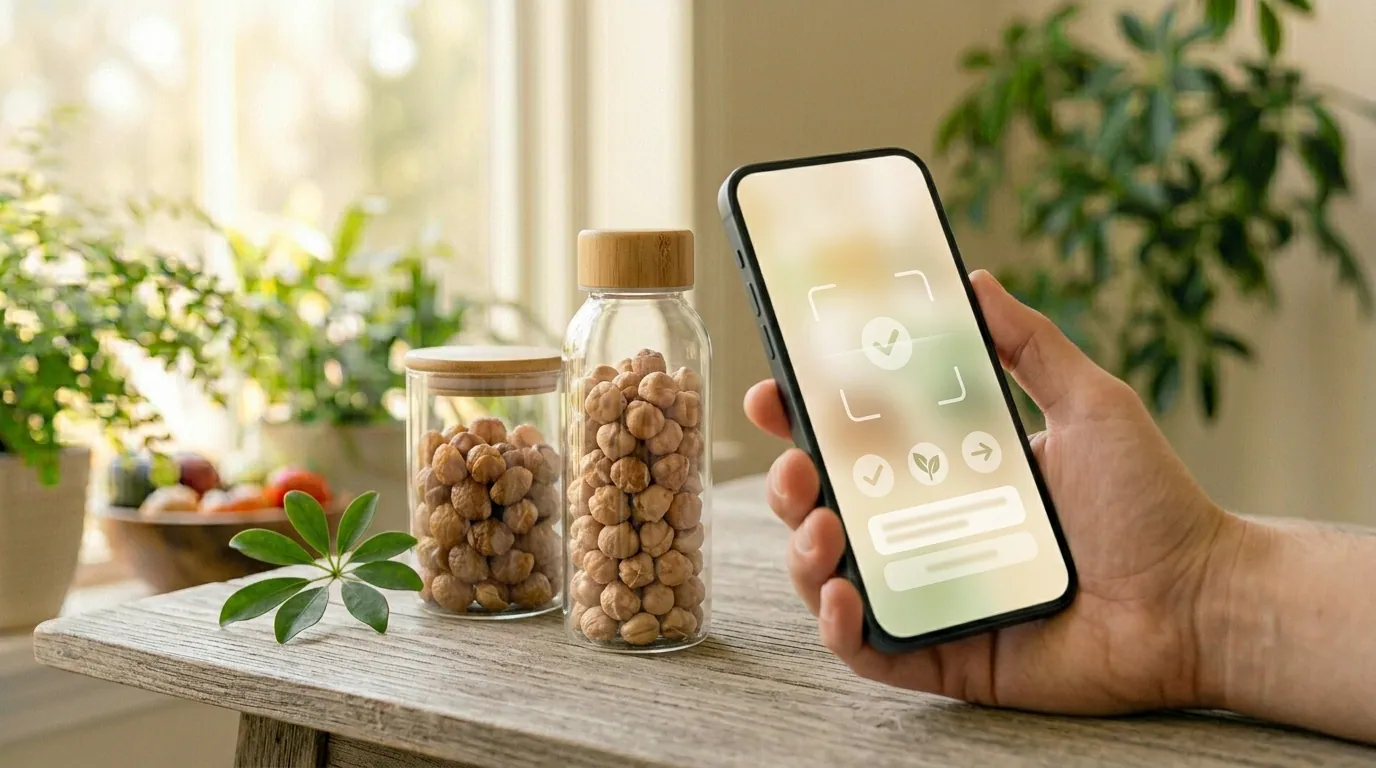
You can't eliminate microplastics from modern life in seven days. But you can cut the obvious daily exposures: bottled water, hot drinks in plastic-lined cups, microwaved plastic, worn cutting boards, takeout containers, and tea bags made of nylon. One change per day, seven days, no overhaul required. By Sunday you'll have replaced the habits that account for most of an average household's avoidable exposure.
| Day | Swap | Cost | Time |
|---|---|---|---|
| Day 1 | Filter your tap water; refill into glass/stainless | $30-90 | 15 min |
| Day 2 | Ban plastic from the microwave; use glass/ceramic | $0-40 | 5 min |
| Day 3 | Replace daily takeaway coffee cup with a personal travel mug | $25-40 | 5 min |
| Day 4 | Audit food storage, toss scratched plastic; switch to glass | $0-60 | 30 min |
| Day 5 | Replace plastic cutting board (produce) with wood/bamboo | $20-60 | 5 min |
| Day 6 | Switch to loose-leaf tea or paper-only certified tea bags | $10-20 | 10 min |
| Day 7 | Scan your pantry with the app to set a baseline | Free | 20 min |
Key Takeaways
- You can hit most of the daily exposure reduction in seven days with seven swaps.
- Day 1 (water filter) accounts for the largest single chunk of typical household reduction.
- Day 2 (never microwave plastic) is free and one of the highest-impact behavioral changes.
- Total cost for the full 7-day plan: roughly $100-300, depending on which swaps you already have.
- The behavioral changes (Day 2, Day 6, Day 7) cost nothing and stack with the product swaps.
- By Day 7, you have a baseline you can track. Reduction is meaningful only if you measure it.
Day 1: Filter your tap water
Why it's first. Bottled water averages ~240,000 microplastic particles per liter (Qian 2024, PNAS). Unfiltered tap is typically a few to a few hundred particles per liter. A NSF P473-certified carbon block pitcher reduces microplastics by 80-99% AND eliminates the bottled-water habit that drives most of the day's exposure.
What to do today:
- Buy or order a Clearly Filtered pitcher ($90), Epic Pure ($70), or AquaTru countertop RO ($450).
- Refill into a stainless or glass water bottle. Klean Kanteen and Hydro Flask are reliable, $20-40.
- Stop restocking single-use plastic water cases.
See: water filters compared and bottled water microplastics.
Day 2: Stop microwaving plastic, ever
Why it matters. A 2023 University of Nebraska study found microwaving plastic releases up to 4.22 million microplastic particles per cm² of container in 3 minutes. “Microwave-safe” just means the container won't melt, it does not mean particle-free.
What to do today:
- Pull out a ceramic dinner plate. From now on: transfer takeout, frozen meals, and leftovers to that plate (or a glass bowl) before microwaving.
- If you don't have a glass food-storage set, this is the swap to make this week. Pyrex starter set ($40-60).
- Use a second plate as a cover instead of plastic wrap.
See: microwaving plastic containers.
Day 3: Replace your coffee cup routine
Why it matters. Disposable coffee cups have a polyethylene or PLA plastic lining. A 2022 study estimated ~1,500 microplastic particles per cup released into hot drinks. Two coffees a day = ~1.1 million particles per year from one habit.
What to do today:
- Buy a stainless travel mug. Klean Kanteen TKWide ($30), Yeti Rambler ($30), Miir Camp Cup ($28).
- Bring it to the café tomorrow. Most chains and independent cafés will fill it directly, many offer a small discount.
- For-here orders: ask for a ceramic mug instead of a paper cup.
See: microplastics in coffee cups.
Day 4: Audit food storage
Why it matters. Scratched, warped, faded plastic containers shed multiplicatively more than fresh plastic. Hot-food contact is the highest-migration condition for plasticisers. Glass food storage is dishwasher / microwave / freezer safe, lasts decades, and eliminates the question entirely.
What to do today:
- Pull every plastic container out of your kitchen. Toss anything scratched, cloudy, warped, or visibly worn.
- If you don't have a glass starter set, get one this week (Pyrex Simply Store or Anchor Hocking, $40-60).
- For travel and kids: silicone (Stasher bags) and stainless (LunchBots) are the durable alternatives.
See: best plastic-free food storage.
Day 5: Replace plastic cutting boards
Why it matters. A 2023 study (Yadav et al.,Environmental Science & Technology) estimated that polyethylene cutting boards could shed up to 50 grams of microplastic per person per year directly into the food on the board. Wood and bamboo shed nothing.
What to do today:
- Toss scratched / gouged plastic cutting boards.
- Get a wood or bamboo board for produce and bread: Teakhaus ($50), Greener Chef bamboo ($25), or any local hardwood board.
- Keep a separate glass or stainless prep surface for raw meat if you want dishwasher sanitation.
See: plastic cutting board microplastics.
Day 6: Check tea bags and hot drinks
Why it matters. Pyramid mesh tea bags are usually nylon or PET. A 2019 McGill study found billions of microplastic particles released per cup. Most paper bags also use a polypropylene heat-seal.
What to do today:
- Switch to loose-leaf tea with a stainless or glass infuser ($10-15), cheapest setup, cleanest result.
- If you prefer bags: Numi, Pukka, Clipper, Traditional Medicinals, Yogi, or Tetley (UK) are explicitly plastic-free.
- If you have a plastic electric kettle, consider replacing with a glass kettle (Cosori, $50) or fully stainless (Bonavita, $95).
See: microplastics in tea bags.
Day 7: Scan your pantry, set a baseline
Why it matters. Reduction only matters if you can see it. Walk through your kitchen with the MicroPlastics app and scan the 20-30 items you use most: water bottles, food storage, packaged staples, cooking oil, sauces, supplements, cosmetics in the bathroom. The app gives each item a 0–100 risk score with the cited research.
What to do today:
- Open the app. Scan your water bottle, coffee mug, food storage, and 10 most-used pantry items.
- Save the worst-scoring 5 to your replace list.
- Set a monthly reminder to scan one new item.
After day 7: the pace that actually sticks
Seven days covers the kitchen, which is where the largest and cheapest wins are. It deliberately does not try to cover everything, and the two pathways it leaves out are worth naming so you know what is left.
Indoor air and what you wear are the chronic, low-grade exposures that a week of kitchen swaps does not touch. Household dust carries synthetic fibres shed from carpet, upholstery and clothing, and it is a genuine intake route rather than a footnote. Neither has a one-day fix, which is exactly why they sit outside a seven-day plan: a HEPA filter and a slow rotation out of synthetic fabrics are month-scale changes, not week-scale ones.
If you want to keep going after day 7, the pacing that works looks roughly like this — and note how much slower it is than the first week, on purpose:
- Month 1 — finish the storage swap. Glass in, scratched plastic out, nothing plastic in the microwave.
- Month 2 — cookware. One stainless or cast-iron pan, a wooden board, and bin anything with a scored non-stick surface.
- Month 3 — hot drinks. Loose leaf, your own mug, a glass or steel kettle.
- Ongoing — replace filter cartridges on schedule (every 6–12 months, and a lapsed cartridge is worse than none), audit personal-care products quarterly as you finish them, and let synthetic clothing phase out as it wears rather than replacing it in one go.
On cost, the honest comparison is not against zero. A household of four drinking bottled water spends roughly $1,500–3,000 a year on it. Against that, a filter and a set of glass containers pay for themselves inside a year or so — the changes in this challenge are mostly a saving dressed up as a purchase.
What this challenge is not
- Not a medical detox. Your body doesn't flush microplastics in seven days. The “detox” is exposure reduction, not biological elimination.
- Not all-or-nothing. Even doing 3 of the 7 days delivers meaningful daily exposure reduction.
- Not expensive. Total budget version (water filter + glass storage + travel mug + wood board): around $130. Pays back vs bottled water in 2-3 months.
- Not a guarantee of health outcomes. Reduction is precautionary, supported by published research on exposure pathways.
Track the 7 days in the app
The app turns this checklist into a daily tracker
Scan each swap as you make it. The app saves your daily exposure score so you can see this week's reduction vs your baseline. On iOS now; Android coming soon, get notified when it launches.
What the MicroPlastics app checks
- Packaging material. PET, HDPE, PP, PS, PVC, polycarbonate, glass, aluminum.
- Container condition from your photo, scratches, dents, fade, warp.
- Brand and product category, different SKUs in the same brand can score differently.
- Use-context flags you log, microwave, heat, reuse, age, contents.
- Published research backing each scan's 0–100 score.
- Safer alternatives, usually a glass / aluminum / stainless version of the same product or a cleaner brand.
Use the App
Use the app to build your first microplastic exposure baseline
Day 7 of the challenge is built around the scanner. Open the app, scan 10-20 of your most-used items, and you have a starting point you can actually reduce against.
Get the MicroPlastics appRelated reading: 30 kitchen swaps, 25 highest-risk foods, check before you buy, full 30-day action plan, how to avoid microplastics.
Frequently Asked Questions
Can you actually detox microplastics from your body in 7 days?
What's the single highest-impact swap?
How much does the full 7-day plan cost?
What if I can't afford to do all 7 days?
Does the challenge work for renters and apartments?
How do I get my family / partner / roommates on board?
What if I do 7 days and slip back to old habits?
Do I need to scan everything in my kitchen?
Sources
- Qian N, Gao X, Lang X, et al. (2024). Rapid single-particle chemical imaging of nanoplastics by SRS microscopy. PNAS.
- Hussain KA, Romanova S, Okur I, et al. (2023). Assessing the Release of Microplastics and Nanoplastics from Plastic Containers and Reusable Food Pouches. Environmental Science & Technology.
- Liu G, Wang J, Wang M, et al. (2022). Disposable plastic materials release microplastics and harmful substances in hot water. Science of the Total Environment.
- Yadav H, Khan MRH, Quadir M, et al. (2023). Cutting Boards: An Overlooked Source of Microplastics in Human Food?. Environmental Science & Technology.
- Hernandez LM, Xu EG, Larsson HCE, et al. (2019). Plastic Teabags Release Billions of Microparticles and Nanoparticles into Tea. Environmental Science & Technology.
After install · scan this first
Open the camera and scan whichever product you suspect is driving your daily intake.
A real detox only works if you reduce input. Scan your top 5 daily-use items and the app shows which one to swap first.
Android · early access
Get the launch email the day Android opens.
One email. No spam. We send when the Android app is in the Play Store, and never again unless you opt in.
Related Research
The Recycled Bottle Is the More Contaminated One
A Brunel evidence map traced 193 food-contact chemicals across the PET bottle lifecycle and found 150 documented migrating — with higher reported migration of antimony and BPA from recycled PET than virgin. Not an argument against recycling; an argument that “100% recycled” is a claim about waste, not about your drink.
Read moreIs It Plastic? Every Material in Your Kitchen, Answered
Nineteen of the thirty materials in an ordinary kitchen are plastic, and most people can name about six. Polyester and nylon are plastic. Melamine is plastic. PLA is plastic despite the compostable label. Silicone is not, quite — it is a siloxane. And "bamboo fibre" tableware is usually melamine resin with a plant filler.
Read moreMicroplastic Testing: What a Lab Can Actually Measure — and Why "None Detected" Isn't Clean
Micro-FTIR stops seeing particles around 10 micrometres and micro-Raman around 0.5. Much of the research linking microplastics to human tissue sits below both limits — so a clean water result is a statement about the instrument, not about your water. What labs measure, what mail-in kits deliver, and the test that does not exist at any price.
Read moreWe Scored 132 Products for Microplastics. Only 12 Have Ever Been Measured.
An audit of our own database. Nine percent of our product scores rest on a measurement of that exact item; 53% are reasoned from materials and use conditions. Six categories — 56 products — contain no measured item at all. And the measured products score 22 points worse, which turns out to say more about what science chooses to study than about the products.
Read moreMicroplastics in Travel: Toiletries, Hotel Water, Plane Food (2026)
Travel toiletries, hotel bottled water, plane food trays, in-room PP coffee makers, sunscreen at the beach: every summer-travel microplastic source in one place. Pack smarter and scan suspicious items with the MicroPlastics app before you check in.
Read morePlastic Scan Apps in 2026: What They Do, How They Work, and Which One to Use
A plastic scan app turns your phone camera into a packaging risk-checker. Here is what these apps actually do, what they can and cannot detect, and how to use one to cut your microplastic exposure.
Read more