Are Red Solo Cups Safe? Microplastics in Party Cups, Plates & Coolers. July 4th Guide (2026)
Last reviewed: by the MicroPlastics Research Desk. Submit a correction or see our editorial standards.
Quick Answer
Got a different brand in the cupboard? Review its packaging inputs and Product Contact Signal, then compare a lower-contact option.
Scan my product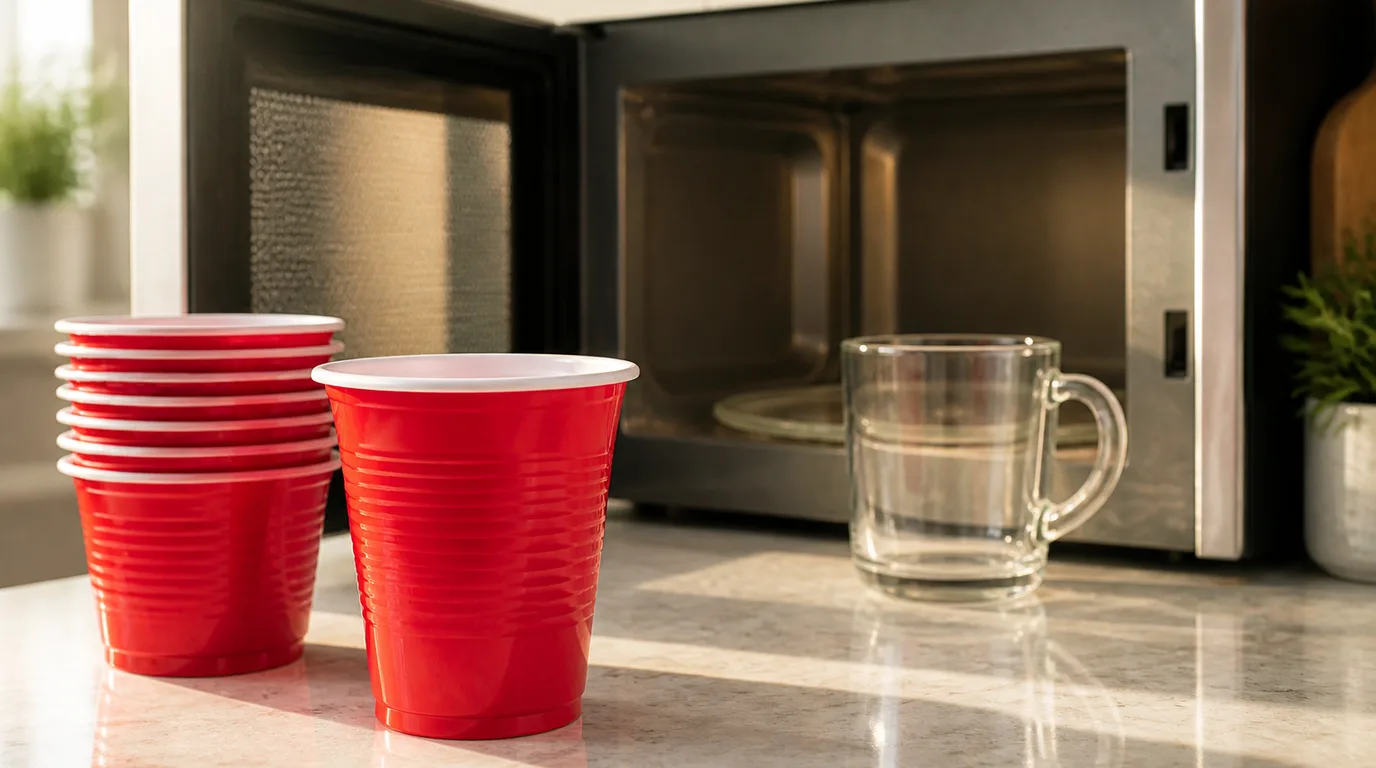
Just here about the microwave? Solo answers that one directly: its red, clear, Ultra Colors and refill cups are “not intended for microwave usage or hot food/beverages.” The full breakdown by product line, including the one Solo line that is microwavable, is in can you microwave a Solo cup.
Key Takeaways
- Red Solo cups are #6 polystyrene, one of the plastics most prone to releasing micro- and nanoplastics, especially with heat, agitation, and repeated temperature swings.
- They are BPA-free (BPA belongs to polycarbonate and epoxy chemistry), but the relevant concern for PS is styrene migration. IARC classifies styrene as Group 2A, probably carcinogenic to humans.
- Alcohol increases leaching: food-contact regulators use ethanol solutions as the official test simulant for alcoholic drinks precisely because ethanol pulls more out of plastic than water does.
- Paper cups and plates aren't plastic-free, the waterproof layer is polyethylene, and hot liquid on that coating releases tens of thousands of microplastic particles per cup in lab studies (Ranjan et al. 2021).
- Ranked for a party: aluminum cans > real dishes > bamboo/uncoated paper > PP cups > PET cups > PE-coated paper > polystyrene cups and foam plates.
Party plastics, the numbers that matter
- red Solo cup resin
- #6 PS
- polystyrene, among the most shed-prone consumer plastics; the same resin family as foam plates and coolers
- Resin identification code, ASTM D7611
- IARC classification of styrene
- Group 2A
- the monomer polystyrene is built from: “probably carcinogenic to humans” (2018)
- IARC Monographs Vol. 121
- microplastic particles per 100 mL
- ~25,000
- released from a PE-coated disposable paper cup holding hot liquid for 15 minutes
- Ranjan et al. 2021, J. Hazardous Materials
- nanoplastics from single-use plastics
- trillions/L
- NIST researchers measured trillions of sub-100 nm particles per litre from everyday food-contact plastics
- Zangmeister et al. 2022, ES&T Letters
- FDA simulant for high-alcohol drinks
- 50% ethanol
- regulators test plastic leaching with ethanol because alcohol extracts more from plastic than water
- FDA food-contact guidance
- PFAS grease-barrier phase-out
- 2020–2024
- FDA-brokered voluntary phase-out of PFAS grease-proofing in food packaging; sales ended in the US by 2024
- US FDA announcement
What a red Solo cup is actually made of
Flip a Solo cup over and you'll find a #6 in the recycling triangle: polystyrene, the rigid form of the same polymer that makes styrofoam. Polystyrene is cheap, opaque enough to hide what's in your cup, and stiff enough to survive a beer-pong table, which is exactly why it won the party market. It is also one of the polymers that materials scientists flag most often for particle release. PS is brittle rather than flexible, so mechanical stress, squeezing, stacking, scraping a fingernail down the side, a ping-pong ball rattling around inside, tends to fracture the surface into fragments rather than just flexing it. NIST researchers measuring nanoplastic release from everyday consumer plastics found that ordinary single-use food-contact items shed trillions of sub-100-nanometre particles per litre of liquid, with release climbing as temperature rises (Zangmeister et al. 2022).
Two party-specific habits make the Solo cup a worse version of itself. First, the cold-then-warm cycle: a cup filled with iced drink, left on a fence post in July sun, refilled, and left again. Repeated thermal swings stress the polymer surface the same way they stress a water bottle left in a hot car , each cycle makes the surface more prone to fragmenting into your next pour. Second, alcohol is a better solvent than water. This isn't speculation: it's baked into how food-contact plastics are regulated. When the FDA and EU authorities test what migrates out of a plastic into a drink, they don't use water to stand in for beer, seltzer, or a mixed drink, they use ethanol solutions, because ethanol reliably extracts more monomers, oligomers, and additives from plastic than water does. A jungle-juice cocktail sitting in a polystyrene cup for an hour is, chemically, a mild extraction experiment.
And to clear up the most-searched question: yes, Solo cups are BPA-free, and no, that doesn't settle anything. BPA is the building block of polycarbonate and epoxy resins; polystyrene never contained it. The relevant chemical for PS is styrene, its own monomer, which migrates into food and drink in small amounts and which IARC classified in 2018 as Group 2A, probably carcinogenic to humans, with the US National Toxicology Program listing it as reasonably anticipated to be a human carcinogen. The doses from a cup are small, and nobody credible claims one cookout matters. But “BPA-free” on a polystyrene cup is answering a question nobody should have asked of it.
Paper plates aren't paper, and the PFAS history matters
The second big July 4th purchase is plates, and the marketing here is slipperier than the cups. A standard “paper” plate or cup is paperboard laminated with a thin film of polyethylene (PE), that's the waterproofing. When Ranjan and colleagues at IIT Kharagpur put hot liquid into ordinary PE-lined paper cups, the lining released roughly 25,000 microplastic particles into 100 mL within 15 minutes, along with detectable ions and metals (Journal of Hazardous Materials, 2021). A paper plate under a hot burger and baked beans is the same laminate under the same conditions: heat, fat, and acid working on a PE film, plus a plastic fork scraping across it with every bite. Fat is the detail people miss, greasy foods are better at pulling plastic-associated compounds out of a coating than watery ones.
Premium molded-fiber plates (the sturdy Chinet-style ones) solved the grease problem a different way, and for years that way was PFAS, per- and polyfluoroalkyl grease barriers that kept oil from soaking through. Under FDA pressure, manufacturers agreed in 2020 to a voluntary phase-out of the main grease-proofing PFAS in US food packaging, and the FDA announced in 2024 that these compounds were no longer being sold for US food-contact use. That's genuinely good news, but it applies to new US production, not necessarily to imported party packs or old stock in a garage, and “grease-resistant” fiber products are the category to be most skeptical of. Foam plates, meanwhile, are expanded polystyrene: everything in the Solo cup section applies, with a more crumble-prone structure.
| Item | Material | Microplastic risk | Worst-case scenario | Verdict |
|---|---|---|---|---|
| Aluminum can (drink or canned water) | Aluminum + thin polymer liner | Low | Liner contact is minimal and stable when cold | Best grab-and-go option |
| Bamboo / wood cutlery | Bamboo, birch | Low | None meaningful, no polymer to shed | Easy one-to-one swap |
| Uncoated paper plate | Plain paperboard | Low | Soaks through with wet food, double up | Fine for dry food |
| PP cup (#5) | Polypropylene | Moderate | Hot drinks and repeated reuse | Best of the plastic cups |
| Clear PET cup (#1) | PET | Moderate | Iced drink left in direct summer sun | OK cold, degrade in heat |
| PE-coated paper cup/plate | Paperboard + polyethylene film | Moderate–high | Hot coffee, hot greasy food on the coating | Worse than it looks |
| Red Solo cup (#6) | Rigid polystyrene | High | Alcohol + sun + beer-pong abuse | The iconic offender |
| Foam plate / foam cooler | Expanded polystyrene | Highest | Hot food; ice sloshing against crumbling foam | Skip entirely |
Rankings reflect polymer shed-propensity and the realistic use case at a cookout, not a single lab measurement, cold, brief, gentle use sits at the low end of each row. For what to do with the leftovers, see our plastic-free food storage guide and the full microplastics in food hub.
Cutlery, coolers, and the water bottle buried in ice
Plastic cutlery is usually polystyrene (the glassy, snappable forks) or polypropylene (the slightly bendy ones). PS forks are the worse pick for the same reasons as the cup, brittle polymer, plus direct scraping against hot food, which is the highest-friction, highest-temperature contact at the whole party. PP holds up better, but bamboo cutlery has reached price parity in bulk packs and removes the question entirely.
Coolers split into two very different products. The $5 foam cooler is expanded polystyrene with no liner: you can watch it shed, white beads in the melt-water, flakes on the cans, a crumbling rim by hour three. Ice sloshing against bare EPS for a day is mechanical abrasion in a water bath, and everything you pull out of it drips that water over the lip you drink from. A hard-shell Igloo or Coleman is a different object: a rotomolded or injection-molded polyethylene liner over insulation. PE is one of the more stable, flexible food-contact polymers, the surface is smooth rather than friable, and the contents stay cold, the low-shedding end of every plastic's operating range. If you own a hard cooler, this is the rare case where the plastic option is genuinely fine.
One caveat lives inside the cooler: the case of single-use water bottles. The ice isn't the problem, cold PET sheds least. The problem is where that case was before the party: the trunk of a car in July, a hot garage, a delivery truck. PET that has been heat-cycled sheds more afterwards, even once it's cold, the damage is done in the trunk, not in the cooler. We covered the mechanism in our hot-car water bottle breakdown. The cleaner play for hosting: canned water or cans of anything, which ride out a hot trunk without consequence, and if you're wondering about can linings, our canned food deep-dive explains why a cold canned drink is still one of the lowest-risk options at the party.
What the MicroPlastics app checks
- The resin code and packaging of the cups, plates, and drinks you scan, so “#6 PS party cup” vs “#5 PP cup” stops being fine print.
- A 0–100 microplastic risk score per product, so you can compare a case of Solo cups against canned seltzer before you're in the checkout line.
- Lower-plastic swaps at the same price point (bamboo cutlery packs, uncoated plates, canned water) matched to what you actually scanned.
- A running exposure log, so a one-off holiday blowout stays a blip instead of a habit you can't see.
Use the App
Scan the party aisle before you fill the cart
Every cup, plate, and cooler in the seasonal aisle has a resin code and a risk profile, most people just can't see it. Scan the barcode and the app tells you what it's made of, how it sheds, and the cheapest swap that doesn't.
Scan my party suppliesThe safer swaps, ranked, for someone actually hosting 30 people
Nobody hosting a July 4th cookout is hand-washing 30 wine glasses, so here's the honest hierarchy, each step down trades a little convenience for a little exposure, and even stopping at step two gets you out of polystyrene entirely:
- 1. Drinks in aluminum, straight from the can. Beer, seltzer, soda, and canned water skip the cup entirely, survive a hot trunk, and chill fast. A marker for names replaces the Solo cup's one real feature.
- 2. If you need cups, buy #5 PP, and keep them cold and shaded. Polypropylene is the most stable of the cheap cup plastics. Skip anything stamped #6, and don't leave stacks baking in the sun before use.
- 3. Uncoated or certified PFAS-free fiber plates, doubled up. Plain paper for dry food; for saucy food, look for explicit “PFAS-free” labeling on molded fiber rather than trusting “compostable.”
- 4. Bamboo cutlery by the 100-pack. Costs within a dollar or two of plastic forks, feels sturdier, and eliminates the highest-friction plastic-on-hot-food contact of the day.
- 5. Real dishes for the inner circle. The 8 people at the table get real plates; the lawn gets fiber. Half the dishwashing, most of the benefit.
- 6. Hard-shell cooler, never foam. The PE liner in an Igloo or Coleman is stable and reusable for decades; the $5 EPS cooler sheds into its own melt-water by design.
Frequently Asked Questions
Do red Solo cups have BPA?
Is it safe to drink beer from a Solo cup?
Can you microwave food on paper plates?
Are aluminum cans safer than plastic cups?
What are the safest disposable cups?
Sources
- Ranjan VP, Joseph A, Goel S. (2021). Microplastics and other harmful substances released from disposable paper cups into hot water. Journal of Hazardous Materials.
- Zangmeister CD, Radney JG, Benkstein KD, Kalanyan B. (2022). Common single-use consumer plastics release trillions of nanoparticles per litre into water. Environmental Science & Technology Letters.
- International Agency for Research on Cancer (2019). IARC Monographs Volume 121: Styrene, styrene-7,8-oxide, and quinoline. IARC / WHO.
- US Food and Drug Administration (2024). FDA announces PFAS used in grease-proofing agents for food packaging no longer being sold in the US. FDA Constituent Update.
- National Toxicology Program (2021). Report on Carcinogens, 15th edition: Styrene. US Department of Health and Human Services.
- Cox KD, Covernton GA, Davies HL, et al. (2019). Human consumption of microplastics. Environmental Science & Technology.
After install · scan this first
Open the camera and scan the party supplies you already bought.
Scan the cup sleeve, the plate pack, and the cutlery bag before the party, polystyrene, PP, and coated fiber all score very differently, and the swap can be same-day at any grocery store.
Android · early access
Get the launch email the day Android opens.
One email. No spam. We send when the Android app is in the Play Store, and never again unless you opt in.
Related Research
Does Instant Coffee Have Microplastics? Nescafé, Starbucks VIA, Folgers & Mount Hagen Ranked (2026)
Instant coffee powder is not plastic: but the jar, the stick pack, the kettle, and the cup decide your exposure. Nescafé Clásico, Taster’s Choice, Starbucks VIA, Folgers (plastic AromaSeal canister), Café Bustelo and Mount Hagen ranked, plus the prep that cuts microplastics to near zero.
Read moreAre Nespresso, Keurig, Lavazza & illy Coffee Pods Plastic? 2026 Brand-by-Brand Microplastic Audit
Five major coffee-pod brands ranked for microplastic exposure: Nespresso Original, Nespresso Vertuo, Keurig K-Cups, Lavazza Modo Mio, illy iperEspresso. Aluminum vs plastic vs compostable: what the polymer disclosure actually says.
Read moreMicroplastics in Iced Coffee: Starbucks, Dunkin, McDonald’s, Peet’s Ranked (Summer 2026)
Iced coffee plastic cups are the worst-case microplastic exposure in any coffee menu: full polypropylene + 20-45 minutes ice-melting contact + acidic + dairy fat extraction. Every major US chain audited with the lower-plastic-contact, same-drink swap.
Read moreBest Reusable K-Cup Pods: Stainless Steel Ranked for 2026
Swap your disposable K-Cup for a stainless-steel reusable pod and take the plastic cup out of the hot-water path. K&J, EcoFlow, Maxware, iPartsPlusMore, SoloFill, Keurig My K-Cup, Cafilas ranked for stainless grade, gasket silicone, Keurig 2.0 compatibility, cleaning, and cost per cup.
Read moreDoes Dunkin’s Coffee Contain Microplastics? Cups, K-Cups, Iced Coffee (2026)
Dunkin’s hot foam cups, iced coffee plastic cups, Original Blend K-Cups, bottled iced coffee, and Dunkin’s bagged ground coffee: every format compared by packaging and use conditions, with lower-plastic-contact, same-drink options for Dunkin’s customers.
Read moreMicroplastics in Oat Milk: Brands Ranked (Oatly, Chobani, Planet Oat, Califia) 2026
Oat milk is the fastest-growing dairy alternative: but every carton is multilayer PE-lined paperboard. Oatly, Chobani, Planet Oat, Califia Farms, Silk, Trader Joe’s, Minor Figures ranked for microplastic exposure plus the lowest-contact fridge-pack vs shelf-stable swaps.
Read more