Are Nespresso, Keurig, Lavazza & illy Coffee Pods Plastic? 2026 Brand-by-Brand Microplastic Audit
Last reviewed: by the MicroPlastics Research Desk. Submit a correction or see our editorial standards.
Quick Answer
Got a different brand in the cupboard? Review its packaging inputs and Product Contact Signal, then compare a lower-contact option.
Scan my product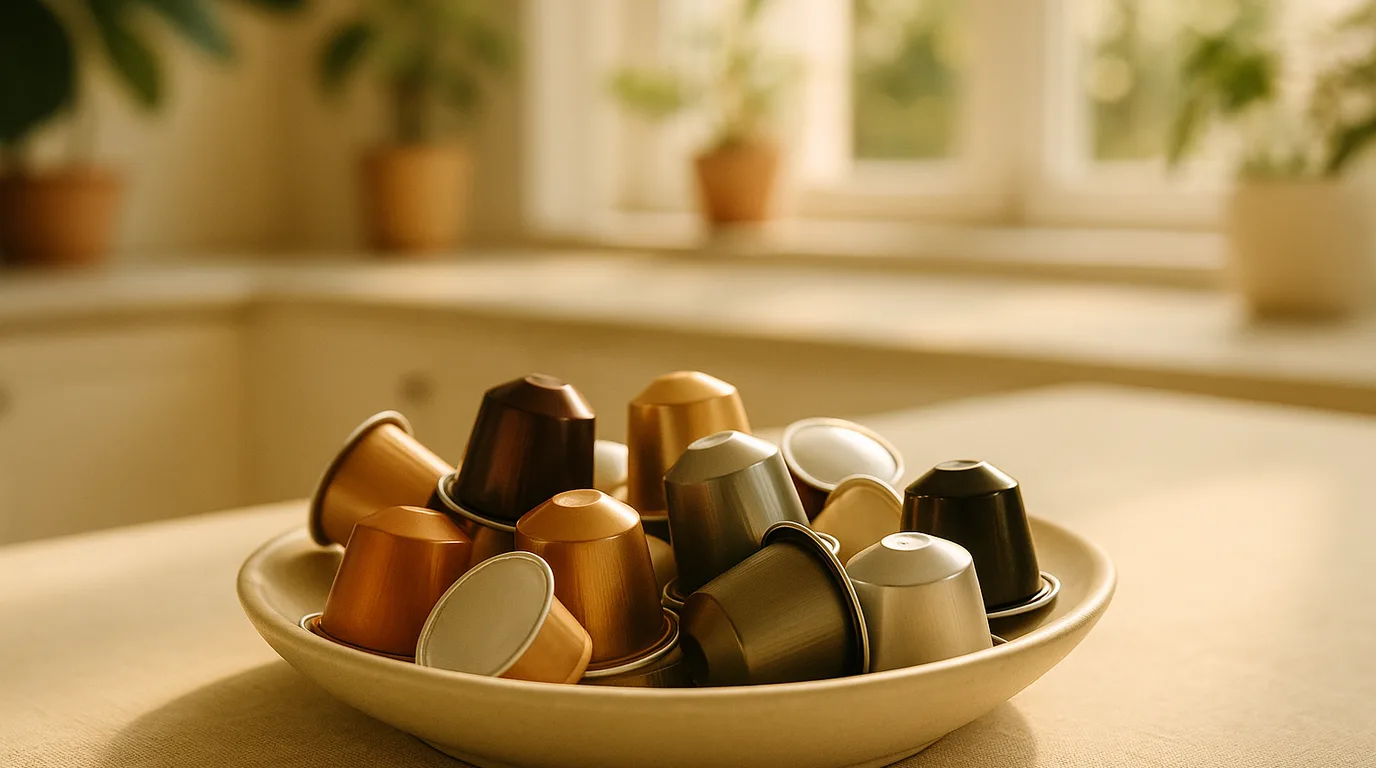
Key Takeaways
- Plastic-bodied pods (Keurig K-Cups) put the most plastic in contact with hot water; aluminum pods expose only a thin inner liner. No study has measured the difference in particles brand by brand.
- Aluminum-bodied pods (Nespresso Original/Vertuo, illy iperEspresso, Lavazza A Modo Mio) still have a thin food-grade polymer inner liner, they're lower-release, not zero.
- Within the aluminum systems, smaller pods + shorter brew times = less microplastic. Nespresso Original (~25 ml espresso, ~25 s) is the cleanest mainstream choice.
- Vertuo's centrifusion adds rotational agitation against the liner and longer brew times, pushing it above Original despite identical materials.
- “Compostable” pods (PLA, paper-fiber) avoid traditional plastic but still degrade under heat, the data is too thin to claim they're cleaner than aluminum.
- A reusable stainless-steel pod in any compatible machine eliminates ~95% of pod-related microplastic exposure for ~$15 one-time.
The five pod systems, side by side
Every single-serve coffee pod sold in volume in 2026 falls into one of two material families: a polymer body with a foil top (Keurig K-Cups, K-Pods), or an aluminum capsule with a thin polymer inner liner (Nespresso Original + Vertuo, illy iperEspresso, Lavazza A Modo Mio, most boutique brands). The polymer-bodied design exposes the full pod wall to hot pressurised water for the entire brew. The aluminum-bodied design exposes only the thin inner liner, typically food-grade polypropylene or polyethylene, which has roughly one-fifth to one-tenth the microplastic-contact surface area at the same brew volume.
| Pod system | Body material | Liner / contact polymer | Brew | Microplastic risk | Verdict |
|---|---|---|---|---|---|
| Nespresso Original | Aluminum | Food-grade PP/PE liner | 25 ml @ ~19 bar, ~25 s | Low (cleanest mainstream) | Best mainstream pick |
| illy iperEspresso | Aluminum (some plastic SKUs) | Food-grade polymer liner | 30 ml @ pressurised, ~25 s | Low | Aluminum SKUs only |
| Lavazza A Modo Mio | Aluminum + plastic ring | Food-grade polymer liner | 30 ml @ ~15 bar, ~25 s | Low–Moderate | Acceptable |
| Nespresso Vertuo | Aluminum | Food-grade polymer liner | 40–414 ml + centrifusion (6,000–7,000 rpm), 30–90 s | Moderate | Acceptable; pick smaller pod sizes |
| Keurig K-Cups | #5 Polypropylene + foil + paper filter | Whole body is contact polymer | ~250 ml @ ~2 bar, 92–96°C, 20–30 s | Highest plastic contact: the whole pod wall | ❌ Worst mainstream, swap to reusable stainless |
| Compostable (PLA, paper-fiber) | PLA / paper / starch composite | Often a thin polymer hot-seal layer | Varies | Unclear, emerging research | Better than K-Cups, not proven cleaner than aluminum |
| Reusable stainless-steel pod | 304 stainless + silicone gasket | No polymer-water contact | Same as system | Near-zero | Cleanest option in any machine |
Why K-Cups are the worst case (and what the research says)
A standard Keurig K-Cup is #5 polypropylene from base to rim, with a foil lid pierced by the brewer needle and a paper filter inside. When the machine forces pressurised water at 92–96°C through the pod for 20–30 seconds, the entire interior plastic surface is in contact with hot, acidic (pH ~5) water for the duration of the brew. What has been measured is modest: the one study of capsule coffee counted 7 to 17 synthetic microplastics per cup (particles 10 µm and larger) and did not isolate the pod, and no study has compared plastic and aluminum pods directly. What is documented is chemical: an antistatic additive migrates from polypropylene capsules into coffee (Otoukesh et al. 2020). Keurig's 2020 redesign for “recyclability” changed the plastic blend but not the chemistry of the water-contact surface, it's still polypropylene.
For depth on K-Cup release mechanics, see our dedicated K-Cup release study breakdown, and for the Nespresso side, do Nespresso pods have microplastics.
Why Nespresso Original is the cleanest mainstream pod
Both Nespresso Original and Vertuo are aluminum bodies with a thin food-grade polymer inner liner. Original is the cleaner of the two for three reasons:
- Smaller pod, smaller liner area. Original pods hold ~5 g coffee and brew ~25–40 ml of espresso. Vertuo pods scale from 40 ml (espresso) to 414 ml (Alto), the larger the pod, the more liner surface contacts hot water.
- Shorter brew time. Original brews finish in ~25–30 seconds. Vertuo's longer brews (especially Mug and Alto sizes) extend pod-water contact to 60–90 seconds.
- No centrifusion. Vertuo spins the pod at 6,000–7,000 rpm during brewing. This adds mechanical agitation against the inner liner that Original's static pressure brewing doesn't produce.
For the full Original vs Vertuo deep-dive, see our Nespresso Vertuo vs Original comparison.
illy iperEspresso and Lavazza A Modo Mio
Both are aluminum-bodied systems comparable to Nespresso Original in microplastic profile. illy iperEspresso pods are pressurised aluminum capsules; some retail SKUs (the older “Easy Serving Espresso” ESE paper pods) are paper-based rather than aluminum and behave differently, check the box. Lavazza A Modo Mio capsules are aluminum with a plastic outer collar ring that doesn't contact water during brewing. Both systems sit between Nespresso Original and Vertuo for microplastic risk.
Are compostable pods cleaner?
Brands like Halo, Woken, and Grind sell PLA (polylactic acid) or paper-fiber compostable pods. The pitch is “no plastic.” The chemistry is more nuanced:
- PLA is a polymer, just a plant-derived one. It's still a synthetic polymer in hot-water contact, and there's less published research on PLA microplastic release at brewing temperatures than there is for polypropylene.
- Many compostable pods use a polymer hot-seal layer or laminate to bond the foil top to the pod body. That seal layer is in the hot zone during brewing.
- The compost claim is for industrial composting facilities, not home compost. Home composting most compostable pods produces no breakdown in any meaningful timeframe.
Verdict: compostable pods are likely cleaner than K-Cups but the data is too thin to claim they beat aluminum systems for microplastic exposure. The environmental story (less plastic in the waste stream) is genuinely better than K-Cups; the in-cup microplastic story is unclear.
Use the App
Scan your pod box before the next order
Check the polymer disclosure on any coffee pod in 5 seconds. MicroPlastics returns a 0–100 risk score and the cleaner same-machine alternative.
Get the MicroPlastics appThe cleanest path: a reusable stainless-steel pod
Any machine (Keurig, Nespresso, illy, Lavazza) has a reusable stainless-steel pod alternative. Fill with your own ground coffee, brew normally, rinse and reuse. Cost: $10–25 one-time. Microplastic release: near-zero, because the only polymer in contact with the brew is the small silicone gasket. For brand-specific picks, see our best reusable K-Cup pods ranked guide.
What the MicroPlastics app checks
- The pod body material (aluminum, polypropylene, PLA, paper composite)
- Inner liner polymer disclosure when manufacturer publishes it
- Pod size (smaller pods = less polymer-water contact)
- Whether your machine has a verified reusable-pod alternative
- Compatible reusable stainless-steel pod recommendations
Frequently Asked Questions
Are Nespresso pods plastic?
Are Keurig K-Cups plastic?
Which coffee pods have the most microplastics?
Are Nespresso Vertuo pods worse than Original?
Are compostable coffee pods microplastic-free?
What is the cleanest way to drink pod coffee?
Do paper coffee pods exist?
Does coffee from aluminum pods have aluminum in it?
Sources
- Al-Mansoori M, Harrad S, Abdallah MAE (2025). Synthetic microplastics in hot and cold beverages from the UK market: comprehensive assessment of human exposure via total beverage intake. Science of the Total Environment.
- Otoukesh M, Vera P, Wrona M, et al. (2020). Migration of dihydroxyalkylamines from polypropylene coffee capsules to Tenax and coffee. Food Chemistry.
- Hernandez LM, Xu EG, Larsson HCE, Tahara R, Maisuria VB, Tufenkji N (2019). Plastic teabags release billions of microparticles and nanoparticles into tea. Environmental Science & Technology.
- EFSA Panel on Food Contact Materials (2008). Safety of aluminium from dietary intake: Scientific Opinion. European Food Safety Authority.
- Hussain KA, et al. (2023). Assessing the release of microplastics and nanoplastics from plastic containers and reusable food pouches. Environmental Science & Technology.
Audit your whole pantry, not just the 5 foods in this article
The app keeps a running scan history for every packaged food you own, every brand swap you make, and every reformulation a brand quietly pushes. The article is a snapshot. The app is the trend line.
Download on the App Store- Free on iOS
- 3 free scans
- No sign-up
- Result in seconds
“Really cool to scan stuff around the kitchen and see what's actually in it. The swaps it suggests are realistic.” App Store review · 5.0★
Android · early access
Get the launch email the day Android opens.
One email. No spam. We send when the Android app is in the Play Store, and never again unless you opt in.
Related Research
Microplastics in Iced Coffee: Starbucks, Dunkin, McDonald’s, Peet’s Ranked (Summer 2026)
Iced coffee plastic cups are the worst-case microplastic exposure in any coffee menu: full polypropylene + 20-45 minutes ice-melting contact + acidic + dairy fat extraction. Every major US chain audited with the lower-plastic-contact, same-drink swap.
Read moreBest Reusable K-Cup Pods: Stainless Steel Ranked for 2026
Swap your disposable K-Cup for a stainless-steel reusable pod and take the plastic cup out of the hot-water path. K&J, EcoFlow, Maxware, iPartsPlusMore, SoloFill, Keurig My K-Cup, Cafilas ranked for stainless grade, gasket silicone, Keurig 2.0 compatibility, cleaning, and cost per cup.
Read moreDoes Dunkin’s Coffee Contain Microplastics? Cups, K-Cups, Iced Coffee (2026)
Dunkin’s hot foam cups, iced coffee plastic cups, Original Blend K-Cups, bottled iced coffee, and Dunkin’s bagged ground coffee: every format compared by packaging and use conditions, with lower-plastic-contact, same-drink options for Dunkin’s customers.
Read moreMicroplastics in Oat Milk: Brands Ranked (Oatly, Chobani, Planet Oat, Califia) 2026
Oat milk is the fastest-growing dairy alternative: but every carton is multilayer PE-lined paperboard. Oatly, Chobani, Planet Oat, Califia Farms, Silk, Trader Joe’s, Minor Figures ranked for microplastic exposure plus the lowest-contact fridge-pack vs shelf-stable swaps.
Read moreDoes Starbucks Coffee Contain Microplastics? Cups, Pods, Cold Brew (2026)
Hot coffee bought from coffee-shop chains measured about 16 synthetic microplastics per cup, far below lab soak tests of paper cups. Frappuccino plastic cups, Pike Place K-Cups, VIA instant, cold brew bottles: Starbucks every format audited, with the lower-plastic-contact, same-drink swaps.
Read moreMicroplastics in Espresso Machines: PP Tanks, Tubing & Brew Path (2026)
Most espresso machines: semi-automatic, super-automatic, and pod hybrids: have plastic water tanks, plastic tubing, and plastic group-head seals in the hot-water path. Brand-by-brand: which machines minimise plastic-water contact.
Read more