Does Dunkin' Coffee Contain Microplastics? Cups, K-Cups, Iced Coffee (2026)

Last reviewed: by the MicroPlastics Research Desk. Submit a correction or see our editorial standards.
Quick Answer
Got a different brand in the cupboard? Review its packaging inputs and Product Contact Signal, then compare a lower-contact option.
Scan my product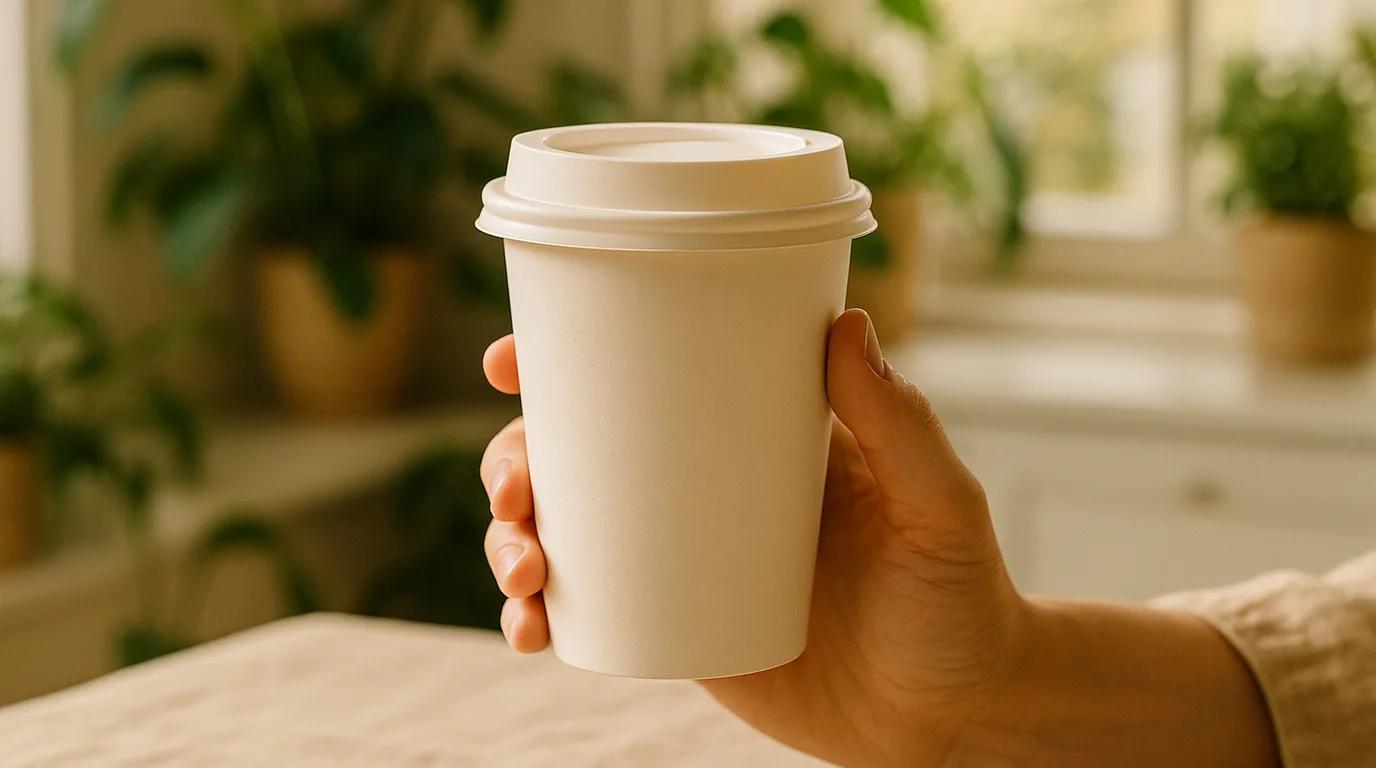
Key Takeaways
- Dunkin's post-2020 paper hot cup releases ~25,000 microplastic particles per drink from its polyethylene inner liner, same chemistry as every other PE-lined paper cup.
- The Dunkin' iced coffee plastic cup is #5 polypropylene; the long ice-melting contact time (20-45 min) makes it the highest-exposure single Dunkin' format.
- Original Blend, Dunkin' Decaf, Donut Shop K-Cups are standard PP K-Cup construction, tens of thousands of particles per pod (Diaz-Basantes 2022).
- Dunkin' switched from EPS foam to paper cups in 2020. The new cup is microplastic-cleaner than the foam but still releases meaningfully.
- Dunkin' bottled iced coffee (sold at grocery stores) is PET-bottled; sits in plastic for 6-12 weeks before sale.
The Dunkin' hot cup, post-2020 paper, post-foam
For 65+ years Dunkin' hot coffee was served in an expanded polystyrene foam (EPS) cup, the iconic white styrofoam-feel cup with the orange and pink logo. In 2020, Dunkin' completed a global transition to double-walled paper cups in response to environmental pressure on EPS foam.
From a microplastic standpoint, the swap was a net improvement but not an elimination. The original EPS cup leached styrene monomer (an endocrine-disrupting compound classified as “reasonably anticipated to be a human carcinogen” by the US National Toxicology Program), and shed polystyrene microparticles especially at high temperatures. The new paper cup eliminates that styrene migration but replaces it with PE microplastic shedding.
The new Dunkin' paper cup is constructed the same way as every other major-chain paper hot cup:
- Outer paperboard wall, for stiffness and printing.
- Inner paperboard wall, for insulation (double-walled cups eliminate the need for a separate sleeve).
- Polyethylene (PE) inner lining, in direct contact with the hot coffee at 70–85°C.
- Polystyrene or polypropylene lid, drinking surface.
The published research that applies: Ranjan et al. (2021), published in Journal of Hazardous Materials, tested disposable paper cups at 85–90°C for 15 minutes and found approximately 25,000 microplastic particles released per 100 ml. The methodology mirrors normal coffee-drinking conditions. Zhou et al. (2023) confirmed the order-of-magnitude finding and detected nanoplastic fragments below 1 µm.
Iced coffee, the Dunkin' signature drink
Dunkin' sells more iced coffee than hot coffee in most of its US locations across the entire year, a brand- specific quirk that doesn't apply to Starbucks. This matters for microplastic exposure because the iced cup is more plastic- rich than the hot cup:
- Cup body: Clear #5 polypropylene plastic, full body.
- Dome lid: Polypropylene with a straw hole.
- Straw: Polypropylene (Dunkin' rolled out paper straws in some markets but PP straws remain default in others).
- Contact time: Typically 20–45 minutes as ice melts and the drink dilutes, significantly longer than a hot cup hold.
- Acidic contents: Cold brew is more acidic than hot drip; flavoured iced coffees add sugar and cream that compound extraction.
Per Hussain et al. (2023) testing of food-contact polypropylene at extended contact times, per-drink release likely exceeds the hot paper cup figure. The Dunkin' iced coffee plastic cup is the single highest-microplastic-exposure item on the Dunkin' menu.
Original Blend, Donut Shop, and Dunkin' K-Cups
Dunkin'-branded K-Cups (Original Blend, Dunkin' Decaf, Donut Shop, Midnight, French Vanilla, Hazelnut, Caramel) use standard polypropylene K-Cup construction, same body as Green Mountain, Starbucks Pike Place, McCafé, and Newman's Own. Brewed under hot pressurised water at 92–96°C, they fall into the general K-Cup category: tens of thousands of microplastic particles per brew per Diaz-Basantes et al. (2022).
Dunkin' also sells a smaller line of aluminum Nespresso-compatible capsules (Dunkin' Espresso) in some markets. These are aluminum-bodied with a thin food-grade polymer inner liner, cleaner than the K-Cup option but not zero.
See: do K-Cups release microplastics, coffee pod brand ranking, and Nespresso Vertuo vs Original.
Bottled Dunkin', grocery store iced coffee, espresso shots
Dunkin' sells bottled iced coffee (PET plastic bottle) and bottled iced espresso (PET or glass depending on region) through grocery and convenience stores. These products sit in their packaging for 6–12 weeks between manufacture and consumption.
- PET-bottled iced coffee (Dunkin' Bottled Iced Coffee): polyethylene terephthalate plastic. Cold storage helps limit migration, but transit-warm exposure (warehouses, trucks, store displays) accumulates over weeks.
- Glass-bottled premium iced espresso (specialty Dunkin' lines): glass is inert; check the lid construction, metal twist-top is cleaner than plastic lid.
- Dunkin' Cold Brew bottled multipacks: typically PET; same considerations as bottled iced coffee.
Dunkin' bagged ground coffee and beans
Bagged Dunkin' ground coffee (Original Blend, French Vanilla, Hazelnut) is sold in multi-layer plastic + foil bags. The coffee itself has minimal in-bag contact issue because the contact is cold and brief, the migration risk is from brewing, not storage.
At home, the cleanest Dunkin' setup is:
- Bagged Dunkin' Original Blend ground coffee from the grocery store.
- Brewed in a Moccamaster or other low-plastic drip machine, or pour-over with a metal mesh filter.
- Served in a ceramic mug.
This setup eliminates the paper cup contribution, the K-Cup pod contribution, and the bottled-PET contribution, leaving only the small in-bag storage migration and the drip-machine internal path.
Dunkin' formats ranked by relative microplastic exposure
| Rank (cleanest first) | Format | Why |
|---|---|---|
| 1 | Bagged Dunkin' ground coffee, drip-brewed in ceramic mug at home | No paper cup, no pod, no bottle, only small in-bag storage migration |
| 2 | Bagged Dunkin' ground coffee, pour-over with metal mesh + ceramic mug | Same as #1 minus the drip-machine internal plastic |
| 3 | Dunkin' Espresso aluminum capsule (Nespresso-compatible) | Aluminum body + small inner polymer liner |
| 4 | Hot drip coffee in a personal reusable cup (Stanley, Yeti, Klean Kanteen) | Eliminates the paper-cup contribution; brewing path is the same |
| 5 | Hot drip coffee in a Dunkin' paper cup, dine-in | ~25,000 particles from PE-lined paper cup over 15 min hold; lid PS contribution |
| 6 | Hot drip coffee in a Dunkin' paper cup, takeaway | Same as #5 plus extended hold time |
| 7 | Original Blend / Donut Shop K-Cup brewed at home, ceramic mug | Tens of thousands of particles per pod; mug eliminates the cup contribution |
| 8 | Dunkin' bottled iced coffee (PET bottle from grocery store) | Weeks of PET contact at variable temperatures |
| 9 | Dunkin' iced coffee in store, plastic cup + lid + straw | Full PP cup + 20-45 min ice-melting contact + acidic + cream extraction |
| 10 | K-Cup brewed at home into a Dunkin' paper cup | Pod release + paper cup release stacked |
The 80% reduction swap for Dunkin' daily customers
Bring a personal reusable cup. Most US Dunkin' locations accept reusable cups for hot drinks and offer a small discount depending on location. The DD Perks app also occasionally promotes “bring your own cup” days with bonus rewards.
For iced coffee specifically, the highest-microplastic Dunkin' format, the swap is harder because Dunkin' baristas typically pour into the disposable cup before transferring to a reusable. Ask for the drink to be made in your reusable insulated tumbler directly; this is a barista request, not a corporate policy. Stainless steel tumblers like the Stanley Quencher H2.0, Yeti Rambler, or Hydroflask all work well for iced coffee.
Other practical interventions:
- Skip the dome lid + straw on iced drinks if you can. Sip from the cup rim with the lid off.
- Order espresso drinks instead of drip when possible. Espresso has shorter brew-water-to-plastic contact.
- At home, switch from Dunkin' K-Cups to a stainless reusable pod filled with bagged Dunkin' ground coffee. Cuts pod release by ~95%.
- Skip the bottled grocery-store Dunkin' products. The 6–12 week PET contact is the worst-case packaged-Dunkin' scenario.
See also: does Starbucks coffee contain microplastics?, microplastics in coffee by brewing method, microplastics in disposable coffee cups, and microplastics in espresso machines.
What the MicroPlastics app checks
- Coffee pod or sachet polymer (PP K-Cup, foil-lined VIA-equivalent, aluminum capsule) from the box barcode.
- Reusable cup material (stainless 18/8, glass, ceramic, Tritan) and lid construction for the “bring your own” approach.
- Bottled drink container (PET, aluminum + liner, glass) and the shelf-time risk multiplier.
- Linked research and a 0–100 microplastic risk score for the specific Dunkin' format and drink.
Use the App
Scan your usual Dunkin' order before the next run
The MicroPlastics app reads the barcode on Dunkin' K-Cup sleeves, bottled drinks, and ground coffee bags, and rates the cleaner cup choice for your usual drink.
Scan a Dunkin' productFrequently Asked Questions
Does Dunkin' coffee contain microplastics?
Are Dunkin' foam cups gone for good?
What is the safest Dunkin' drink for microplastics?
Are Dunkin' iced coffee plastic cups bad?
Are Dunkin' Original Blend K-Cups any different from other K-Cups?
Is bottled Dunkin' iced coffee safe?
Can I bring my own cup to Dunkin'?
Is Dunkin' or Starbucks cleaner for microplastics?
Sources
- Ranjan VP, Joseph A, Goel S. (2021). Microplastics and other harmful substances released from disposable paper cups into hot water. Journal of Hazardous Materials.
- Zhou G, Wu Q, Li XC, et al. (2023). Disposable paper cups and the release of micro- and nanoplastics. Journal of Hazardous Materials Letters.
- Diaz-Basantes MF, Conesa JA, Fullana A. (2022). Microplastics in honey, beer, milk and refreshments: coffee capsule comparison. Foods (MDPI).
- Hussain KA, Romanova S, Okur I, et al. (2023). Assessing the Release of Microplastics and Nanoplastics from Plastic Containers and Reusable Food Pouches. Environmental Science & Technology.
- US National Toxicology Program (2024). Report on Carcinogens: styrene listing. NTP.
- European Food Safety Authority (2024). Re-evaluation of bisphenol A (BPA) in food contact materials. EFSA Journal.
After install · scan this first
Open the camera and scan your Dunkin' cup or pod.
The cup and lid material drives the score more than the coffee itself. Scan yours to know which combo you're actually drinking.
Android · early access
Get the launch email the day Android opens.
One email. No spam. We send when the Android app is in the Play Store, and never again unless you opt in.
Related Research
Microplastics in Oat Milk: Brands Ranked (Oatly, Chobani, Planet Oat, Califia) 2026
Oat milk is the fastest-growing dairy alternative: but every carton is multilayer PE-lined paperboard. Oatly, Chobani, Planet Oat, Califia Farms, Silk, Trader Joe’s, Minor Figures ranked for microplastic exposure plus the lowest-contact fridge-pack vs shelf-stable swaps.
Read moreDoes Starbucks Coffee Contain Microplastics? Cups, Pods, Cold Brew (2026)
Hot Starbucks cups release ~25,000 microplastic particles per drink (Ranjan 2021). Frappuccino plastic cups, Pike Place K-Cups, VIA instant, cold brew bottles: Starbucks every format audited, with the lower-plastic-contact, same-drink swaps.
Read moreMicroplastics in Espresso Machines: PP Tanks, Tubing & Brew Path (2026)
Most espresso machines: semi-automatic, super-automatic, and pod hybrids: have plastic water tanks, plastic tubing, and plastic group-head seals in the hot-water path. Brand-by-brand: which machines minimise plastic-water contact.
Read moreNespresso Vertuo vs Original: Microplastics and Materials Compared (2026)
Original aluminum pods vs Vertuo aluminum-bodied pods: head-to-head for microplastic release, inner liner contact, brew temperature, and pod-to-cup chemistry. Which is the lower-plastic-contact choice.
Read moreDo K-Cups Release Microplastics Into Coffee? What the Research Shows (2026)
Yes: Keurig K-Cups release tens of thousands of microplastic particles per brew under hot pressurised water. Here is the published evidence, the per-cup numbers, and the lower-plastic-contact ways to keep using a Keurig.
Read moreMicroplastics in K-Cups and Coffee Pods: Brands Ranked (2026)
Keurig K-Cups, Nespresso, Lavazza, illy and more compared by documented pod materials and brewing conditions. Aluminum, plastic, compostable, and reusable formats ranked by modeled contact, not safety.
Read more