Does Sous Vide Cook Food in Plastic? Microplastics in Sous Vide, Explained (2026)

Last reviewed: by the MicroPlastics Research Desk. Submit a correction or see our editorial standards.
Quick Answer
Got a different brand in the cupboard? Review its packaging inputs and Product Contact Signal, then compare a lower-contact option.
Scan my product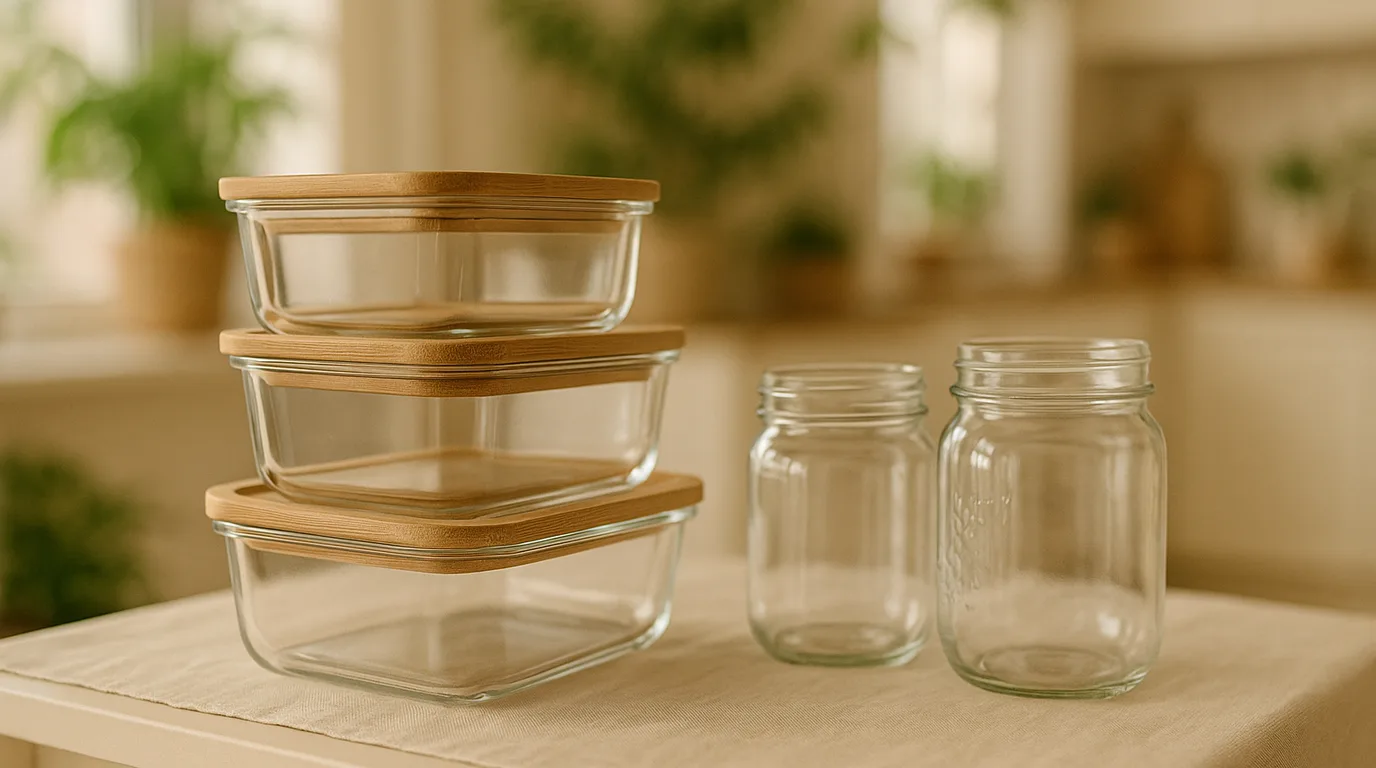
Key Takeaways
- Sous vide's risk profile is “low temp, long time, warm fat”, duration and fat, not extreme heat, are the drivers.
- Food-grade PE and PP (what quality vacuum bags are made of) are the lowest-leaching everyday plastics; PVC and polycarbonate are the ones to avoid.
- Never sous vide in thin storage/sandwich bags or anything not explicitly rated for sustained heat.
- Fatty foods (steak, salmon, butter-poached) extract more than lean foods, fat is a solvent for plastic additives.
- Silicone bags and glass jars remove the PE bag from the equation for many recipes.
Why sous vide raises the question at all
Every driver of plastic migration is about contact: how hot, how long, how fatty, how much surface area. Sous vide is unusual because it maximizes two of those at once, time and warmth. A steak might sit sealed against a plastic wall at 55°C for two hours; a tough brisket for a day or more. That's far longer than boiling pasta or microwaving leftovers. So the instinct that “cooking my food in a bag for hours can't be great” is reasonable, and worth answering properly rather than dismissing.
Why the risk is real but moderate
Two facts pull the other way. First, temperature: the studies that show dramatic microplastic release, boiling water in plastic, microwaving, hot liquids in cups, involve temperatures at or above 100°C. Sous vide almost never gets there. Migration rises with heat, and staying 10–45°C below boiling meaningfully lowers it.
Second, the plastic itself. Purpose-made sous vide and vacuum-seal bags are food-grade polyethylene (PE) and polypropylene (PP). In migration research these are the best-behaved everyday plastics, they contain no BPA, no phthalate plasticizers, and shed less than PVC (cling films, cheap bags) or polycarbonate. The danger scenarios in the literature are usually the wrong plastic, PVC or unknown thin films, not food-grade PE at sous-vide temperatures.
The honest bottom line: sous vide in a proper bag is a moderate, manageable exposure, higher than steaming in glass, much lower than microwaving in plastic or boiling in a cheap bag. The fat content of the food is the variable most people underrate.
Sous vide vessels ranked for plastic exposure
| Vessel | Plastic contact | Verdict |
|---|---|---|
| Glass jar (eggs, custards, oats) | None | Cleanest; limited to jar-friendly foods |
| Reusable silicone bag | Food-grade silicone (very low-leaching) | Best for proteins; reusable, no PE |
| Certified food-grade PE/PP vacuum bag | Low-leaching PE/PP, heat-rated | Fine for regular use; the standard safe choice |
| Zip-top freezer bag (water-displacement) | PE, but not all rated for sustained heat | Only if labeled heat-safe; avoid thin/sandwich bags |
| Cheap/unlabeled or PVC bag | Unknown; PVC can carry plasticizers | Avoid, this is the actual risk case |
How to sous vide with the least plastic
- Use certified food-grade vacuum bags or reusable silicone bags, never thin storage/sandwich bags.
- For eggs, oats, custards, and yogurt, use a glass jar, no bag needed.
- Cook at the lowest effective temperature for your recipe; you rarely need to push high.
- Be extra choosy with fatty foods (salmon, well-marbled steak, butter poaches), fat extracts more, so favor silicone or glass there.
- Don't reuse single-use PE bags, scratched, stressed plastic sheds more.
- Add aromatics and fat after cooking when you can, rather than sealing butter and oil in for the whole cook.
What the MicroPlastics app checks
- Whether your vacuum bags are food-grade PE/PP or an unlabeled/PVC film, from the box.
- A 0–100 risk score for the specific bags, rolls, or silicone bags you use.
- A lower-leaching swap (silicone or heat-rated PE) in the same size.
- Your kitchen's overall cook-in-plastic exposure trend as you swap items.
Use the App
Scan your sous vide bags before the next cook
“Food-grade” on the front doesn't always mean low-leaching. Scan your vacuum rolls or bags with MicroPlastics for a 0–100 score and a silicone or heat-rated swap if yours falls short.
Scan my sous vide bagsRelated: are vacuum sealer bags safe, can you microwave Ziploc bags, and do Ziploc bags release microplastics.
Frequently Asked Questions
Is sous vide bad because it cooks food in plastic?
What are the safest sous vide bags for microplastics?
Does sous vide temperature affect microplastic release?
Can I sous vide in glass or silicone instead of plastic bags?
Sources
- Hussain KA, Romanova S, Okur I, et al. (2023). Assessing the Release of Microplastics and Nanoplastics from Plastic Containers and Reusable Food Pouches. Environmental Science & Technology.
- Fadare OO, Wan B, Guo LH, Zhao L. (2020). Microplastics from consumer plastic food containers: migration under thermal stress. Journal of Hazardous Materials.
- Muncke J, et al. (2020). Impacts of food contact chemicals on human health. Environmental Health.
After install · scan this first
Open the camera and scan your sous vide or vacuum-seal bags.
"Food-grade" on the box doesn't always mean low-leaching. Scan your bags or rolls for a silicone or heat-rated swap in the same size.
Android · early access
Get the launch email the day Android opens.
One email. No spam. We send when the Android app is in the Play Store, and never again unless you opt in.
Related Research
Does Almond Milk Have Microplastics? Brands Ranked by Packaging (2026)
Almost certainly, like all packaged drinks, and the carton vs plastic jug decides how much. Almond Breeze, Silk, and Califia compared by packaging, plus the lowest-plastic way to drink it. No animal-fat baseline is one built-in advantage.
Read moreDoes Fairlife Have Microplastics? The Measured Number Is About Something Else
No microplastic particle count has ever been published for Fairlife. But Consumer Reports measured 20,452 nanograms of total phthalates per serving in Core Power chocolate — the highest of any dairy product tested — wrote to Fairlife in February 2024, and got no reply. Phthalates are chemicals, microplastics are particles, and the difference is the whole story.
Read moreMilk Brands Ranked for Microplastics & Phthalates (2026)
Fairlife, Horizon, Organic Valley, Lactaid, and store brands compared. Packaging drives microplastics; Consumer Reports found phthalates highest in Fairlife Core Power (24,928 ng/serving). How to pick the lowest-plastic milk.
Read moreDoes PUR Gum Have Microplastics? The Gum Base Question (2026)
Probably, because "gum base" is the tell. PUR markets aspartame-free and vegan, but does not disclose a chicle base, and undisclosed gum base is almost always synthetic (plastic). PUR vs Simply Gum vs plastic-free options.
Read moreDo Ninja Coffee Makers Have Microplastics? Every Model, Where the Plastic Touches Hot Water (2026)
Yes, Ninja coffee makers have plastic in the hot-water path, like most drip machines. Which parts touch near-boiling water, how the DualBrew and thermal models compare, and the lower-plastic setup that keeps the machine.
Read moreDoes Trident Gum Have Microplastics? Yes — It's in the Gum Base (2026)
Yes. Trident’s “gum base” is a synthetic petroleum-based plastic, and a 2025 UCLA study found chewing gum sheds 100–600 microplastic particles per gram of saliva. The honest catch: natural gum shed similar amounts.
Read more