Do Energy Drinks Have Microplastics? Prime, Celsius, Red Bull & Monster Ranked (2026)

Last reviewed: by the MicroPlastics Research Desk. Submit a correction or see our editorial standards.
Quick Answer
Got a different brand in the cupboard? Review its packaging inputs and Product Contact Signal, then compare a lower-contact option.
Scan my product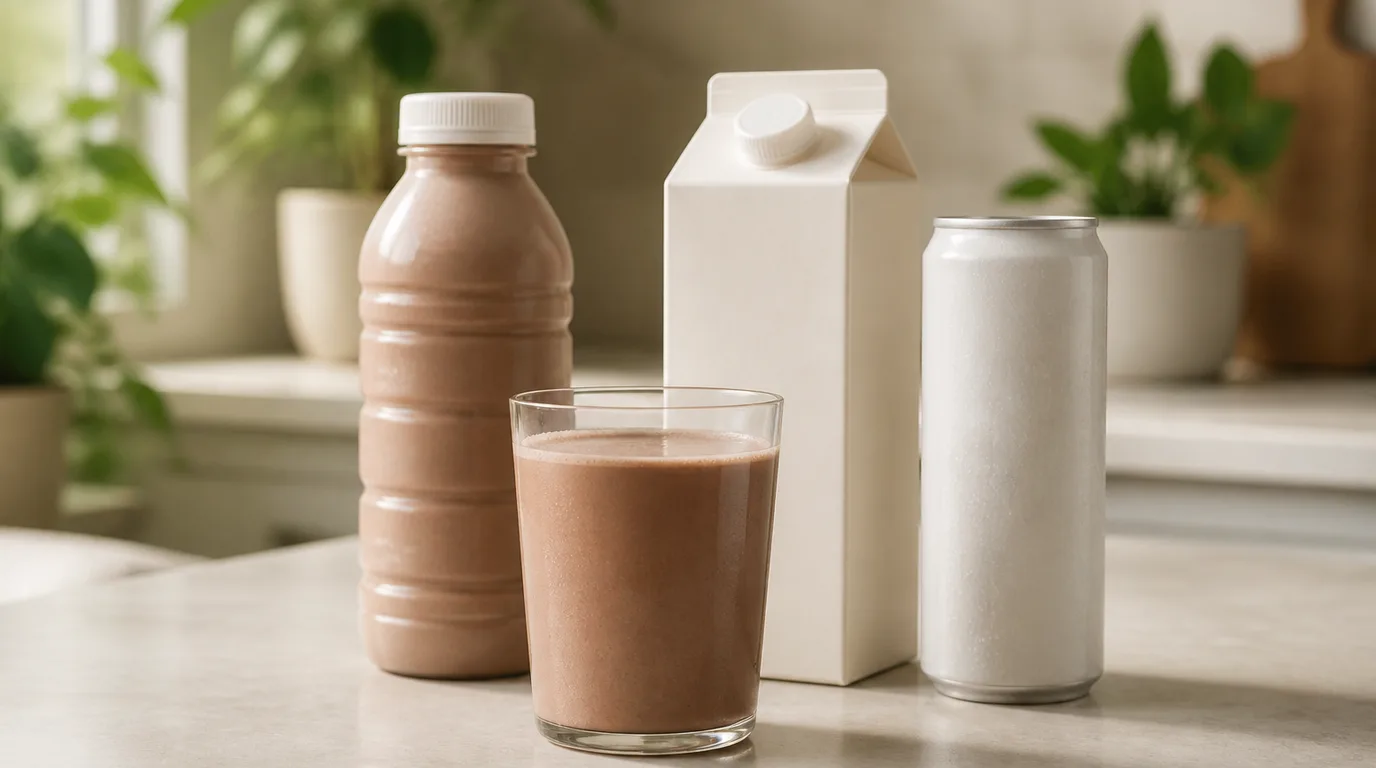
Key Takeaways
- No brand publishes microplastic testing on its drink, claims that a specific energy drink is “microplastic-free” are unverified.
- Aluminum cans (Celsius, Red Bull, Monster) don't shed microplastics from the metal, but have an epoxy/acrylic liner, a bisphenol question, not a particle one.
- Prime Hydration's PET bottle is the real microplastic shedder in this category, and shedding rises with heat and agitation.
- Plastic-bottled sports/hydration drinks (Gatorade, Powerade, Prime) sit with Prime on the shedding axis.
- Lowest-plastic caffeine: coffee or tea brewed yourself in glass or steel; among ready-to-drink, a can beats a plastic bottle.
The short answer: it's the container, not the caffeine
Energy drinks are water, caffeine, sweeteners, and flavorings, none of which is a microplastic source on its own. What separates one can or bottle from another is what the liquid sits against. And in this category there are really two packaging worlds: aluminum cans (most of the market) and PET plastic bottles (Prime Hydration and the sports-drink crossover). They have completely different microplastic profiles, so “do energy drinks have microplastics” has two different answers depending on which one you grabbed.
Cans: the liner question, not the microplastic question
Celsius, Red Bull, Monster, Bang, and Reign all ship in aluminum cans. The aluminum itself sheds no microplastics. But aluminum can't touch acidic, carbonated drink directly, so every can has a thin internal epoxy or acrylic liner. That liner is a food-contact polymer, and the concern it raises is bisphenols (BPA and replacements like BPS) migrating into the drink, not microplastic particles shedding the way a plastic bottle does. It's a real food-contact-chemical question, but a different one, and generally a lower microplastic-particle load than a plastic bottle. See are cans lined with plastic for the full liner breakdown.
Prime Hydration and plastic bottles: the real shedders
Prime Hydration (the blue-cap sports drink, distinct from Prime Energy cans) comes in a PET plastic bottle. Plastic bottles are the packaging most clearly shown to release micro- and nanoplastics into their contents, and that release rises with heat, sunlight, time, and agitation, exactly the conditions a bottle sees in a gym bag, a car, or a backpack. Prime has drawn separate scrutiny over the years (caffeine levels in Prime Energy, and a 2023 lawsuit alleging PFAS in Prime Hydration); microplastics from the bottle are a distinct issue from those, and they apply to any PET-bottled drink, Gatorade and Powerade included.
Energy & hydration drinks ranked for microplastics
| Drink | Packaging | Main plastic/liner driver | Verdict |
|---|---|---|---|
| Red Bull / Monster / Celsius / Bang | Aluminum can | Epoxy/acrylic liner (bisphenols) | Lower particle shedding; liner is the open question |
| Prime Energy | Aluminum can | Can liner | Same can profile as the others |
| Prime Hydration | PET plastic bottle | Bottle shedding (heat/agitation) | Highest microplastic shedder here; keep cold |
| Gatorade / Powerade | PET plastic bottle | Bottle shedding | Same bottle issue as Prime Hydration |
| Coffee / tea you brew | Glass or steel (your call) | Minimal (your prep) | Lowest-plastic caffeine overall |
The pattern is the same one that shows up across every drink category: there is no clean winner among ready-to-drink options, only a can (liner question) vs bottle (shedding question) trade, and the real upgrade is brewing your own caffeine in glass or steel.
How to cut the plastic from your energy drink
- Pick the can over the bottle when you have the choice, it moves you off the biggest microplastic-shedding surface.
- Keep bottles cold and drink them fresh, heat and time are the multipliers for PET shedding. Never leave a bottle in a hot car.
- Don't refill or reuse single-use PET bottles, stressed, scratched plastic sheds more.
- Pour into a glass over ice rather than drinking hot-day-warm straight from a bottle that's been sitting out.
- For a daily habit, brewing coffee or tea yourself in glass or steel is the lowest-plastic caffeine by a wide margin.
What the MicroPlastics app checks
- The packaging of your drink (aluminum can vs PET bottle) from the label.
- A 0–100 risk score that weighs packaging, format, and additives together.
- A lower-plastic swap, usually the canned version, or a brew-your-own option.
- Your running drink-product profile so you can compare what you actually buy over a summer.
Use the App
Scan your go-to energy drink
Can or bottle changes the plastic story more than the brand does. Scan yours with MicroPlastics for a 0–100 score and the lowest-plastic way to get the same caffeine.
Scan my energy drinkRelated: best electrolyte powders without microplastics, microplastics in soda, and does Fairlife have microplastics.
Frequently Asked Questions
Do energy drinks have microplastics?
Does Prime have microplastics?
Does Celsius have microplastics?
Are canned or bottled energy drinks better for microplastics?
What is the lowest-microplastic way to get caffeine?
Sources
- Qian N, Gao X, Lang X, et al. (2024). Rapid single-particle chemical imaging of nanoplastics by SRS microscopy (bottled beverages). Proceedings of the National Academy of Sciences (PNAS).
- Winkler A, Santo N, Ortenzi MA, et al. (2022). Does mechanical stress cause microplastic release from plastic bottles?. Water Research.
- European Food Safety Authority (2024). Re-evaluation of the risks to public health related to bisphenol A (BPA) in food contact materials. EFSA Journal.
After install · scan this first
Open the camera and scan your energy drink.
Can or plastic bottle changes the plastic story more than the brand does. Scan yours to see which it is and the lowest-plastic way to get the same caffeine.
Android · early access
Get the launch email the day Android opens.
One email. No spam. We send when the Android app is in the Play Store, and never again unless you opt in.
Related Research
Does Sous Vide Cook Food in Plastic? Microplastics in Sous Vide, Explained (2026)
Yes, sous vide seals food in plastic for hours in warm water, so migration is a fair worry. But it runs below boiling and proper bags are food-grade polyethylene, the lowest-leaching plastic. The real mistakes, and the silicone/glass alternatives.
Read moreDoes Almond Milk Have Microplastics? Brands Ranked by Packaging (2026)
Almost certainly, like all packaged drinks, and the carton vs plastic jug decides how much. Almond Breeze, Silk, and Califia compared by packaging, plus the lowest-plastic way to drink it. No animal-fat baseline is one built-in advantage.
Read moreDoes Fairlife Have Microplastics? The Measured Number Is About Something Else
No microplastic particle count has ever been published for Fairlife. But Consumer Reports measured 20,452 nanograms of total phthalates per serving in Core Power chocolate — the highest of any dairy product tested — wrote to Fairlife in February 2024, and got no reply. Phthalates are chemicals, microplastics are particles, and the difference is the whole story.
Read moreMilk Brands Ranked for Microplastics & Phthalates (2026)
Fairlife, Horizon, Organic Valley, Lactaid, and store brands compared. Packaging drives microplastics; Consumer Reports found phthalates highest in Fairlife Core Power (24,928 ng/serving). How to pick the lowest-plastic milk.
Read moreDoes PUR Gum Have Microplastics? The Gum Base Question (2026)
Probably, because "gum base" is the tell. PUR markets aspartame-free and vegan, but does not disclose a chicle base, and undisclosed gum base is almost always synthetic (plastic). PUR vs Simply Gum vs plastic-free options.
Read moreDo Ninja Coffee Makers Have Microplastics? Every Model, Where the Plastic Touches Hot Water (2026)
Yes, Ninja coffee makers have plastic in the hot-water path, like most drip machines. Which parts touch near-boiling water, how the DualBrew and thermal models compare, and the lower-plastic setup that keeps the machine.
Read more