Microplastics in Coffee by Brewing Method: 2026 Ranking
Last reviewed: by the MicroPlastics Research Desk. Submit a correction or see our editorial standards.
Quick Answer
Got a different brand in the cupboard? Review its packaging inputs and Product Contact Signal, then compare a lower-contact option.
Scan my product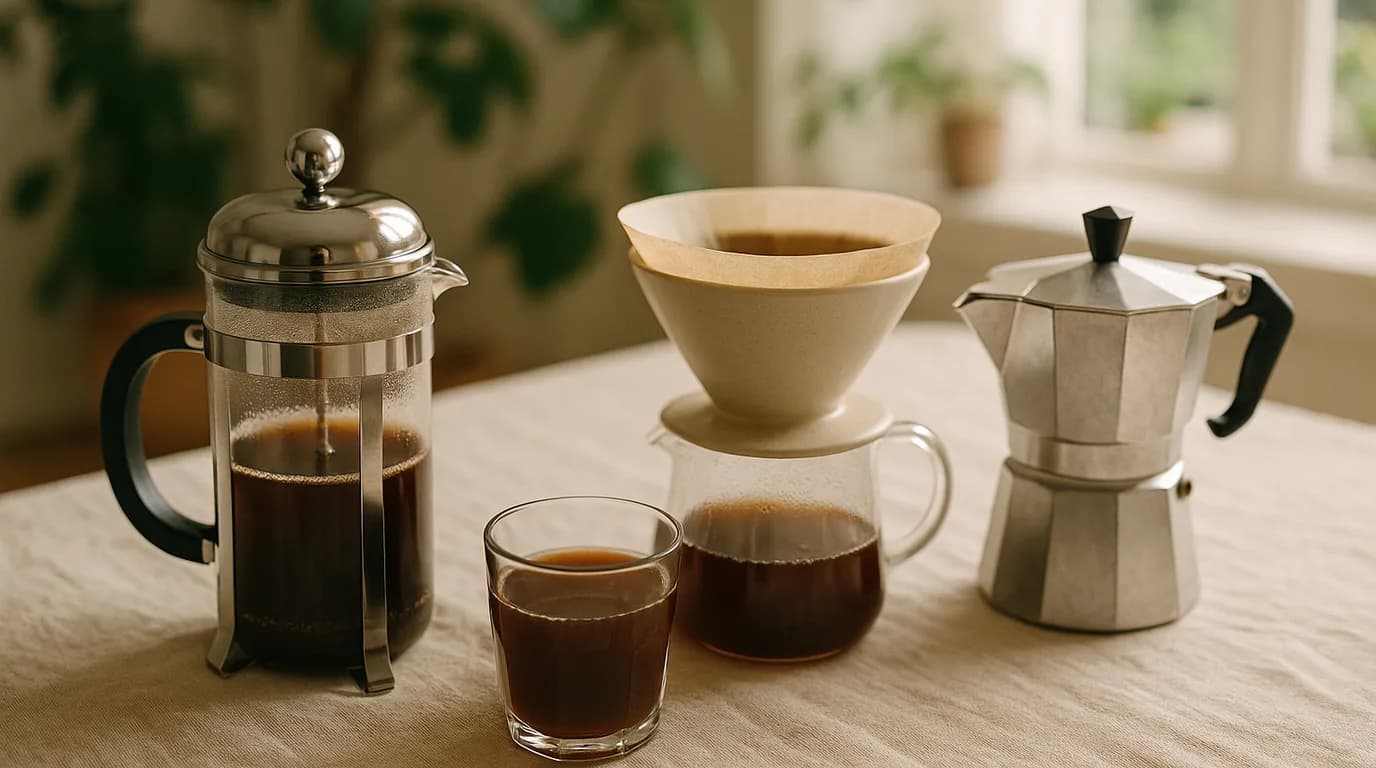
Key Takeaways
- No study has counted nanoplastics from K-Cups. The only direct count of capsule coffee found 7–17 synthetic microplastics (10 µm and up) per cup (Al-Mansoori et al. 2025); the “16 billion” figure comes from plastic tea bags.
- Paper-filter pour-over and stovetop moka pot are among the lowest-shedding methods when paired with a glass or stainless carafe.
- French press with a stainless mesh and glass carafe is excellent; plastic-handled French presses can add small particle loads.
- The cup matters as much as the brew method, a paper to-go cup adds ~25,000 microplastic particles per 15-minute drink.
- Reusable stainless-steel pods take the plastic pod wall out of the hot-water path, though the machine's own plastic parts remain.
Coffee brewing, particle release by method
- synthetic microplastics per cup of capsule coffee
- 7–17
- particles 10 µm and larger, three home machines; the oldest (8 years, PET water tank) released the most
- Al-Mansoori, Harrad & Abdallah 2025, Science of the Total Environment
- particles from a paper to-go cup
- ~25,000
- over 15 minutes from the polyethylene inner liner
- Ranjan et al. 2021 (J. Hazard. Materials)
- particles from a stainless / glass cup
- <100
- background level, essentially zero polymer contact
- Material comparison estimate
- tied for cleanest brew
- 4 methods
- stovetop moka, commercial espresso, French press (glass+steel), pour-over with paper filter
- Our method comparison: least plastic in the hot-water path
The ranking
| Brewing method | Hot-water plastic contact | Typical release / cup | Verdict |
|---|---|---|---|
| Stovetop moka pot (aluminium/steel) | None | Negligible | Cleanest. Glass cup recommended. |
| Espresso machine (commercial, all-metal) | Minimal (seals) | Very low | Excellent if not served in paper cup. |
| Pour-over with paper filter (Hario V60 etc.) | Filter holder material varies | Very low if using ceramic/glass dripper | Cleanest manual method. |
| French press (glass + stainless mesh) | Minimal | Very low | Excellent if no plastic in lid/handle. |
| Drip coffee maker (glass carafe, paper filter) | Reservoir, tubes | Low to moderate | Acceptable; check inner parts for plastic. |
| AeroPress | Plastic body (PP) | Moderate | Glass alternatives exist (Prismo, Fellow Aiden). |
| Drip coffee in paper cup with plastic lid | Cup liner + lid | ~25,000+ particles from cup alone | Avoid the cup; use ceramic. |
| Reusable steel pod (for Nespresso/Keurig) | Machine internals | Low to moderate | Removes the plastic pod wall from the hot path. |
| Plastic pod (Keurig K-Cup) | Pod wall and filter at brewing temperature | Nanoplastics unmeasured; 7–17 microplastics per cup in one study, machine-dependent | Most plastic in the hot path. Switch to refillable steel pods or another method. |
Why brewing temperature, pressure, and acidity all matter
Coffee brewing is the worst-case scenario for plastic-water contact in nearly every kitchen, because four migration accelerants run at the same time:
- Temperature. 88–96°C is the brewing range for every common method except cold brew. This is well above the glass transition for additives in food-grade plastics and the temperature where polymer chains become mobile enough to release plasticisers and oligomers.
- Pressure. Espresso brews at 9 bar, Keurig at ~2 bar, AeroPress at ~1 bar from hand force, moka pot at ~1.5 bar from steam. Pressure forces water into surface micro-fissures in any plastic in the brew path.
- Acidity. Brewed coffee sits at pH ~4.85–5.10. Acidic conditions speed up migration of antimony, BPA-class plasticisers, and ester additives from polymers more than neutral water does.
- Contact time. Espresso (~25–30 s) is brief; AeroPress (~1 min) and drip coffee (~5–6 min) are longer; cold brew (12+ hours) is extreme, even at room temperature the extended contact matters if the steeping vessel is plastic.
Why plastic pods are the worst
The case against plastic pods starts with mechanics: water at 90–96°C is forced under pressure through a polypropylene cup and filter, the exact combination of heat and plastic contact that drives release elsewhere. What has actually been measured is more modest than the headlines. No study has counted nanoplastics from K-Cups. The figure you will see everywhere, “16 billion particles per cup”, comes from a 2019 McGill study of plastic tea bags, which measured about 11.6 billion microplastics and 3.1 billion nanoplastics from one nylon or PET bag steeped at 95°C. It was not measuring coffee.
The one direct count of capsule coffee, a 2025 University of Birmingham study, found 7 to 17 synthetic microplastics per cup (particles 10 µm and larger) across three home machines. The oldest machine, eight years old with a PET water tank, released the most, which the authors put down to wear on the machine's own plastic. Smaller particles were not counted, so the true number is likely higher, but nobody has measured how much higher. Steel refillable pods remove the pod wall from that path; the machine's tank and tubing stay.
See our deep dives: the question-form do K-Cups release microplastics?, the brand-by-brand coffee pod ranking, and the head-to-head Nespresso Vertuo vs Original.
Drip coffee makers, the hidden plastic in the brew path
Standard drip coffee makers (Mr. Coffee, Cuisinart, Hamilton Beach, Black+Decker) are an under-appreciated plastic-water source. Even with a glass carafe and paper filter, the brew path typically includes:
- Plastic water reservoir. Usually polypropylene or styrene blend. Sits at room temperature; warms during brewing.
- Plastic shower head / spray arm. The piece that disperses hot water over the grounds. Direct hot-water contact for the duration of every brew cycle.
- Plastic internal tubing. Silicone or PTFE between the heating element and the shower head.
- Plastic basket. Holds the paper filter and grounds. Hot water passes through it on the way to the carafe.
Premium drip machines (Technivorm Moccamaster, Bonavita Connoisseur, Wilfa Svart, OXO Brew) replace most of these with stainless steel and copper. The Moccamaster brew path is nearly all metal, with silicone only at the seals, the lowest-plastic drip option on the market for under $400. The best plastic-free coffee makers guide ranks the rest of the field on the same test: what touches the water once it is hot.
If you keep an existing drip machine, the highest-impact upgrade is a glass or stainless carafe replacement (some carafes are plastic- lined) plus regular descaling, scale accelerates polymer surface degradation in any internal plastic.
Cold brew, no heat, but extended contact still matters
Cold brew is often assumed to be plastic-safe because there's no heat. The temperature is right, room-temperature steeping massively reduces migration vs hot brewing. But the 12–24 hour contact time means a plastic steeping vessel still adds measurable load over the brew. The acidic coffee + extended PP contact yields more dissolved migration than a sub-minute hot espresso shot.
Cleaner setups:
- Glass cold-brew pitchers (Hario Mizudashi, Bodum Bean, OXO Compact Cold Brew with glass version): borosilicate glass body, stainless mesh filter, zero plastic contact during the 12-hour steep.
- Stainless-steel cold-brew brewers (Toddy stainless, Coffee Gator): all-metal vessel + paper or stainless mesh filter.
- Mason jar + nut milk bag: the DIY zero-plastic option.
AeroPress, the plastic body question
The standard AeroPress is polypropylene (#5), the most heat-stable common food-contact plastic. Brew contact time is short (~30 s plunge), the press isn't sealed against pressure for long, and the plunger is rubber-sealed. Microplastic release is meaningfully lower than a sealed plastic pod brewed under pressure for 20–30 seconds, but it's not zero.
AeroPress alternatives for the buyer who wants minimal plastic contact:
- Fellow Aiden brewer, stainless steel body with silicone seals.
- Prismo or Fellow Prismo. AeroPress-compatible attachment that doesn't change the body but lets you make pressurised espresso-style shots.
- Replace the standard plastic filter cap with the stainless-steel reusable disk, eliminates paper but more importantly catches grounds in a metal mesh, not a plastic-screen-then-paper sandwich.
Instant coffee and coffee creamers
Instant coffee skips the brewing step entirely, you add hot water to coffee powder. The contact time is brief, the water is hot, the polymer surface that matters is whatever container you mix in. If you mix instant coffee in a ceramic mug, the coffee itself contains very little brewing-related microplastic. The packaging matters more, sachets are often multi-layer plastic + foil; tins (Nescafé Gold) are aluminum + thin polymer liner.
Coffee creamers and barista syrups are a separate concern. Plastic creamer bottles (Coffee Mate, International Delight) sit on the shelf at room temperature, so room-temperature migration is the issue, not heat. Glass-bottled creamers and refrigerated dairy cream in cardboard cartons are cleaner alternatives.
Coffee bean storage and grinder choice
Most coffee bags are multi-layer plastic + foil + valve. Bean contact with the inside of the bag at room temperature is low- migration; the issue is transferring beans to a plastic storage canister or grinder hopper for ongoing use.
- Cleaner storage: Airscape stainless-steel canister, Fellow Atmos glass canister, mason jar + vacuum-seal lid.
- Cleaner grinder hoppers: Fellow Ode (steel hopper), Baratza Sette (plastic hopper but with grind-on-demand option). Most home grinders have plastic hoppers that beans sit in for days, switch to grind-on-demand if you can, or transfer beans to glass.
- Burr grinder vs blade grinder: grind quality aside, burr grinders typically have steel or ceramic burrs (the milling surface), while blade grinders have plastic chambers. Burr is cleaner for both reasons.
Why the cup is as important as the brew
Even a clean brewing method ends up plastic-contaminated if served in a polyethylene-lined paper cup. The 2022 IIT Kharagpur study found a single paper cup at 85–90°C releases approximately 25,000 microplastic particles into the drink over 15 minutes. The lid (polystyrene or polypropylene) adds more, especially when hot steam recondenses on its underside and drips back in.
See our full article on microplastics in paper cups.
Putting it all together: the cleanest cup of coffee
- Brew with metal or glass that contacts the hot water.Moka pot, French press (glass body + steel mesh), pour-over with ceramic or glass dripper.
- Use a paper or stainless-mesh filter. Paper is fine because it contains the grounds but does not heat-leach itself.
- Skip plastic pods. If you love pod coffee, buy a stainless-steel refillable pod that fits your machine.
- Drink from ceramic, glass, or stainless steel. Never the paper to-go cup.
- Let it cool slightly before drinking. Leaching from any remaining plastic drops sharply below 60°C.
- Filter your water with at least a carbon block, coffee is mostly water, so your water's baseline microplastic load is the coffee's baseline. See our water filter guide.
For everything else about coffee and plastics, see the parent article: microplastics in coffee.
What the MicroPlastics app checks
- Packaging material. PET, HDPE, PP, PS, multi-layer, glass, aluminum.
- Container condition from the photo, scratches, dents, fade.
- Product category, fresh, packaged, canned, frozen, takeout.
- Use-context flags you log, microwave, heat, reuse, time stored.
- Cited research behind the 0–100 risk score.
Use the App
Use the app as a grocery-store second opinion
Scan the product, check the packaging score, compare alternatives. The MicroPlastics app weighs material, condition, brand, and the cited research.
Scan groceries in the appFrequently Asked Questions
Which coffee brewing method has the fewest microplastics?
Are Keurig K-Cups bad for you?
Does French press release microplastics?
Is AeroPress plastic safe?
How much plastic do you drink from a paper coffee cup?
What is the best mug material for hot coffee?
Does cold brew release microplastics?
Are drip coffee makers safe?
Is instant coffee plastic-free?
Are plastic coffee bean storage canisters safe?
Sources
- Al-Mansoori M, Harrad S, Abdallah MAE (2025). Synthetic microplastics in hot and cold beverages from the UK market: comprehensive assessment of human exposure via total beverage intake. Science of the Total Environment.
- Hernandez LM, Xu EG, Larsson HCE, Tahara R, Maisuria VB, Tufenkji N (2019). Plastic teabags release billions of microparticles and nanoparticles into tea (the origin of the “billions per cup” figure). Environmental Science & Technology.
- Ranjan VP, Joseph A, Goel S (2021). Microplastics and other harmful substances released from disposable paper cups into hot water. Journal of Hazardous Materials.
- Hussain KA, Romanova S, Okur I, et al. (2023). Assessing the release of microplastics from plastic containers and reusable food pouches. Environmental Science & Technology.
- European Food Safety Authority (2024). Re-evaluation of bisphenol A (BPA) in food contact materials. EFSA Journal.
After install · scan this first
Open the camera and scan whatever coffee you brewed this morning.
The article ranks methods; the app ranks YOUR cup, including the filter, the kettle, and the cup itself.
Android · early access
Get the launch email the day Android opens.
One email. No spam. We send when the Android app is in the Play Store, and never again unless you opt in.
Related Research
Microplastics in Canned Food: Linings, BPA & What Leaches (2026)
Every food can has a plastic-polymer inner lining: usually BPA-based epoxy or modern BPA-NI replacements: that leaches into the food. Acidic and hot-packed contents are worst affected. The 2026 evidence and lower-plastic-contact packaging alternatives.
Read moreMicroplastics in Rice: Is the World’s Most Popular Grain Contaminated?
Instant rice contains up to 13 million microplastic particles per serving: 4x more than raw rice. Discover which types of rice are safest.
Read moreMicroplastics in Tea Bags: Plastic-Free Guide
Pyramid mesh bags are nylon or PET; most paper bags use a polypropylene seal. Brand-by-brand cheat sheet and the lowest-contact loose-leaf and paper-only swaps.
Read moreMicroplastics in Coffee: What’s Really in Your Morning Cup?
What has actually been measured in a cup of coffee: about 16 microplastics per coffee-shop cup and 7 to 17 per capsule coffee, far below the viral numbers. It is the contact surface, not the bean. Brewing methods ranked.
Read moreMicroplastics in Seafood: Which Fish Are Safest to Eat?
A 2026 synthesis found effects in 95.2% of seafood specimens tested, yet seafood is still not your largest dietary source of particles. Which fish are lowest-contact.
Read moreMicroplastics in Salt: Should You Switch Brands?
Sea salt contains up to 600 microplastic particles per kilogram. Why that high concentration still adds up to a small share of your daily intake, and the cheapest swap.
Read more