Do Coffee Filters Have Microplastics? Paper vs Plastic vs Mesh (2026)
Last reviewed: by the MicroPlastics Research Desk. Submit a correction or see our editorial standards.
Quick Answer
Got a different brand in the cupboard? Review its packaging inputs and Product Contact Signal, then compare a lower-contact option.
Scan my product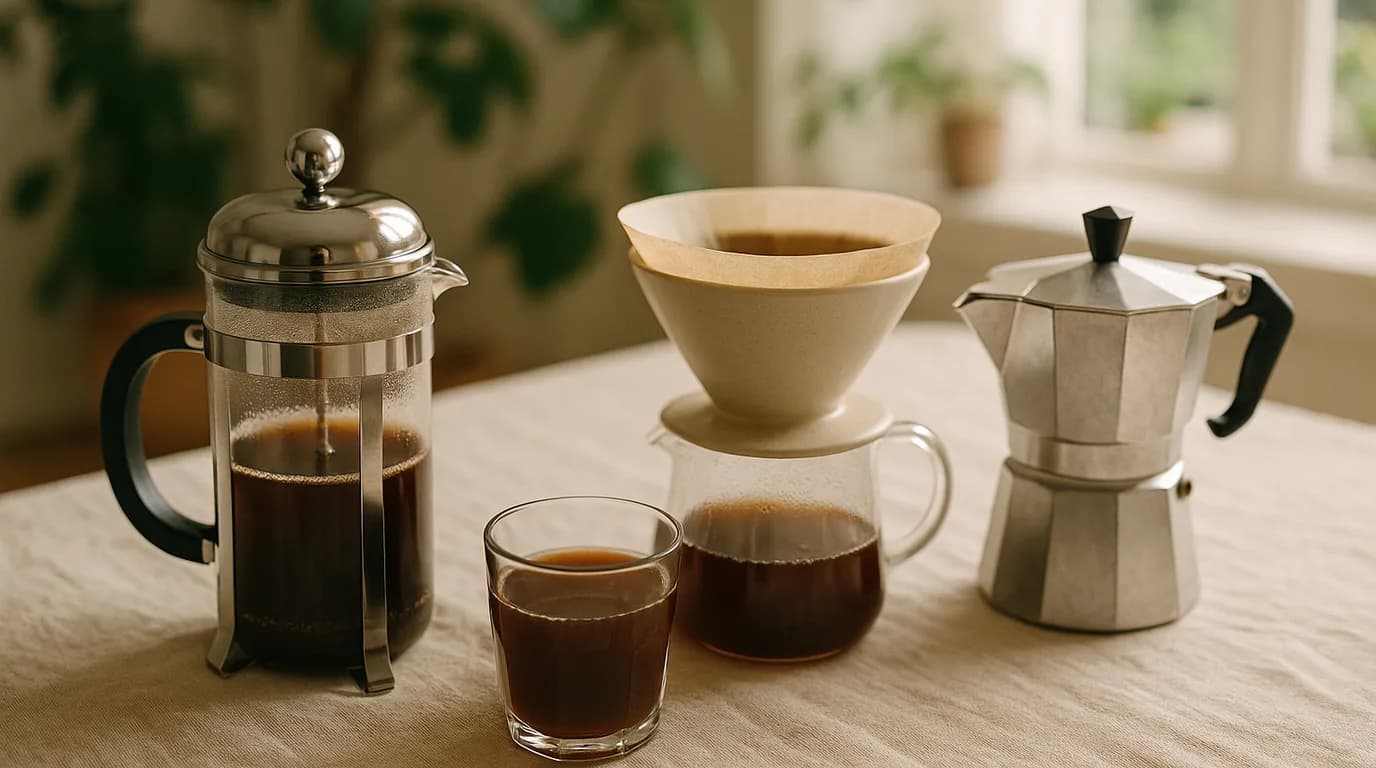
Key Takeaways
- A plain paper coffee filter is ~cellulose (tree fiber) and does not meaningfully shed microplastics into your brew.
- Nylon mesh “reusable” filters are plastic steeping in ~90–96°C water — the highest-shed option in this category.
- Most drip machines and pour-over cones are plastic in the hot-water path; that dripper, not the paper, is the real contact point.
- Unbleached filters are closer to 100% cellulose; some bleached or specialty filters add a thin plastic glue, coating, or heat-sealed seam.
- Cleanest setup: unbleached paper in a steel, glass, or ceramic dripper. Cloth (cotton) filters are also plastic-free.
- See best plastic-free coffee makers and microplastics in coffee by brewing method.
Coffee filters & microplastics — the facts
- what paper filters are made of
- Cellulose
- tree fiber — low microplastic risk on its own
- Paper filter composition
- reusable mesh filter material
- Nylon
- a plastic; the highest-shed filter option in hot water
- Reusable filter materials
- most drippers & brew baskets
- Plastic
- the hot-water contact point that actually matters
- Coffee maker construction
- closest to 100% cellulose
- Unbleached
- fewer additives than some bleached or coated filters
- Filter manufacturing
Do paper coffee filters release microplastics?
Not meaningfully. A standard paper coffee filter — Melitta, Chemex, generic cone or basket — is made from cellulose fiber derived from wood. Cellulose is not a plastic, so the filter paper itself is one of the lower-risk parts of your morning coffee. The nuance is in the details: some filters use a small amount of polypropylene glue or a heat-sealed plastic seam to hold their shape, and a few specialty filters add synthetic fibers or coatings for wet-strength. Those are minor contributors, and choosing an unbleached filter (closer to 100% cellulose) sidesteps most of them.
The real plastic is the dripper, not the paper
If you are worried about microplastics in your coffee, the paper is the wrong thing to focus on. The genuine hot-plastic contact comes from the hardware:
- Plastic pour-over cones and drippers. Near-boiling water passes directly over the plastic on its way through the paper.
- Plastic brew baskets, tanks, and tubing inside most automatic drip machines — covered in our plastic-free coffee makers guide.
- Nylon mesh “reusable” filters — these are plastic, and they sit steeping in the hottest water of the whole process. Of all filter choices, this is the one to avoid.
The cleanest filter setup
| Filter | Material | Microplastic risk |
|---|---|---|
| Unbleached paper + steel/glass/ceramic dripper | Cellulose + inert dripper | Lowest |
| Cloth / cotton reusable filter | Cotton | Very low (plastic-free) |
| Bleached paper in a plastic cone | Cellulose + plastic dripper | Low paper, plastic dripper contact |
| Metal mesh (permanent) filter | Stainless steel | None from the filter (more sediment) |
| Nylon mesh reusable filter | Nylon (plastic) | Highest — plastic in hot water |
For the broader picture, see microplastics in coffee by brewing method, microplastics in espresso machines, and do K-Cups release microplastics.
Use the App
Sort the real coffee-plastic sources from the myths
Scan your coffee maker, pods, and to-go cups with the MicroPlastics app to see which parts of your coffee ritual actually add plastic — and the swaps that cut it.
Get the MicroPlastics appFrequently Asked Questions
Do paper coffee filters contain plastic?
Are reusable nylon coffee filters safe from microplastics?
Bleached or unbleached coffee filters for microplastics?
What is the lowest-microplastic way to brew coffee?
Sources
- Li Y, et al. (2020). Microplastic release from the degradation of polypropylene during hot-water contact. Nature Food.
- World Health Organization (2022). Dietary and inhalation exposure to nano- and microplastic particles. WHO.
- Ranjan VP, et al. (2021). Microplastics and other harmful substances released from disposable paper cups. Journal of Hazardous Materials.
Audit your whole pantry, not just the 5 foods in this article
The app keeps a running scan history for every packaged food you own, every brand swap you make, and every reformulation a brand quietly pushes. The article is a snapshot. The app is the trend line.
Download on the App Store- Free on iOS
- 3 free scans
- No sign-up
- Result in seconds
“Really cool to scan stuff around the kitchen and see what's actually in it. The swaps it suggests are realistic.” App Store review · 5.0★
Android · early access
Get the launch email the day Android opens.
One email. No spam. We send when the Android app is in the Play Store, and never again unless you opt in.
Related Research
Microplastics in Coffee Creamer: It's the Packaging, Not the Cream (2026)
No study measures microplastics in creamer itself, the exposure is packaging. Single-serve cups (polystyrene) topped with hot coffee are the worst, PET bottles next. The lower-plastic-contact comparisons, ranked.
Read moreDo Keurig Coffee Makers Have Microplastics? The Honest Answer (2026)
Yes, but far less than the internet claims. A Keurig heats water through a polypropylene pod and its own plastic reservoir and tubing. The one study that measured capsule-brewed coffee found about ten microplastic particles per mug, not the billions spread online. The honest evidence, the machine vs the pod, and the swaps that actually cut it.
Read moreAre Cans Lined With Plastic? What’s Actually Inside Your Food, Beer & Tuna Cans (2026)
Yes: essentially every metal food and beverage can has a polymer lining, because bare metal corrodes and makes food taste metallic. The question is which polymer. Most US food cans have moved off BPA epoxy to acrylic, polyester, non-BPA epoxy or oleoresin. What each one is, where it is used, and what the evidence actually shows.
Read moreStyrofoam Takeout Containers Release 148× More Microplastics Than Plastic Ones (2026)
Under hot water, expanded polystyrene foam released 2.82 million microplastic particles per litre: roughly 148× more than polypropylene (Hu et al. 2023). The reason: polystyrene’s glass transition sits at about 100°C, the exact temperature of the soup you just poured in. Container types ranked, with the one swap that matters.
Read moreBest Plastic-Free Coffee Makers 2026: Drip, Pour-Over and Press Ranked
Chemex, steel presses and ceramic pour-over put no plastic in the hot-water path. Two drip machines now claim the same, Simply Good and Caraway’s new brewer, and we checked what each discloses. Every setup ranked by hot-plastic contact.
Read moreAre Red Solo Cups Safe? Microplastics in Party Cups, Plates & Coolers: July 4th Guide (2026)
Red Solo cups are #6 polystyrene: one of the plastics most prone to shedding micro- and nanoplastics, and alcohol increases leaching. Party cups, paper plates, plastic cutlery, and foam coolers ranked by microplastic risk, plus realistic lower-plastic-contact comparisons for a July 4th cookout.
Read more