Microplastics in Iced Coffee: Starbucks, Dunkin, McDonald's, Peet's Ranked (Summer 2026)

Last reviewed: by the MicroPlastics Research Desk. Submit a correction or see our editorial standards.
Quick Answer
Got a different brand in the cupboard? Review its packaging inputs and Product Contact Signal, then compare a lower-contact option.
Scan my product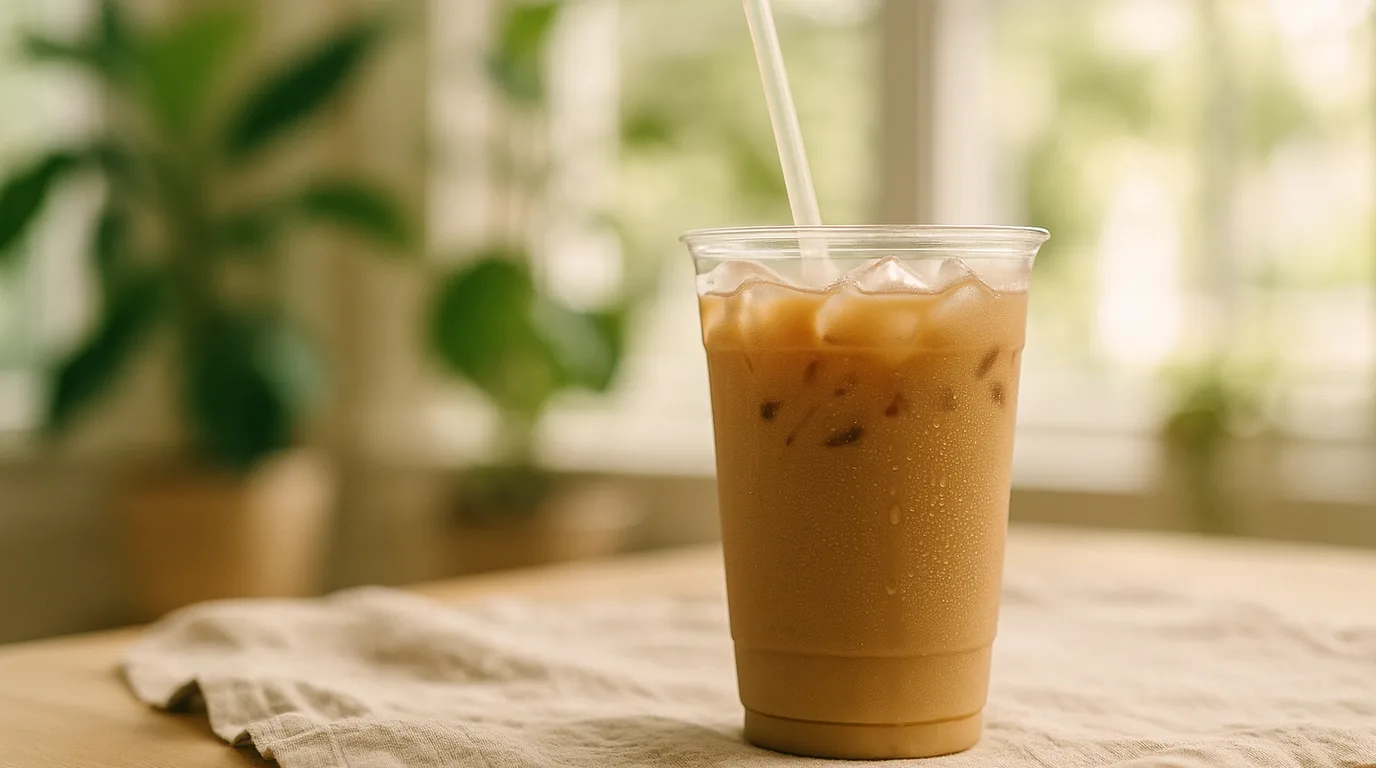
Key Takeaways
- Every major US chain serves iced coffee in a #5 polypropylene plastic cup. The cup body, lid, and straw are all PP.
- The 20-45 minute ice-melting hold time is 3-5× longer than a hot drink, but measured iced coffee still carried fewer synthetic microplastics than hot coffee from the same shop (11 vs 16 per cup; Al-Mansoori et al. 2025).
- Acidic coffee (pH ~5) + dairy fat (cream / oat milk) + outdoor summer heat all compound PP migration vs the baseline.
- Cleanest in-store options: Tim Hortons (smallest plastic cup in US), Peet's glass-bottled iced espresso shots, McDonald's small iced coffee (smallest McDonald's cup).
- Highest-impact swap: bring your own stainless steel insulated tumbler. Most US chains accept reusable cups for iced drinks when you ask the barista to make it directly into your tumbler.
Is iced coffee worse than hot coffee?
Most coffee microplastic research has focused on hot beverages because that's where the obvious chemistry is, hot water accelerates polymer migration from paper-cup liners (Ranjan 2021), K-Cup polypropylene, and other contact surfaces. Iced coffee gets less research attention. The one study that measured both found hot coffee higher (16 vs 11 synthetic microplastics per cup from the same shop), but iced drinks have their own contact factors, and they decide which iced drinks are better or worse:
- Contact time multiplies 3-5×. A 16oz hot drink is finished in 5-10 minutes. A 16oz iced coffee with ice typically takes 20-45 minutes to drink, and the ice keeps melting throughout, continuously diluting and re-circulating coffee against the cup walls.
- The cup is full plastic, not paper. Iced coffee cups are clear #5 polypropylene from rim to bottom. Hot cups are paper with a thin PE inner liner. Per square inch of plastic-water contact, iced cups expose more polymer surface than hot cups.
- Dairy fat acts as an extraction solvent. Cream, half-and-half, oat milk, and especially the syrup-and-cream Frappuccino-style drinks contain fat that pulls plasticisers and oligomers out of polypropylene more aggressively than plain coffee.
- Summer outdoor temperature compounds. Drinking iced coffee at the beach, in the car cup holder, or on a hot patio means the OUTSIDE of the cup is at 85°F+ while the inside is melting. The PP wall is held at an elevated temperature throughout the hold.
- The straw is direct mouth-to-plastic contact. The PP straw is in the drink for the entire hold time AND every sip pulls plastic-contact liquid past your tongue.
Hussain et al. (2023) showed polypropylene food containers release more with longer contact and warmth, so these factors are real. The direct measurements still put iced coffee below hot, which is why this guide ranks iced drinks against each other rather than against hot coffee.
Major US iced coffee chains compared
| Rank (cleanest first) | Chain / typical drink | Cup construction | Standard size (oz) | Note |
|---|---|---|---|---|
| 1 | Espresso drink in a ceramic mug + ice cubes, dine-in | Ceramic + glass | 8-12oz | Cleanest possible iced coffee. Order hot espresso in a ceramic mug, ask for ice on the side, mix. |
| 2 | Peet's glass-bottled iced espresso (grocery) | Glass bottle + metal lid | 8oz | Premium glass-bottled cold brew when available. Check the lid is metal not plastic. |
| 3 | Any chain, your own stainless tumbler | Stainless steel insulated | 16-32oz | Single biggest in-chain swap. Bring Stanley Quencher / Yeti Rambler / Hydroflask. Ask barista to pour directly. |
| 4 | Tim Hortons Iced Coffee (small) | PP cold cup | 10oz (small) | Smallest standard iced coffee in the major-chain US market. Less plastic per drink. |
| 5 | McDonald's Small Iced Coffee | PP cold cup | 12oz | McDonald's small is genuinely small. Avoid medium/large, same chemistry but more PP surface. |
| 6 | Peet's Iced Latte | PP cold cup | 12-16oz | Peet's uses the standard major-chain PP cup. Order in the smallest size that satisfies. |
| 7 | Caribou Cold Press | PP cold cup | 16oz | Midwest US chain. Standard PP cup, similar to Starbucks/Dunkin. |
| 8 | Starbucks Iced Coffee (Tall 12oz) | PP cold cup | 12oz | Tall is the smallest Starbucks iced drink. Grande/Venti compound the issue. |
| 9 | Dunkin' Iced Coffee (small) | PP cold cup | 16oz | Dunkin's small is already 16oz, larger than most chains' small. More PP per drink. |
| 10 | Starbucks Frappuccino | PP cup + PP dome + PP straw + dairy fat | 16oz Grande | Worst-case category. 20-45 min hold + fat + acidic + multiple polymer surfaces. |
| 11 | Dunkin' Frozen Coffee | PP cup + PP dome + PP straw + dairy fat | 16oz | Equivalent to Frappuccino chemistry. Same trade-offs. |
| 12 | Any chain, large/venti iced drinks | PP cold cup + PP dome + PP straw | 20-24oz | Largest sizes have the most plastic contact + the longest hold time. Most exposed. |
Brand-by-brand specifics
Starbucks Iced Coffee
Starbucks serves iced coffee in clear #5 polypropylene cups across all sizes (Tall 12oz, Grande 16oz, Venti 24oz, Trenta 30oz). The dome lid and straw are both PP. The Trenta and Venti are particularly long-hold drinks. 30+ minutes of ice-melting contact is the norm. See our full Does Starbucks coffee contain microplastics deep-dive for the full Starbucks menu audit.
Dunkin' Iced Coffee
Dunkin's small iced coffee is already 16oz, larger than most chains' small size. Medium is 24oz, Large is 32oz. Same #5 polypropylene cup + PP dome + PP straw construction. Dunkin' sells more iced coffee than hot coffee in most US locations across the entire year, making this the highest-volume single iced coffee product in America. See our Does Dunkin coffee contain microplastics deep-dive.
McDonald's Iced Coffee
McDonald's sizes are Small (12oz), Medium (16oz), Large (22oz). The small is genuinely small, the smallest mainstream iced coffee available in the US fast-food market. Standard PP cup + PP lid + PP straw. The McDonald's ice-to-coffee ratio is generous, so the actual coffee volume in a small is closer to 8oz, drink it faster, less PP exposure time.
Peet's Coffee
Peet's in-store iced drinks use the standard major-chain PP cup. The Peet's differentiator is the bottled cold brew + bottled iced espresso line sold at grocery stores, some SKUs in glass bottles, which is the cleanest packaged iced coffee option from any major US brand. Look for the glass-bottled Peet's Iced Espresso at Whole Foods, Sprouts, and Peet's in-store retail.
Tim Hortons (smallest standard iced coffee)
Tim Hortons Iced Coffee Small is 10oz, the smallest standard iced coffee size at any major North American chain. Medium is 14oz, Large is 20oz. Same #5 polypropylene cup construction as every other chain, but the smaller base size means less plastic per drink. Tim Hortons is most common in Canada (Ontario alone has 4,000+ locations), expanding US presence in 2024-2025.
Caribou Coffee
Caribou Cold Press is the Caribou iced coffee line, available at the chain's ~480 US locations (heavily Midwest). Standard PP cup construction. Caribou markets “cold press” specifically, a more concentrated cold brew that gets diluted with ice and milk, same plastic-water contact chemistry as any other iced drink.
Bottled iced coffee at the grocery store
Bottled iced coffee sold at grocery and convenience stores sits in PET plastic bottles for 6-12 weeks before purchase. The long shelf-life PET contact is worse than the short in-store PP exposure, even at refrigerated temperatures, because of cumulative weeks of contact.
- Glass-bottled cold brew (cleanest): some Peet's, Stumptown, La Colombe, Chameleon Cold Brew SKUs. Glass is inert; check the lid is metal not plastic.
- Aluminum-canned cold brew (good): La Colombe Draft Latte (aluminum can), Califia Farms Cold Brew (aluminum can on some SKUs). Aluminum body with a thin polymer liner, similar to Nespresso aluminum pod chemistry.
- PET-bottled (worst): Starbucks Bottled Frappuccino, Dunkin' Bottled Iced Coffee, most grocery-store iced coffee. Months of PET contact at variable warehouse temperatures.
- Multipack PET cold brew: often the worst-per-dollar option, bulk pricing on long-shelf-life PET maximises both per-bottle migration and total bottles consumed.
Make iced coffee at home, the cleanest setup
The lowest-microplastic iced coffee on the planet is the one you make at home. The setup:
- Brew hot espresso or strong drip coffee. Use a moka pot, French press with glass body, or pour-over with metal mesh. See our coffee by brewing method ranking.
- Pour over ice in a ceramic or glass cup. The hot coffee melts some ice, cools quickly to drinkable temperature.
- Add cold milk or oat milk from glass bottle. See our oat milk brand ranking for the cleanest options.
- Drink from the ceramic / glass. No plastic cup, no dome lid, no straw, or use a stainless steel straw if you want one.
Time: 5-7 minutes start to finish if you have an espresso machine; 8-12 minutes for pour-over. Cost per serving: ~$0.25 vs $4-7 at a chain. Microplastic exposure: near zero vs the worst-case scenario at the chain.
Bringing your own cup to a chain
Most US chains will make iced drinks in your reusable tumbler if you ask the barista directly. The catch: many baristas default to making the drink in the disposable cup THEN transferring to your tumbler, which defeats the purpose. Ask specifically: “Can you make this directly in my tumbler, please?”
- Starbucks: $0.10 discount + bonus rewards points for personal cup. Will make most iced drinks directly in your tumbler.
- Dunkin': $0.10 discount in most locations. More variable on iced drinks, some baristas accommodate, some don't. Ask politely.
- McDonald's: generally accepts reusable cups for hot drinks; iced is more hit-or-miss by location.
- Peet's, Caribou, Tim Hortons: generally accommodate reusable cups including iced drinks if you ask directly at order.
- Independent cafes: almost universally accept reusable cups and often add their own discount.
See our Stanley vs Yeti vs Hydroflask vs Owala comparison for picking the right reusable tumbler.
See also does Starbucks coffee contain microplastics?, does Dunkin coffee contain microplastics?, K-Cups and coffee pods ranked, best reusable K-Cup pods, microplastics in coffee by brewing method, and microplastics in espresso machines.
What the MicroPlastics app checks
- Bottled cold brew and iced coffee brand at the grocery store. PET vs glass vs aluminum can.
- Reusable tumbler material (stainless 18/8 vs Tritan vs plastic) when you upgrade your travel cup.
- K-Cup, Nespresso pod, and at-home coffee maker components when you brew iced coffee at home from hot espresso.
- 0–100 microplastic risk score for the specific iced coffee format + cup combination.
Use the App
Scan your usual iced coffee setup before the next summer routine
Whether you grab bottled cold brew at the store, pull espresso at home, or order at a chain, the MicroPlastics app reads the barcode on bottled drinks and rates the cleanest swap for your daily ritual.
Scan an iced coffee productFrequently Asked Questions
Is iced coffee worse than hot coffee for microplastics?
Which fast-food chain has the cleanest iced coffee?
Are iced coffee plastic cups safe?
Is bottled cold brew worse than in-store iced coffee?
Does a paper straw help reduce microplastics in iced coffee?
Can I make microplastic-free iced coffee at home?
Will Starbucks make iced coffee in my reusable cup?
Are oat milk iced lattes better for microplastics?
Sources
- Hussain KA, Romanova S, Okur I, et al. (2023). Assessing the Release of Microplastics and Nanoplastics from Plastic Containers and Reusable Food Pouches. Environmental Science & Technology.
- Al-Mansoori M, Harrad S, Abdallah MAE (2025). Synthetic microplastics in hot and cold beverages from the UK market: comprehensive assessment of human exposure via total beverage intake. Science of the Total Environment.
- Ranjan VP, Joseph A, Goel S. (2021). Microplastics and other harmful substances released from disposable paper cups into hot water. Journal of Hazardous Materials.
- European Food Safety Authority (2024). Re-evaluation of bisphenol A (BPA) in food contact materials. EFSA Journal.
After install · scan this first
Open the camera and scan whichever iced coffee you bought today.
The ranking is the snapshot; the app remembers your week of iced coffees and tells you which brand actually drove your exposure up.
Android · early access
Get the launch email the day Android opens.
One email. No spam. We send when the Android app is in the Play Store, and never again unless you opt in.
Related Research
Best Reusable K-Cup Pods: Stainless Steel Ranked for 2026
Swap your disposable K-Cup for a stainless-steel reusable pod and take the plastic cup out of the hot-water path. K&J, EcoFlow, Maxware, iPartsPlusMore, SoloFill, Keurig My K-Cup, Cafilas ranked for stainless grade, gasket silicone, Keurig 2.0 compatibility, cleaning, and cost per cup.
Read moreDoes Dunkin’s Coffee Contain Microplastics? Cups, K-Cups, Iced Coffee (2026)
Dunkin’s hot foam cups, iced coffee plastic cups, Original Blend K-Cups, bottled iced coffee, and Dunkin’s bagged ground coffee: every format compared by packaging and use conditions, with lower-plastic-contact, same-drink options for Dunkin’s customers.
Read moreMicroplastics in Oat Milk: Brands Ranked (Oatly, Chobani, Planet Oat, Califia) 2026
Oat milk is the fastest-growing dairy alternative: but every carton is multilayer PE-lined paperboard. Oatly, Chobani, Planet Oat, Califia Farms, Silk, Trader Joe’s, Minor Figures ranked for microplastic exposure plus the lowest-contact fridge-pack vs shelf-stable swaps.
Read moreDoes Starbucks Coffee Contain Microplastics? Cups, Pods, Cold Brew (2026)
Hot coffee bought from coffee-shop chains measured about 16 synthetic microplastics per cup, far below lab soak tests of paper cups. Frappuccino plastic cups, Pike Place K-Cups, VIA instant, cold brew bottles: Starbucks every format audited, with the lower-plastic-contact, same-drink swaps.
Read moreMicroplastics in Espresso Machines: PP Tanks, Tubing & Brew Path (2026)
Most espresso machines: semi-automatic, super-automatic, and pod hybrids: have plastic water tanks, plastic tubing, and plastic group-head seals in the hot-water path. Brand-by-brand: which machines minimise plastic-water contact.
Read moreNespresso Vertuo vs Original: Microplastics and Materials Compared (2026)
Original aluminum pods vs Vertuo aluminum-bodied pods: head-to-head for microplastic release, inner liner contact, brew temperature, and pod-to-cup chemistry. Which is the lower-plastic-contact choice.
Read more