Does Premier Protein Have Microplastics? What the Carton Actually Tells You

Last reviewed: by the MicroPlastics Research Desk. Submit a correction or see our editorial standards.
Quick Answer
Got a different brand in the cupboard? Review its packaging inputs and Product Contact Signal, then compare a lower-contact option.
Scan my product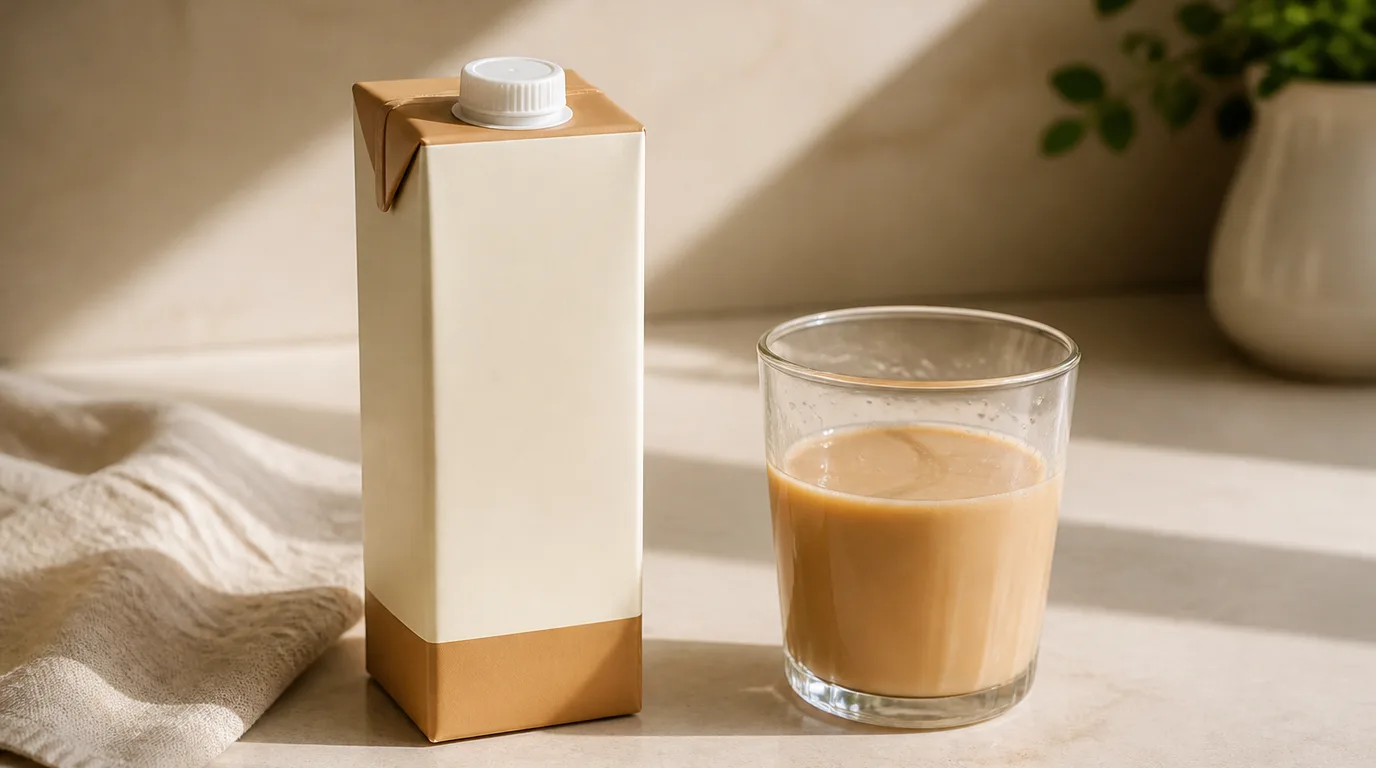
Key Takeaways
- No public test data exists for Premier Protein — not for phthalates, not for particles.
- Premier Nutrition does not state its packaging material anywhere on its own site. We checked in August 2026.
- Premier was not among the products Consumer Reports flagged in its 85-food survey. That is an absence of evidence, not evidence of absence — it was never tested.
- A carton is a laminate: paperboard, aluminium foil, and a food-contact polyethylene liner. The liquid touches polyethylene, not paper.
- Premier's protein sodas ship in steel cans, which moves the question to the can liner instead.
- Premier shakes are milk-protein based, so the ultrafiltration question that applies to Fairlife applies here too.
- Format beats brand: a Premier carton is a better bet than any bottled shake, including a “clean” one.
What Premier Nutrition publishes, and what it doesn't
- carton or bottle material
- Not stated
- no resin code, laminate structure or liner chemistry anywhere on premierprotein.com
- premierprotein.com, checked Aug 2026
- in the Consumer Reports survey
- Not tested
- Premier was not among the 85 foods CR analysed for plasticizers
- Consumer Reports, Jan 2024
- across the Premier range
- 4 formats
- carton shakes, bottled shakes, steel-can protein sodas and powders — each a different exposure
- premierprotein.com product range
- of a carton is polymer
- ~5%
- typical aseptic carton is mostly paperboard with thin polyethylene layers and an aluminium barrier
- standard aseptic carton construction
Why this question is being asked at all
Premier Protein did not do anything to earn this search. It is getting asked about because Fairlife got caught. When Consumer Reports measured one of the highest plasticizer levels in its entire 85-food survey in a Core Power chocolate shake and wrote to the company about it, everyone holding a different protein shake reasonably asked whether theirs was any better.
The frustrating answer is that nobody knows, because nobody tested it. Premier's absence from that survey is not a pass. It is an absence. We think it is worth saying that plainly rather than dressing up a format argument as a clean result.
What a carton actually is
People treat “carton” as a synonym for paper, and it is not. An aseptic carton is typically six layers: paperboard for stiffness, thin aluminium foil as an oxygen and light barrier, and polyethylene films that laminate it together and line the inside face.
So your shake is stored against polyethylene either way. The question is how much and under what conditions, and here the carton has three real advantages over a bottle:
- Far less polymer per serving. A liner film is a fraction of the mass of a moulded bottle wall.
- Rigid, so less flexing. A squeezed and shaken bottle works its walls; a carton does not deform the same way.
- Opaque. Light and heat drive polymer degradation. A carton blocks both; a clear or translucent bottle on a warm shelf does not.
Set against that, cartons are usually stored at ambient temperature for long periods, which is contact time. Nothing here is free.
The Premier range is not one thing
| Format | Surface touching the product | Verdict |
|---|---|---|
| Protein powders | Dry powder in a tub | Lowest risk in the range. No liquid stored against polymer. Use a steel shaker and this is the best option Premier sells. |
| Protein sodas (steel can) | Can liner, chemistry not disclosed | Good barrier, but shifts the question to the liner. See our can-lining explainer. |
| Shakes (carton) | Polyethylene liner film | The best of the ready-to-drink options. Less polymer, opaque, rigid. |
| Shakes (plastic bottle) | Full bottle wall | Same format as the shake Consumer Reports flagged at a competitor. If you buy Premier, buy the carton. |
| Protein breakfast items | Mixed — film bags, boxes | Dry goods. Not the thing to worry about in this range. |
That table contains the most useful thing on this page: Premier sells the same shake in a carton and in a plastic bottle. If you are already buying the brand, that is a free improvement — same product, same price bracket, better container.
The ultrafiltration point applies here too
Premier's shakes are milk-protein based, and high-protein dairy drinks get their numbers through ultrafiltration — pushing milk through polymer membranes under pressure. Whatever you conclude about Fairlife's process, the same category of contact applies to Premier's. The carton advantage is real but it is downstream of a process step neither company describes.
If that step concerns you, the plant-protein shakes are the ones that skip it entirely, and the powders skip the storage question as well.
Use the App
Check what's in your fridge right now
Scan a Premier carton, bottle or can with MicroPlastics for the polymer, a 0–100 risk score, and the lower-exposure version of the same product.
Get the MicroPlastics appWhat to actually do
- Buy the carton, not the bottle. Premier sells both. This is the whole article in one line.
- Do not store them warm. A case in a hot garage or car boot for weeks is the worst thing you can do to any of these formats.
- Powder if it is a daily habit. Ready-to-drink is a convenience product; daily convenience is where exposure accumulates.
- Do not switch brands expecting a clean one. Consumer Reports found plasticizers in 84 of the 85 foods it tested. Format and frequency are the levers; brand mostly is not.
- Email them. Premier has a contact form. “What is the carton liner made of?” is a fair question with no published answer.
See the full protein shake ranking, the brand that started this with does Fairlife have microplastics, the other untested major in does Muscle Milk have microplastics, and for the soda cans, are cans lined with plastic.
Frequently Asked Questions
Does Premier Protein have microplastics?
Is Premier Protein safer than Fairlife?
Are Premier Protein cartons plastic-free?
Should I buy Premier Protein in cans or cartons?
Was Premier Protein in the Consumer Reports plastic chemicals study?
Sources
- Premier Nutrition Company, LLC (2026). Premier Protein shakes, sodas, powders and breakfast range (no packaging material stated; checked August 2026). premierprotein.com.
- Consumer Reports (2024). The Plastic Chemicals Hiding in Your Food (85 foods tested; Premier Protein not among them). Consumer Reports.
- Ronholm, B. (Consumer Reports) (2024). Letter to fairlife, LLC regarding plasticizer levels in Core Power High Protein Chocolate Milk Shake. Consumer Reports Advocacy.
- European Food Safety Authority (2025). Microplastics and nanoplastics in food (release driven by heat, wear and contact time). EFSA.
After install · scan this first
Open the camera and scan your Premier Protein carton or bottle.
Premier sells the same shake in a carton and a plastic bottle. Scan the one you actually buy to see which format you have been picking up.
Android · early access
Get the launch email the day Android opens.
One email. No spam. We send when the Android app is in the Play Store, and never again unless you opt in.
Related Research
Does Muscle Milk Have Microplastics? What Cytosport Won't Tell You
We went looking for a bottle material and an ingredient list and found neither, which makes this the least transparent product we have audited in any category. What the plastic-bottle format implies, why the 11oz is marginally worse than the 14oz, and the better option inside the same brand.
Read moreIs a Moccamaster Plastic-Free? Every Part That Touches Your Coffee (2026)
No, and no drip brewer is. But the Moccamaster puts its plastic where it matters least: the reservoir holds cold water and heating happens in a copper element, not a plastic tank. Component by component through the water path, what Technivorm confirms, the polymer it will not disclose, and how it compares with a Keurig.
Read moreFruit and Vegetables Are the Biggest Microplastic Source in Your Diet (2026)
A University of Amsterdam review of 193 studies found fruit, vegetables and grains account for roughly 99.5% of the microplastic particles people swallow, ahead of seafood and bottled water. Why that is about how often you eat them rather than how dirty they are, why it is not a reason to eat less produce, and the buried finding: intake estimates span more than ten orders of magnitude.
Read moreCan Food Help Clear Microplastics? Kimchi, Fiber & the Evidence (2026)
A kimchi bacterium (Leuconostoc mesenteroides CBA3656) bound 57% of nanoplastics and doubled plastic excretion in mice. What that means for your plate, what fiber does, and the honest limit: food may block absorption, not clear what's already stored.
Read moreDo Energy Drinks Have Microplastics? Prime, Celsius, Red Bull & Monster Ranked (2026)
No brand tests its drink, so packaging decides it. Canned energy drinks (Celsius, Red Bull, Monster) shift the question to the liner; Prime Hydration's plastic bottle is the real shedder. The honest 2026 ranking and the lowest-plastic pick.
Read moreDoes Sous Vide Cook Food in Plastic? Microplastics in Sous Vide, Explained (2026)
Yes, sous vide seals food in plastic for hours in warm water, so migration is a fair worry. But it runs below boiling and proper bags are food-grade polyethylene, the lowest-leaching plastic. The real mistakes, and the silicone/glass alternatives.
Read more