Microplastics in 28 Famous People’s Blood: What the Test Shows

Last reviewed: by the MicroPlastics Research Desk. Submit a correction or see our editorial standards.
Quick answer

Check the products you use most
Scan a few everyday items to see what drives each score and where one swap would help.


Free · 3 scans · iOS and Android
Key Takeaways
- Who: a Small Change Fund project with Plastic Pollution Coalition, the Plastic People documentary team and the Canadian Association of Physicians for the Environment.
- Found: eight polymer types; plastic in 27 of 28 people by one method; counts of 1,890 to 197,000 particles per microliter by the other.
- Weak points: 28 self-selected volunteers, one blood draw each, home collection, no peer review stated, and the two methods ranked people differently.
- Polyethylene dominated, and independent validation work says Py-GC/MS can mistake fats in blood for polyethylene.
- A single blood number can’t diagnose anything. There are no normal ranges, and the report says so.
- Mail-in “microplastics blood tests” are sold, but we found no validation that makes an individual result meaningful.
What the Microplastics in Me report measured
- participants with plastic detected by Py-GC/MS
- 27 of 28
- combined red-cell and plasma result; one participant had none detected
- Microplastics in Me report, Oct 2026
- range of total plastic per person by mass
- 0–32.5 µg/mL
- group average 7.01 µg/mL; eight polymers; 12 screened
- Microplastics in Me report, Figure B
- of the average measured mass was polyethylene
- 66.4%
- combined result; PE is the polymer most prone to fat interference
- Microplastics in Me report, Figure C
- particles per microliter of plasma by flow cytometry
- 1,890–197,000
- 24 of 28 participants; blanks under 300 per µL; most particles under 500 nm
- Microplastics in Me report, Figure E
What was the celebrity microplastics blood test?
“Microplastics in Me: Finding Plastics in Human Blood” is a 2026 report from a project of the Small Change Fund, a Canadian charity. Its partners are the Plastic Pollution Coalition, a US advocacy group; the makers of the 2024 documentary Plastic People; and the Canadian Association of Physicians for the Environment (CAPE). Seven private foundations funded it. The report was published on October 27, 2026, and trade outlets including Plastics News picked it up that week.
The 28 volunteers work in entertainment, art, media, politics and policy. Participants named in the report include novelist Margaret Atwood, actor and former SAG-AFTRA president Fran Drescher, musician Jackson Browne, actor Kyra Sedgwick and oceanographer Sylvia Earle, alongside politicians, Indigenous leaders and several people who work for the partner organizations. The report publishes every participant’s results by name. We don’t repeat individual numbers here: they are single measurements with no medical meaning, which is the point of most of this article.
How did they test the blood?
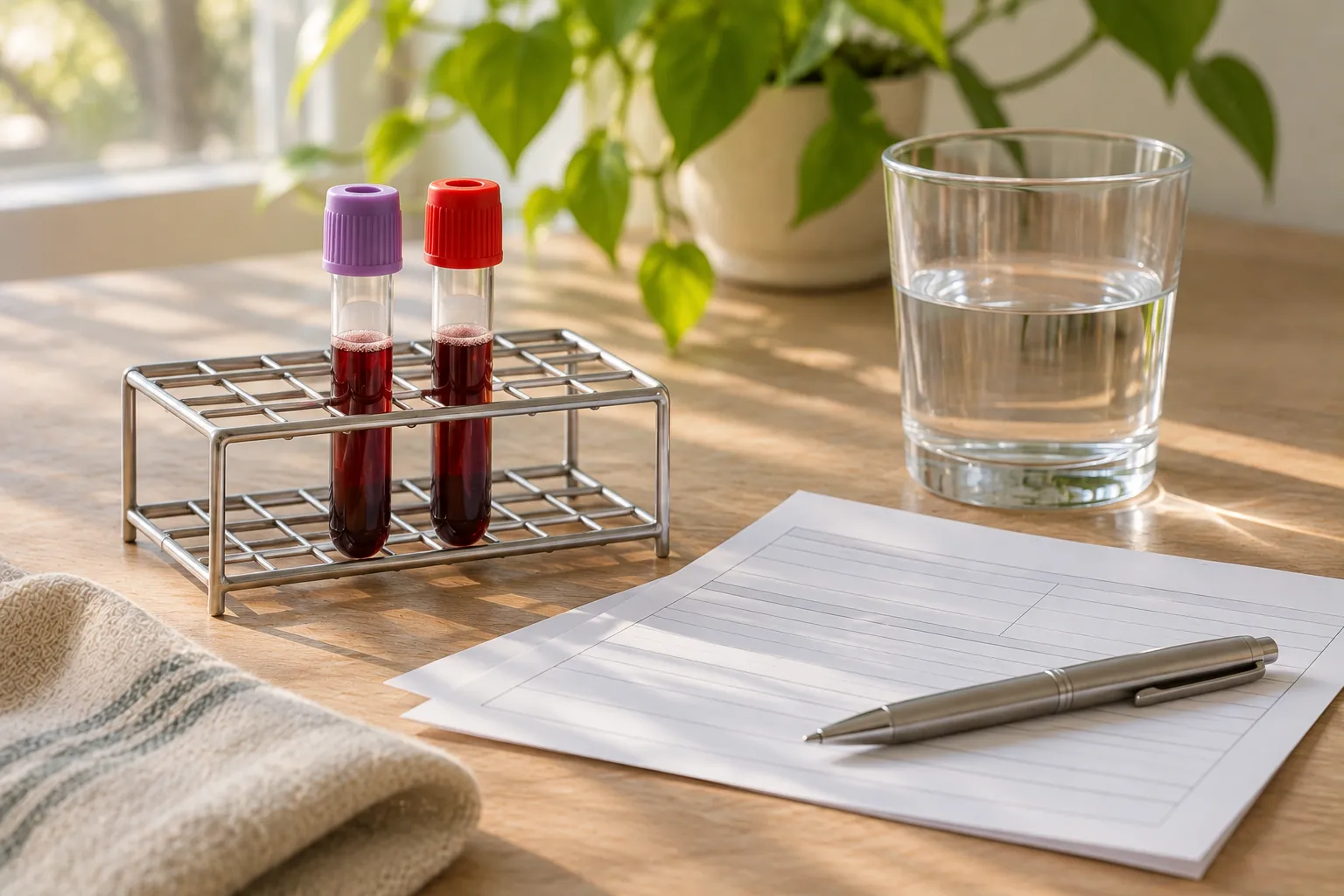
Contracted phlebotomists drew blood over eight months in 2025 and 2026, at a place each participant chose, often their home. The team used glass vials and says it minimized plastic during collection and shipping. Samples were sent overnight to the University of New Mexico, and leftover plasma went on to the University of Hawaiʻi at Mānoa. Two methods were used, and they measure different things.
| Method | What it measures | How it was run | Main limitation |
|---|---|---|---|
| Py-GC/MS (University of New Mexico) | Mass of 12 target polymers, in µg/mL | 1 mL samples dried, digested in 10% potassium hydroxide at 60°C for 72 hours, spun at about 100,000 × g, rinsed, collected on 50 nm quartz filters, then heated until the plastic breaks into identifiable fragments | Cannot count particles; fats and other blood components can mimic polyethylene and PVC signals |
| Flow cytometry (University of Hawaiʻi) | Number and size of stained particles | 20 µL plasma digested, stained with Nile red dye, counted by laser three times and averaged | Cannot say which plastic; counts depend on staining and size calibration |
The methods note says the Py-GC/MS settings are identical to those in the 2025 Nature Medicine brain study by Nihart, Campen and colleagues from the same New Mexico lab. Controls included empty sample cups, reagent controls, field and procedural blanks, and spike-recovery tests. For flow cytometry, the report says all procedural blanks came in under 300 particles per microliter.
What did the test find?
By Py-GC/MS, 27 of 28 people had at least one polymer above zero. Each person’s total ranged from 0 to 32.45 µg/mL, and the group average was 7.01 µg/mL. Eight of the 12 screened polymers turned up: ABS, nylon 6, nylon 6,6, polyethylene, PET, polystyrene, PVC and styrene-butadiene rubber. Polyethylene made up 66.4% of the average combined mass, followed by ABS, nylon 6 and styrene-butadiene rubber. Red blood cells averaged more than plasma (9.04 vs 5.02 µg/mL), though red-cell results were not available for everyone.
By flow cytometry, the 24 people with enough plasma had between 1,890 and 197,000 particles per microliter, and more than 90% of particles were under 500 nanometers on average. The report sorts people into thirds (low, medium, high) and stresses that these groups only describe position within this cohort.
How reliable are the results?
Less reliable than the headline suggests. None of this means plastic isn’t in human blood; several independent groups have found it. It means this particular set of numbers is hard to interpret.
| Limit | Detail | Why it matters |
|---|---|---|
| Small, self-selected sample | 28 volunteers, many tied to environmental causes | Can’t represent the public or compare groups |
| One draw per person | The report notes blood is constantly replenished | A second draw could give a different number |
| Collection outside a lab | Draws at homes and offices, though in glass | Room air, clothing and gear are known contamination sources; field blanks help but don’t remove the risk |
| Methods disagree | The person with the highest particle count had one of the lowest masses (0.43 µg/mL) | They measure different things, and neither is validated as a personal test |
| Polyethylene-heavy result | 66.4% of average mass | Validation work found Py-GC/MS unreliable for PE and PVC in biological samples |
| No peer review stated | Released as an advocacy-group report | Raw data, blank values and detection limits per polymer weren’t independently checked |
| Who ran it | Advocacy funders and partners; lab lead quoted in promotion | Not proof of bias, but a reason to want independent replication |
The polyethylene problem deserves a closer look. In 2025, Rauert and colleagues in Australia tried to validate Py-GC/MS for blood. They found that different breakdown fragments of polyethylene gave wildly inconsistent results, with ratios between fragments ranging from 0.02 to 4.1 in real samples, compared with 0.7 to 1.2 in spiked controls. They concluded the method is not currently suitable for polyethylene and PVC in biological samples, likely because of fats. Germany’s risk assessor BfR raised related concerns about the New Mexico brain study, calling it careful but flagging contamination and signal-assignment issues. Those critiques don’t prove the celebrity numbers are wrong. They mean the largest part of them rests on the least settled measurement.
What the report gets right
It would be unfair to stop at the problems. The project published its methods, named its labs and funders, and used glass collection vials and blanks, which many quick consumer-style tests skip. It ran two independent techniques instead of leaning on one, and reported a participant with nothing detected rather than rounding everyone up to positive. Its own “For consideration” section says plainly that the results are not medical tests, cannot diagnose anything, reflect one point in time and should not be applied to the wider population. That is more candor than the social-media posts about it showed.
The project’s purpose is advocacy: putting recognizable faces on a statistic to push for research funding and plastics policy, including the global plastics treaty. That is a legitimate goal, and it explains the format. A celebrity cohort draws attention; it cannot answer whether plastic in blood harms people, how much typical adults carry, or which sources matter most. Those questions need large, representative groups, repeat sampling, validated methods and independent labs, and that work is still under way.
How does this compare with earlier blood studies?
The first study to quantify plastic in human blood, by Leslie and colleagues in 2022, found measurable plastic in 17 of 22 anonymous donors, averaging 1.6 µg/mL in positive samples. Our explainer on that study covers it in detail. The new report’s average is higher, but the two can’t be lined up directly: different labs, sample preparation, blood fractions, polymer lists and cut-offs. What the new report adds is names and faces, not a better estimate. It is the first group of publicly identified people tested, in the project’s own words, and that is a communications achievement rather than a scientific one.
What can a blood microplastics number tell you?
Very little, for an individual. Here is why:
- There is no normal range. The report states there are no established medical reference ranges, so a number can’t be called high or low except relative to other people in the same study.
- It is one moment. Blood turns over constantly, and the report notes a repeat draw could differ.
- It isn’t tied to an outcome. No study has linked a particular blood level to a disease risk. The strongest human signal so far, plastic in arterial plaque, came from tissue, not blood, and is observational.
- It doesn’t point to a source. Polyethylene is in films, bottles and caps; nylon is in clothing and carpet. A blood result can’t tell you which of your habits to change.
- Regulators haven’t found a risk at current food levels. The FDA says current evidence does not show that detected levels in food pose a health risk.
For what is known about how long particles might stay, see how long microplastics stay in your body, and for the health evidence as a whole, are microplastics dangerous?
Can you get your own blood tested for microplastics?
You can buy something, but not something that means much. Search results show several companies selling mail-in kits marketed as microplastics blood tests. We could not open their product pages to check methods, and we found no peer-reviewed validation or regulatory clearance for any of them in the sources we reviewed. The report itself says there is no clinically standardized microplastics blood test, that commercial tests have faced criticism over methods, and that neither of the two methods it used is commercially available.
The core problem is contamination. Research labs fight it with filtered air, glass and metal equipment, and repeated blanks, and even then results are disputed. A home-collected sample posted through the mail, analyzed by a method nobody has validated, can’t clear that bar. Our testing guide explains what kinds of microplastics testing do and don’t work, and the detox guide covers why blood-cleaning treatments sold for microplastics are unproven.
What to do instead of testing
Spend the money and attention on the contacts you can change. These steps reduce avoidable exposure; none has been shown to change a health outcome.
- Stop heating food in plastic. Use glass or ceramic in the microwave.
- Store hot, fatty or acidic food in glass or steel, not soft plastic tubs or film.
- Filter tap water if you want to, and drink it instead of bottled water where it is safe.
- Replace worn plastic that touches food: cutting boards, scratched containers, melted utensils.
- Ventilate and vacuum. Indoor dust and fibres from synthetic textiles are a steady source.
Use the App
Find the plastics you can actually swap
A blood number can't tell you where plastic comes from. Scanning your containers, bottles and wraps can. The app reports each product's declared materials and suggests lower-plastic swaps for the ones that meet heat or food.
What the MicroPlastics app checks
- The declared materials of scanned food containers, bottles, wraps and kitchen tools, including polyethylene, PVC and nylon.
- Which of those products are typically used with heat, fat or acid.
- A lower-plastic alternative for the same job.
- Product information only: the app does not test blood, measure your exposure or interpret a lab result.
Frequently Asked Questions
Which celebrities had microplastics in their blood?
Who ran the Microplastics in Me blood test?
How much microplastic was in their blood?
Can I get a microplastics blood test?
Is microplastic in blood dangerous?
Can you remove microplastics from your blood?
Sources
- Small Change Fund; Plastic Pollution Coalition; Plastic People; CAPE (2026). Microplastics in Me: Finding Plastics in Human Blood (report, October 27, 2026). Plastic Pollution Coalition.
- Microplastics in Me project (2026). Blood methodology: Py-GC-MS and flow cytometry. Plastic Pollution Coalition.
- Plastic Pollution Coalition (2026). New analysis exposes microplastics contamination in the blood of notable individuals in Canada and the U.S. (October 27, 2026). Plastic Pollution Coalition.
- Plastics News (2026). Putting a face on microplastics statistics (news context). Plastics News.
- Leslie HA, van Velzen MJM, Brandsma SH, et al. (2022). Discovery and quantification of plastic particle pollution in human blood. Environment International 163:107199.
- Rauert C, Charlton N, Bagley A, Dunlop SA, Symeonides C, Thomas KV (2025). Assessing the efficacy of pyrolysis–gas chromatography–mass spectrometry for nanoplastic and microplastic analysis in human blood. Environmental Science & Technology 59(4):1984–1994.
- Nihart AJ, Garcia MA, El Hayek E, et al. (2025). Bioaccumulation of microplastics in decedent human brains. Nature Medicine.
- German Federal Institute for Risk Assessment (BfR) (2025). Microplastics in the brain (Communication No. 056/2025). BfR.
- US Food and Drug Administration (2024). Microplastics and nanoplastics in foods (retrieved November 8, 2026). FDA.
Your next product question
Start with one food container, bottle or wrap you use every day.
A blood number cannot tell you where plastic comes from; a product check can show which declared materials you could swap. It does not test blood or measure your exposure.
Use the exact product name, model and label to check the information behind an assessment. A photo does not measure particles or personal health risk. The examples above are research subjects, not a verified app-coverage list.
Read the first human blood study →Go deeper
Less-travelled research from our archive that follows directly from this page.
Related Research
Are Microplastics Chemically Inert? What the Nature Study Found
A Nature paper found six common plastics make hydroxyl radicals at their surfaces in water, even in the dark. What was measured, what happened to cells in a dish, and why it is a mechanism, not a health verdict.
Read moreBryan Johnson's Microplastics Routine: The Habits and the Sauna Evidence
Bryan Johnson reports lower microplastic test results. Examine the sauna evidence, detection limits, water habits and what his self-experiment cannot establish.
Read moreDo Toothbrush Bristles Shed Microplastics? Study Review
A 2025 simulation found toothbrush particle release but did not measure swallowed dose. Here is what the annualized estimate, polymer results and dental guidance actually support.
Read moreClear Aligners Shed Microplastics — and the BPA Comes From Somewhere Else
Seven aligner brands shed microplastics into artificial saliva over seven days, most particles 5–20 µm — and Invisalign released the fewest, not the most. The BPA spike measured in patients came 30 minutes after the composite attachments were bonded, not from the tray, and was back to baseline within a week.
Read moreDo Contact Lenses Shed Microplastics? The 2026 Study Points at the Blister Pack
A June 2026 study analysed the whole routine — new lenses, worn lenses, blister packs, cases and solutions — and found microparticles in every sample type. Then the polymer fingerprints said most of them did not come from the lens. The part you cannot change turns out not to be the part that matters most.
Read moreDo Microplastics Cause Weight Gain? The Obesogen Evidence (2026)
The chemicals in plastic have more human evidence than the particles do. BPA and phthalates show consistent links to obesity in human studies; microplastic particles drive fat-cell growth in labs and mice but have no human causal proof. The honest verdict, and the reverse-causation problem most coverage skips.
Read more