Microplastics in Human Blood: What the 2022 Leslie Study Found

Last reviewed: by the MicroPlastics Research Desk. Submit a correction or see our editorial standards.
Quick Answer
Want a saved-scan baseline? Assess products you use often and compare their modeled contact inputs, not bodily exposure.
Scan my product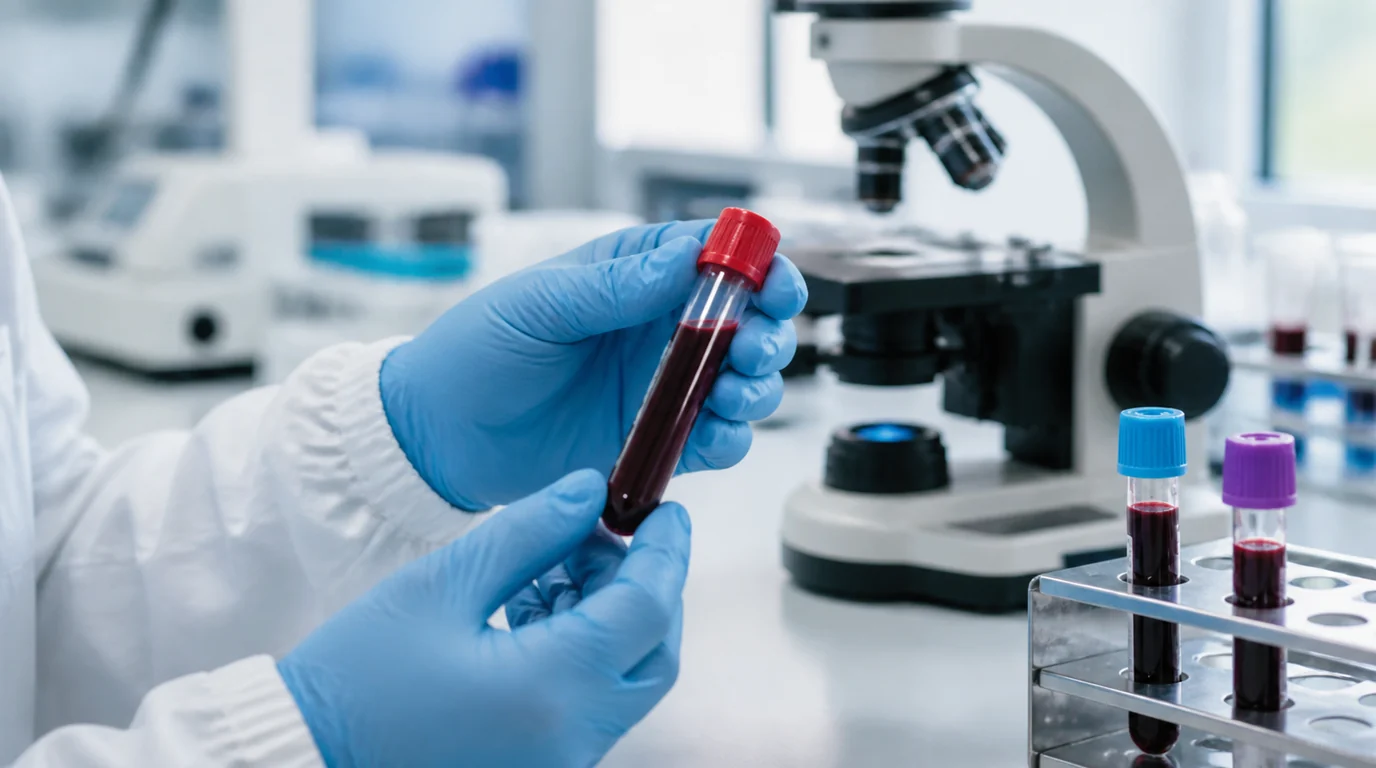
Key Takeaways
- The Leslie et al. 2022 study in Environment International was the first peer-reviewed evidence that ingested or inhaled microplastics reach the human bloodstream.
- PET (polyethylene terephthalate) was the most common plastic detected, the same material as single-use water bottles.
- Particles down to 700 nanometres were detectable; smaller nanoplastics likely exist but were below the study's detection limit.
- Follow-up studies have since found microplastics in placenta, lung tissue, semen, breast milk, atherosclerotic plaque, and brain tissue.
- No safe blood concentration has been established. The 2024 NEJM cardiovascular study suggests presence in tissue is associated with adverse outcomes.
The 2022 Leslie study, in plain English
Heather Leslie and Marja Lamoree of Vrije Universiteit Amsterdam analysed whole-blood samples from 22 healthy anonymous donors. Using pyrolysis gas chromatography–mass spectrometry, a technique that vaporises tiny samples and identifies them by their chemical fingerprint, they detected microplastic particles in 17 of the 22 donors (~77%). The average quantifiable concentration was 1.6 micrograms per millilitreof blood.
Five polymers were screened. The breakdown of what they found is striking:
| Polymer | Common products | Detected in donors |
|---|---|---|
| PET (polyethylene terephthalate) | Single-use bottles, polyester clothing | 50% of samples |
| Polystyrene | Food packaging, take-out containers | 36% |
| Polyethylene | Plastic bags, films, milk jugs | 23% |
| Poly(methyl methacrylate) (PMMA) | Acrylic plastics, dental fillings | Below quantification limit |
| Polypropylene | Yogurt cups, bottle caps | Below quantification limit |
How does plastic get into blood?
Three routes are established in the toxicology literature:
- Ingestion. Microplastics in food and beverages can pass through the gut wall via M-cells and Peyer's patches, especially particles smaller than 10 µm. Nanoplastics <1 µm cross more readily.
- Inhalation. Airborne microplastics, indoor air contains 3–15× more than outdoor air, settle in airways. Fibres <5 µm reach alveoli and can enter pulmonary circulation. See our airborne microplastics guide.
- Medical sources. The Leslie study explicitly notes that IV drips, blood-bag plasticisers, and dental polymers may contribute to baseline contamination, an area still being characterised.
What follow-up research has found since 2022
The Leslie study triggered a wave of replication and extension. As of mid-2026 the catalogue of human tissues confirmed to contain microplastics or nanoplastics includes:
- Placenta (Ragusa et al., 2021)
- Lung tissue (Jenner et al., 2022)
- Breast milk (Ragusa et al., 2022), see our breast-milk article
- Testes and semen (Hu et al., 2024; Zhao et al., 2024)
- Atherosclerotic plaque (Marfella et al., NEJM 2024), see our cardiovascular evidence article
- Brain tissue (Nihart et al., 2025), with concentrations ~7× higher in patients with documented dementia. See our brain microplastics article
- Liver, kidney, spleen (multiple papers, 2023–2025)
Is plastic in your blood dangerous?
Honestly: we are still in the “establishing association” phase. No regulatory body has yet set a maximum safe blood concentration. What we do know:
- Inflammation: in-vitro and animal studies consistently show micro- and nanoplastic particles trigger oxidative stress and inflammatory cytokines in vascular cells.
- Endocrine disruption: plastics carry plasticisers (phthalates, bisphenols) and additives that interfere with hormone signalling at extremely low doses.
- Cardiovascular events: the 2024 NEJM study reported a 4.53× higher risk of heart attack, stroke, or death from any cause over 34 months in patients whose carotid plaque contained microplastics versus those whose plaque did not.
These findings are correlational and the field has not yet established causation, but the trend is consistent and the patient evidence is accumulating quickly.
Can you reduce microplastics already in your bloodstream?
Direct “detox” is largely marketing, see our evidence-based detox guide for what is and isn't supported. The body does excrete some particles via bile, urine, and faeces, but accumulation in fat and connective tissue appears to be lifelong. Realistic strategy: reduce intake going forward.
The five daily changes that do the most (consistent across every published exposure-reduction study):
- Switch bottled water to filtered tap water (RO or carbon block)
- Never heat food or water in plastic
- Replace plastic food storage with glass or stainless steel
- Choose natural-fibre clothing and bedding
- HEPA-filter indoor air, especially in bedrooms
What the MicroPlastics app checks
- Product packaging. PET, HDPE, PP, PS, PVC, multi-layer, glass, aluminum.
- Container condition from photo, scratches, dents, fade.
- Brand and product category, flags for known PFAS / BPA / fragranced lines.
- Use-context flags, heat exposure, microwave, reuse cycles.
- Cited published research, every score links the specific studies behind it.
Use the App
Translate the research into 5-second shelf decisions
Reading the studies is step one. Acting on them at the grocery store is step two. The MicroPlastics app scores each product 0–100 using research like this.
Get the MicroPlastics appFrequently Asked Questions
When was the first study of microplastics in human blood?
How much plastic is in human blood?
What types of plastic were found in human blood?
How does plastic get into your bloodstream?
Is having microplastics in your blood dangerous?
Can you remove microplastics already in your blood?
Sources
- Leslie HA, van Velzen MJM, Brandsma SH, et al. (2022). Discovery and quantification of plastic particle pollution in human blood. Environment International.
- Ragusa A, Svelato A, Santacroce C, et al. (2021). Plasticenta: First evidence of microplastics in human placenta. Environment International.
- Jenner LC, Rotchell JM, Bennett RT, et al. (2022). Detection of microplastics in human lung tissue using μFTIR spectroscopy. Science of the Total Environment.
- Marfella R, Prattichizzo F, Sardu C, et al. (2024). Microplastics and nanoplastics in atheromas and cardiovascular events. New England Journal of Medicine.
- Nihart AJ, Garcia MA, El Hayek E, et al. (2025). Bioaccumulation of microplastics in decedent human brains. Nature Medicine.
Turn this article into a saved-scan baseline
Scan the 5–10 products you read about here. The app saves a modeled packaging-contact baseline and shows how that assessed mix changes month over month—not what is in your body.
Download on the App Store- Free on iOS
- 3 free scans
- No sign-up
- Result in seconds
“Really cool to scan stuff around the kitchen and see what's actually in it. The swaps it suggests are realistic.” App Store review · 5.0★
Android · early access
Get the launch email the day Android opens.
One email. No spam. We send when the Android app is in the Play Store, and never again unless you opt in.
Related Research
Microplastics in Arterial Plaque: The 2024 NEJM Heart Study
A 2024 NEJM study found microplastics in 58% of carotid plaque samples. Patients with plastic in their arteries had 4.53× higher risk of heart attack or stroke.
Read moreHow Much Plastic Do We Eat Per Week? The Credit-Card Stat Explained
You may have read that we eat a credit card of plastic per week. Here is what the research actually says and what is realistic.
Read moreMicroplastics Health Effects: What the Latest Research Says
Microplastics have been found in human blood, lungs, brain, and placenta. From cardiovascular risk to neurological effects, here is what research reveals.
Read moreMicroplastics and Cancer: What the Latest Research Reveals
A landmark 2024 NEJM study found patients with microplastics in arterial plaque had 4.53x higher risk of heart attack, stroke, or death.
Read moreMicroplastics in the Brain: What the 2026 Studies Reveal
Microplastics turned up in 100% of healthy brain samples from living patients in 2026, at 7-30x the concentration in liver or kidney. What the evidence shows, and what it still cannot prove.
Read moreAre Nanoplastics More Dangerous Than Microplastics? (2026 Research)
Nanoplastics cross the blood-brain barrier, the placenta, and the gut wall: micros cannot. The 2024 PNAS bottled-water finding (240,000 particles/L, 90% nano), the NEJM heart-attack risk study, and what the evidence shows.
Read more