For skeptics, in the best sense
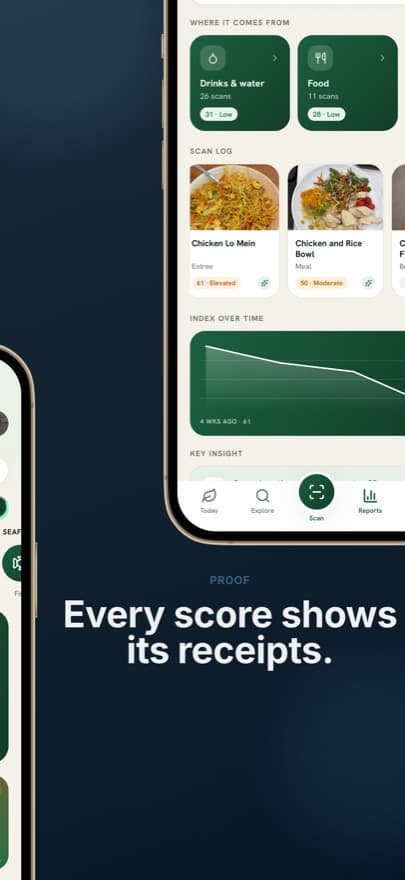
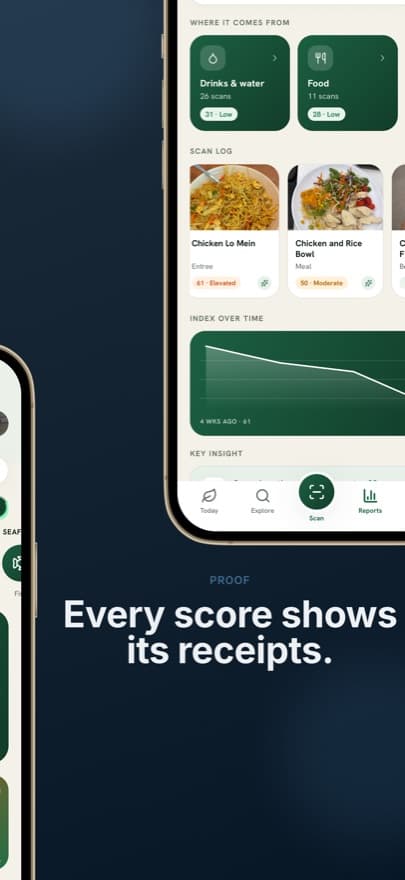
Every score shows its receipts
A score you cannot verify is just an opinion with a number on it. Every score in the app cites the peer-reviewed study behind it. Browse lab-tested products, see measured chemical levels, and check the research yourself before you change anything.
Free to start with 3 scans · 3-day free trial on Premium · iOS
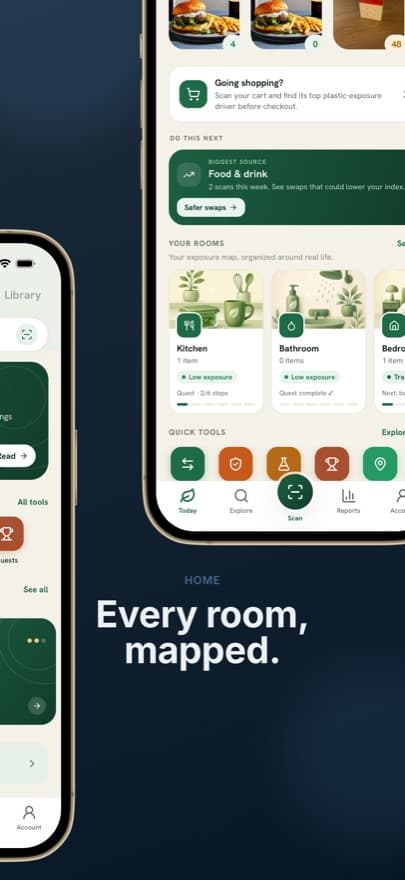
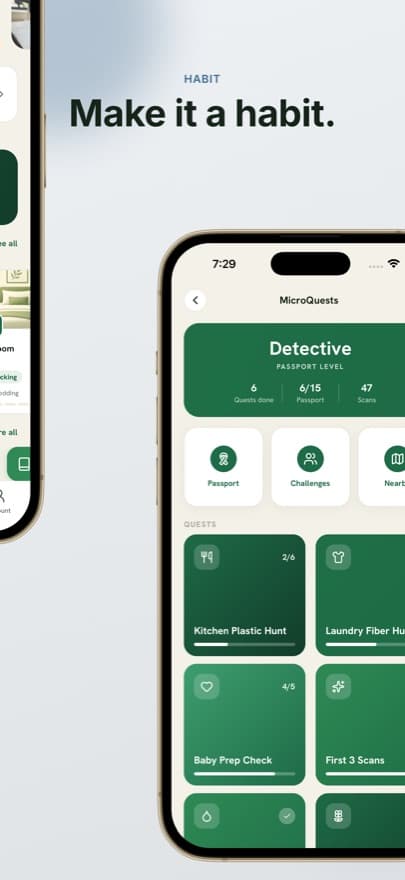
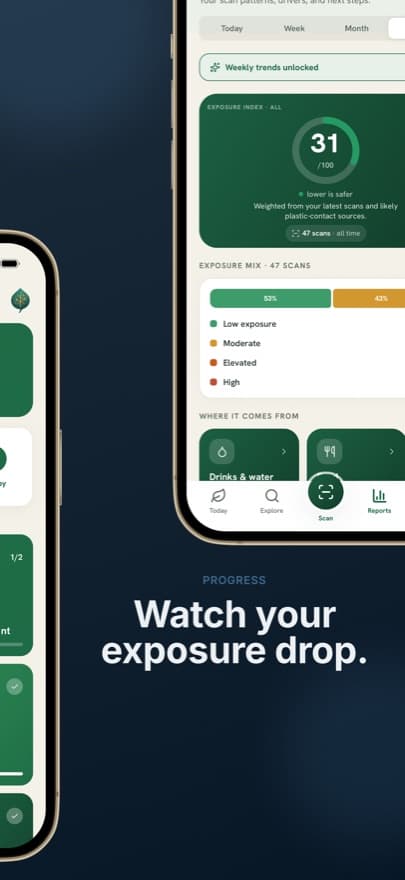
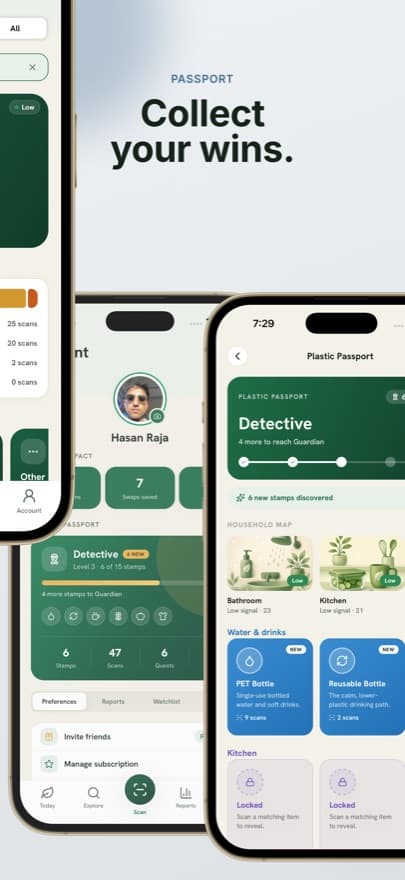
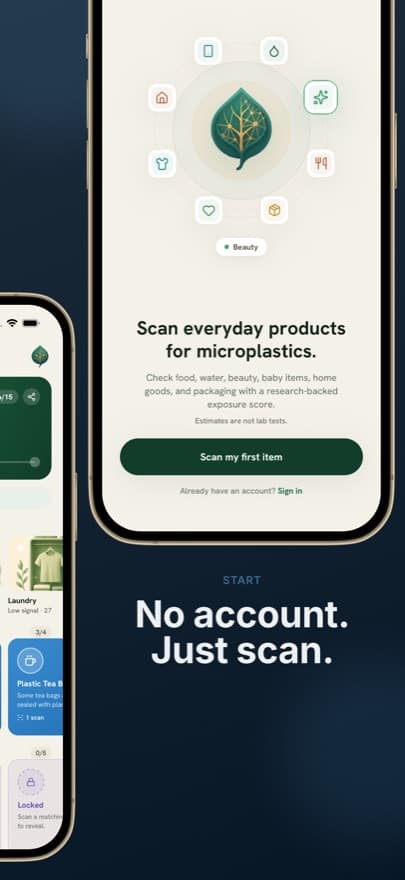
How scores are built
Grounded in published research
Scores draw on peer-reviewed microplastics and food-contact studies, weighted by material, heat and contact time.
Citations on every result
Each result links its sources. Tap through to the actual paper, not a summary of a summary.
Honest about uncertainty
Estimates are labeled as estimates. Where the evidence is thin, the app says so instead of inventing precision.
Data you can interrogate
The same numbers behind the app also power our public brand databases, built to be citable.
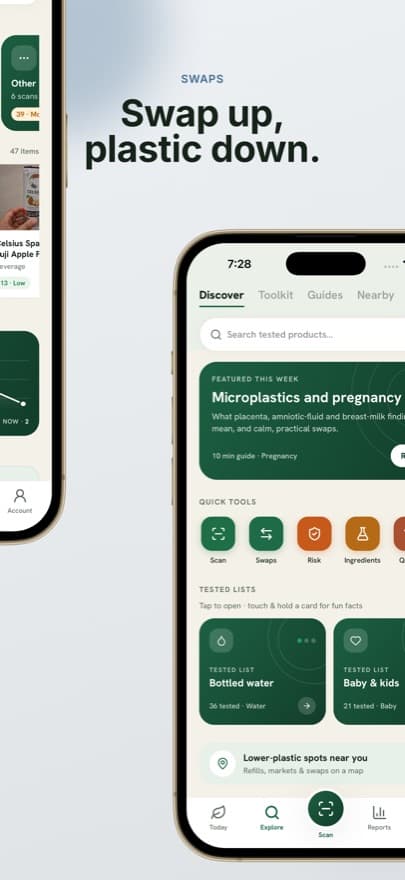
Lab-tested product lists
Bottled water, kids bottles, coffee pods and more, ranked by measured contamination from published tests.
Measured levels, not vibes
Where labs published particle counts or chemical levels, you see the numbers and the units, not just a color.
Methodology in the open
How Scores Work is documented inside the app, including what the exposure index does and does not claim.
Research library
A reading list of the key studies, updated as new findings land, summarized without the doom framing.
Ask the Plastic Coach
A coach trained on the same research as the scanner. Ask it anything about your results, in plain language.
How is the 240,000 particles per liter number measured?
It comes from a 2024 study using stimulated Raman scattering microscopy on bottled water, which counts nanoplastics older methods missed. I can link the paper and explain what it does and does not claim.
Are these scores just estimates?
Yes, and the app says so on every result. Scores combine measured data where labs published it with material-based estimates where they did not, and the two are always labeled differently.
Also built for
Bring your skepticism
Run three scans, then read the papers behind the scores. The evidence holds up, and that is the point.
Download on iOSFree · 3 scans included · No credit card required