Styrofoam Takeout Containers Release 148× More Microplastics Than Plastic Ones (2026)
Last reviewed: by the MicroPlastics Research Desk. Submit a correction or see our editorial standards.
Quick Answer
Got a different brand in the cupboard? Review its packaging inputs and Product Contact Signal, then compare a lower-contact option.
Scan my product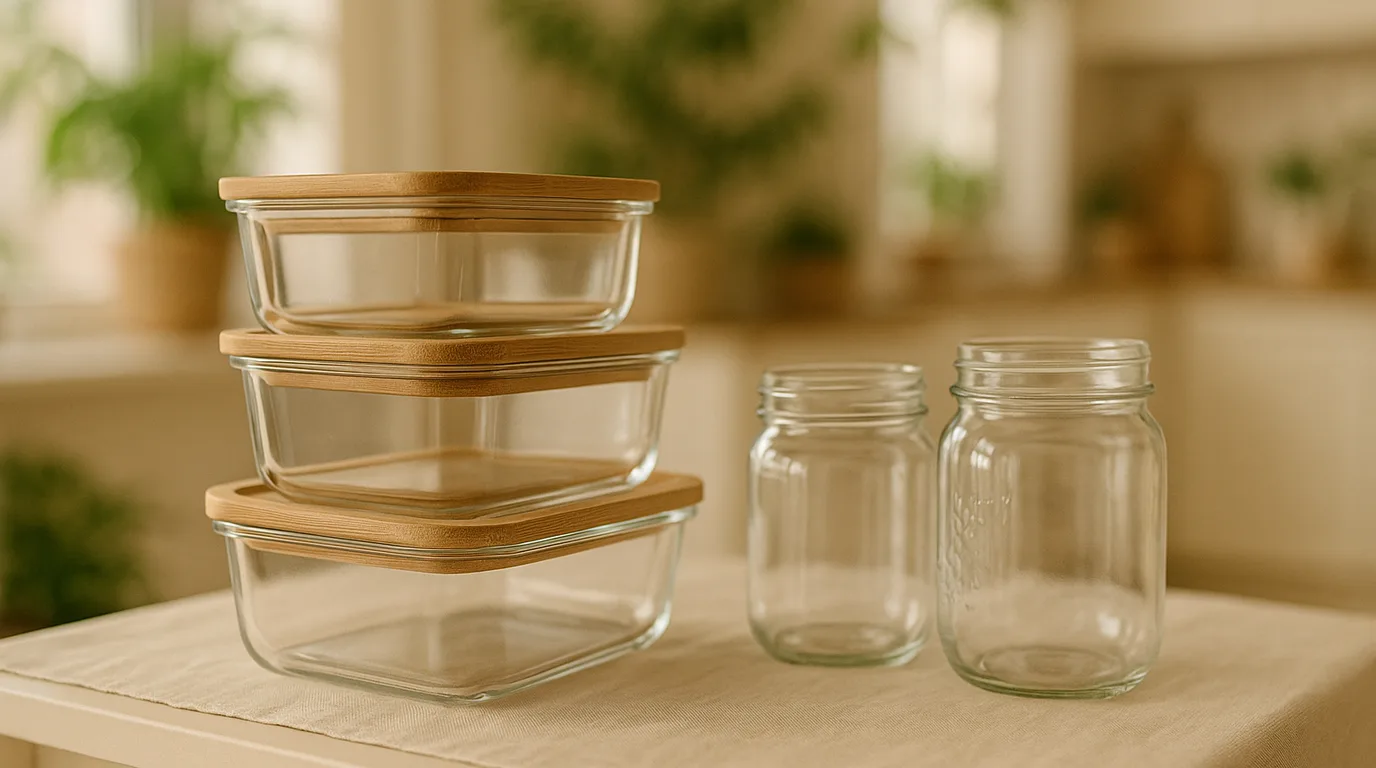
Key Takeaways
- Under hot-water testing, EPS foam released 2.82 × 10⁶ microplastic particles per litre versus 1.90 × 10⁴ for polypropylene, a 148× difference between the two most common takeout containers (Hu et al. 2023).
- The particles are small: 0.8–38 µm, with more than 96% under 10 µm, the range biology has the hardest time excluding.
- The mechanism is thermal, not magical: release is attributed to “relaxations of the polymer chains in the rubbery state” plus “defects caused by processing techniques.”
- Polystyrene's glass transition is ≈100°C, hot soup, hot noodles and a microwave all land at or above it. Polypropylene's is ≈−20 to −10°C, but PP is semi-crystalline and melts at 160–170°C, so it stays stable at food temperatures.
- Styrene, the monomer PS is built from, also migrates, 2.58 µg/L into food simulants, peaking under alkaline, 100°C, long-contact conditions (Wang et al. 2023). The US National Toxicology Program lists styrene as reasonably anticipated to be a human carcinogen.
- Regulators are more measured: EFSA's 2025 review found release real but measured levels very low, and the FDA says current evidence does not demonstrate a health risk. The mechanism is well established; the dose-response is not.
Takeout containers under hot water, the numbers
- particles/L from EPS foam
- 2.82 × 10⁶
- expanded polystyrene takeout containers under hot water, identified by micro-Raman spectroscopy
- Hu et al. 2023, Food Addit. Contam. Part A
- particles/L from polypropylene
- 1.90 × 10⁴
- the rigid PP containers most restaurants use, about 148× fewer particles than foam in the same test
- Hu et al. 2023, Food Addit. Contam. Part A
- of released particles under 10 µm
- >96%
- released particles spanned 0.8–38 µm, but the overwhelming majority sat at the small end
- Hu et al. 2023, Food Addit. Contam. Part A
- polystyrene glass transition
- ≈100°C
- the point at which PS chains become mobile, and the temperature of hot soup and microwaved food
- Hu et al. 2023 (thermal properties)
- styrene monomer migration
- 2.58 µg/L
- into food simulants from PS food containers; particle release peaked at pH 9, 100°C, 6 hours
- Wang et al. 2023, Heliyon
- PP containers already holding microplastics
- 210 of 210
- every container sampled across 7 cities held 3–43 particles before any heating, manufacturing residue, not heat release
- Hu et al. 2022, Toxics
The 148× number, and what was actually measured
Most microplastic headlines compare a plastic to nothing. This one compares plastics to each other, which is far more useful, because “stop eating takeout” is not advice anyone follows, and “ask for a different container” is. Hu and colleagues, in Food Additives & Contaminants: Part A (2023), took commercial takeout containers in three common materials, treated them with hot water, and identified the released particles by micro-Raman spectroscopy, which matters, because Raman confirms a particle really is the polymer in question rather than a stray fibre from the lab. Their averages:
- Polypropylene (PP): 1.90 × 10⁴ particles/L, about 19,000.
- Polyethylene (PE): 1.01 × 10⁵ particles/L, roughly 5× PP.
- Expanded polystyrene (EPS / foam): 2.82 × 10⁶ particles/L, roughly 148× PP.
The size distribution is the part that gets skipped. Released particles ranged from 0.8 to 38 µm, and more than 96% were smaller than 10 µm, the range biology has the hardest time excluding, and the range older filter-and-count methods systematically missed.
Why foam is so much worse: the glass transition is the whole story
A 148× gap sounds like a scare statistic until you understand the mechanism, at which point it becomes something better: a prediction. The authors attribute release to “relaxations of the polymer chains in the rubbery state” plus “defects caused by processing techniques.” Translated: every polymer has a glass transition temperature (Tg), the point at which its chains stop being locked in place and start being able to move. Below Tg the plastic is glassy and rigid. Above it, the chains relax, the surface becomes mobile, and any flaw built in during manufacturing works itself loose. Now put the numbers side by side:
- Polystyrene: Tg ≈ 100°C. It melts around 240°C, but the release-relevant threshold sits at almost exactly the boiling point of water.
- Polypropylene: Tg ≈ −20 to −10°C, melting at 160–170°C. PP is already above its Tg on your counter, but it is semi-crystalline, crystalline domains hold the structure together, and hot soup gets it nowhere near melting.
- Polyethylene: Tg far below room temperature, melting at 105–130°C, closer to hot-food temperature than PP, which fits its middle position in the results.
So when you pour 95°C soup into a foam container, you are not simply putting hot food in plastic. You are taking that specific polymer to the exact temperature at which its chains become mobile, and doing it to a material that is mostly surface area and mostly manufacturing defect. Expanded polystyrene is blown from beads fused with steam; every fusion line is a structural weak point by construction. Foam is not “polystyrene, but lighter.” It is polystyrene with the worst possible geometry for shedding, held at the worst possible temperature.
Which points at something worth carrying into every plastic question you have: temperature is the master variable, not the heating method, the same conclusion published critics of the microwave-container literature have reached. A microwave is just the fastest way to make plastic hot. Foam doesn't need one; a ladle of hot pho does it.
Styrene, the monomer, and the alkaline complication
Particles are only half the story. Polystyrene is built from styrene, and styrene migrates. Wang and colleagues (Heliyon, 2023) measured 2.58 µg/L of styrene monomer moving into food simulants, and found PS particle release peaking at pH 9, 100°C, and 6 hours of contact. Alkaline conditions accelerated it markedly. That cuts against the intuition most of us carry, which is that acidic food is the dangerous kind. And alkaline-hot-and-long is an everyday combination: a foam container of hot soup, congee, or alkaline noodles sitting in a delivery bag for 45 minutes, then in the fridge until tomorrow.
On styrene itself, precision matters more than volume. The US National Toxicology Program lists styrene as “reasonably anticipated to be a human carcinogen” in its Report on Carcinogens, first listed in 2011 and carried into the current edition, on the basis of limited evidence in humans (elevated lymphohematopoietic cancer among occupationally exposed workers), sufficient evidence in animals, and supporting mechanistic data. Two things are true at once. That classification is real and not a fringe opinion, and it was derived overwhelmingly from occupational inhalation exposure among reinforced-plastics workers, not from people eating soup. Migration from a container is microgram-per-litre scale. Prefer a different container; don't be frightened of last night's dinner.
The containers already hold microplastics, but read this carefully
A companion study by the same lead author (Hu et al. 2022, Toxics) sampled 210 polypropylene takeout containers across seven cities and found every single one already contained microplastics. 3 to 43 particles each. Content farms will tell you your takeout box comes “pre-loaded with plastic.” The honest framing: this counted particles already sitting inside the container from manufacturing, which rinse out when it is washed or filled. It is not a measure of heat-generated release, and the counts, single or double digits, are orders of magnitude below the hot-water figures above. Useful context. Not the headline.
Never microwave foam, and “microwave safe” wouldn't save you anyway
The easiest rule here: do not put an EPS foam container in the microwave. Microwaved food routinely reaches or exceeds 100°C in spots, which is at or above polystyrene's glass transition, you would be driving the polymer straight through the threshold where release switches on, in a material already primed to shed. The visible warping and pitting people report is just the macroscopic version of what is happening at particle scale.
And don't let a “microwave safe” stamp on a different container reassure you too much either. As our microwave-safe explainer sets out, that phrase is not an FDA certification. It reflects that a material has been cleared for a food-contact condition of use, testing that measures chemical migration into food simulants, plus the container's ability to survive heat without melting or deforming. No part of that testing counts plastic particles. A container can be fully compliant and still shed micro- and nanoplastics, because particle release is not what the test looks for. The same logic applies to microwaving Ziploc bags and everything else in the reheating drawer.
What the regulators say, the counterweight we're obliged to print
A site that prints only the scary half of the evidence is a content farm. So: in 2025 EFSA published a literature review on micro- and nanoplastic release from food-contact materials, screening over 1,700 publications and extracting data from 122, and its conclusions cut against the headline. Release does occur, but EFSA judged it driven primarily by physical wear (abrasion, cutting, friction) rather than principally by heat; found measured release levels to be very low; and warned that contamination and particle misidentification mean the literature may overestimate release. Its key line: there is no sufficient basis at this stage to estimate micro/nanoplastic exposure from food-contact materials during their use. The FDA's position is similarly restrained, current evidence does not demonstrate that the levels of microplastics detected in foods pose a risk to human health.
Both things are true. The 148× gap is real and well-measured. What it means for your body is genuinely not established. Which is exactly why the advice here is a free, thirty-second habit change rather than a panic: the cost of acting is near zero, and the uncertainty runs in only one direction.
Every takeout container, ranked
| Container | Material | Release under hot food | What to do |
|---|---|---|---|
| Foam clamshell / foam soup cup | Expanded polystyrene (EPS, #6) | 2.82 × 10⁶ particles/L, highest by far; Tg ≈ 100°C is hot-food temperature | Ask for no foam. If you get it, transfer immediately, never reheat in it. |
| Rigid clear clamshell | Polystyrene (PS, #6) | High, same 100°C threshold, less surface area than foam | Fine for cold salads; transfer anything hot. |
| Black or clear rigid container | Polypropylene (PP, #5) | 1.90 × 10⁴ particles/L (~148× less than foam; stable at food temperatures | Best of the plastics) but see the black-plastic note below. |
| Paper soup cup / lined box | Paperboard + polyethylene lining | 1.01 × 10⁵ particles/L class; the PE lining melts at 105–130°C | Better than foam, worse than PP. Decant hot liquids. |
| Aluminium tray, cardboard lid | Aluminium | Near zero, no polymer against the food | Excellent. Ask for it if the restaurant offers it. |
| Your own glass container | Borosilicate / soda-lime glass | Zero, inert at any temperature you will reheat at | The real answer for regular takeout. Hand it over at the counter. |
One caveat on the winner: polypropylene is far better on particle release, but recycled black plastic carries a separate issue (flame-retardant contamination from recycled electronics) covered in our black plastic breakdown. For the wider picture, see microplastics in fast food packaging, what's actually in fast food, or the microplastics in food hub.
The one thing to change
If you take a single action from this article: get hot food out of foam. Not eventually, before you eat. Tip it onto a ceramic plate or into a glass bowl the moment it lands on the counter. Every extra minute of 90°C food sitting in expanded polystyrene is time spent above the polymer's glass transition, and release is driven by temperature and time. Then, in rough order of how much they move the needle:
- Never microwave foam. The highest-release scenario in the category, and it takes ten seconds to avoid.
- Ask for no foam when you order. A one-line note in the delivery app works more often than you'd think, restaurants that let you choose usually have PP in the back.
- Prefer the rigid PP containers. Roughly 148× less particle release under hot water. Still transfer before reheating.
- Don't store leftovers in the takeout box. Contact time is the second half of the equation, the Heliyon data had PS release peaking after hours, not minutes. Move it into glass storage.
- For regular takeout, bring your own container. If you collect the same order weekly, handing over a glass dish removes the problem permanently.
- Foam cups and plates follow the same rules, same polymer, same threshold. Ranked in our party supplies guide.
What the MicroPlastics app checks
- The resin of the container you scan (EPS foam, rigid PS, PP, or PE-lined paperboard) so “#6 foam” stops being invisible fine print under a lid.
- Whether the temperature of what you're putting in it crosses that polymer's glass transition, which is what actually drives release.
- A 0–100 risk score per item and use case, so “cold salad in a PS clamshell” and “hot soup in a foam cup” score as the very different scenarios they are.
- The cheapest same-format swap. PP over foam, aluminium over PP, your own glass over all of it.
Use the App
Know what your takeout arrived in before you eat out of it
Foam, rigid polystyrene, polypropylene, PE-lined paper, they look alike in a delivery bag and behave 148× apart under hot food. Scan the container and the app tells you what it is, how it sheds at your food's temperature, and what to do in the next thirty seconds.
Scan my takeout containerFrequently Asked Questions
Are styrofoam containers safe?
Can you microwave styrofoam?
Are there microplastics in styrofoam cups?
Are plastic takeout containers safe?
Is styrofoam bad for you?
Why does polystyrene release so many more microplastics than polypropylene?
Sources
- Hu J-L, Duan Y, Zhong H-N, et al. (2023). Analysis of microplastics released from plastic take-out food containers based on thermal properties and morphology study. Food Additives & Contaminants: Part A, 40(2), 305–318.
- Wang J, Lee J, Kwon EE, Jeong S. (2023). Quantitative analysis of polystyrene microplastic and styrene monomer released from plastic food containers. Heliyon, 9(5), e15787.
- Hu J, Xu X, Song Y, et al. (2022). Microplastics in Widely Used Polypropylene-Made Food Containers. Toxics, 10(12), 762.
- National Toxicology Program (2021). Styrene: Report on Carcinogens, 15th Edition. US Department of Health and Human Services.
- European Food Safety Authority (2025). Literature review on micro- and nanoplastic release from food contact materials during their use. EFSA Supporting Publications.
- US Food and Drug Administration (2024). Microplastics and Nanoplastics in Foods. FDA.
Audit your whole pantry, not just the 5 foods in this article
The app keeps a running scan history for every packaged food you own, every brand swap you make, and every reformulation a brand quietly pushes. The article is a snapshot. The app is the trend line.
Download on the App Store- Free on iOS
- 3 free scans
- No sign-up
- Result in seconds
“Really cool to scan stuff around the kitchen and see what's actually in it. The swaps it suggests are realistic.” App Store review · 5.0★
Android · early access
Get the launch email the day Android opens.
One email. No spam. We send when the Android app is in the Play Store, and never again unless you opt in.
Related Research
Best Plastic-Free Coffee Makers 2026: Drip, Pour-Over and Press Ranked
Chemex, steel presses and ceramic pour-over put no plastic in the hot-water path. Two drip machines now claim the same, Simply Good and Caraway’s new brewer, and we checked what each discloses. Every setup ranked by hot-plastic contact.
Read moreAre Red Solo Cups Safe? Microplastics in Party Cups, Plates & Coolers: July 4th Guide (2026)
Red Solo cups are #6 polystyrene: one of the plastics most prone to shedding micro- and nanoplastics, and alcohol increases leaching. Party cups, paper plates, plastic cutlery, and foam coolers ranked by microplastic risk, plus realistic lower-plastic-contact comparisons for a July 4th cookout.
Read moreDoes Instant Coffee Have Microplastics? Nescafé, Starbucks VIA, Folgers & Mount Hagen Ranked (2026)
Instant coffee powder is not plastic: but the jar, the stick pack, the kettle, and the cup decide your exposure. Nescafé Clásico, Taster’s Choice, Starbucks VIA, Folgers (plastic AromaSeal canister), Café Bustelo and Mount Hagen ranked, plus the prep that cuts microplastics to near zero.
Read moreAre Nespresso, Keurig, Lavazza & illy Coffee Pods Plastic? 2026 Brand-by-Brand Microplastic Audit
Five major coffee-pod brands ranked for microplastic exposure: Nespresso Original, Nespresso Vertuo, Keurig K-Cups, Lavazza Modo Mio, illy iperEspresso. Aluminum vs plastic vs compostable: what the polymer disclosure actually says.
Read moreMicroplastics in Iced Coffee: Starbucks, Dunkin, McDonald’s, Peet’s Ranked (Summer 2026)
Iced coffee plastic cups are the worst-case microplastic exposure in any coffee menu: full polypropylene + 20-45 minutes ice-melting contact + acidic + dairy fat extraction. Every major US chain audited with the lower-plastic-contact, same-drink swap.
Read moreBest Reusable K-Cup Pods: Stainless Steel Ranked for 2026
Swap your disposable K-Cup for a stainless-steel reusable pod and take the plastic cup out of the hot-water path. K&J, EcoFlow, Maxware, iPartsPlusMore, SoloFill, Keurig My K-Cup, Cafilas ranked for stainless grade, gasket silicone, Keurig 2.0 compatibility, cleaning, and cost per cup.
Read more