Protein Powder, Supplements, and Plastic Tubs: Is Your 'Healthy' Routine Adding Microplastics?

Last reviewed: by the MicroPlastics Research Desk. Submit a correction or see our editorial standards.
Quick Answer
Quick answer: Most protein tubs are PET (#1) or HDPE (#2) with a plastic-foil-laminate seal; scoops are polypropylene; shaker bottles are PP, Tritan, or HDPE. The dry powder isn't hot, which lowers migration vs hot food, but long storage, warm/humid environments, frequent opening (friction on the seal and threads), and plastic shaker shaking all add up over a year of daily use.
Highest-risk situations: tubs stored in a hot garage or sun-warm pantry; scooping powder for a year out of the same scratched scoop; mixing protein in a scratched plastic shaker; supplement gummies in soft plastic pouches; collagen / pre-workout dissolved in hot drinks while still in plastic.
Best first swap: transfer the powder to a large glass jar (Le Parfait, Weck, or a clean Mason jar) with a metal scoop. Use a glass or stainless shaker bottle for mixing. Both swaps total around $30-50.
Got a different brand in the cupboard? Scan the label for its polymer, risk score, and a cleaner swap.
Scan my product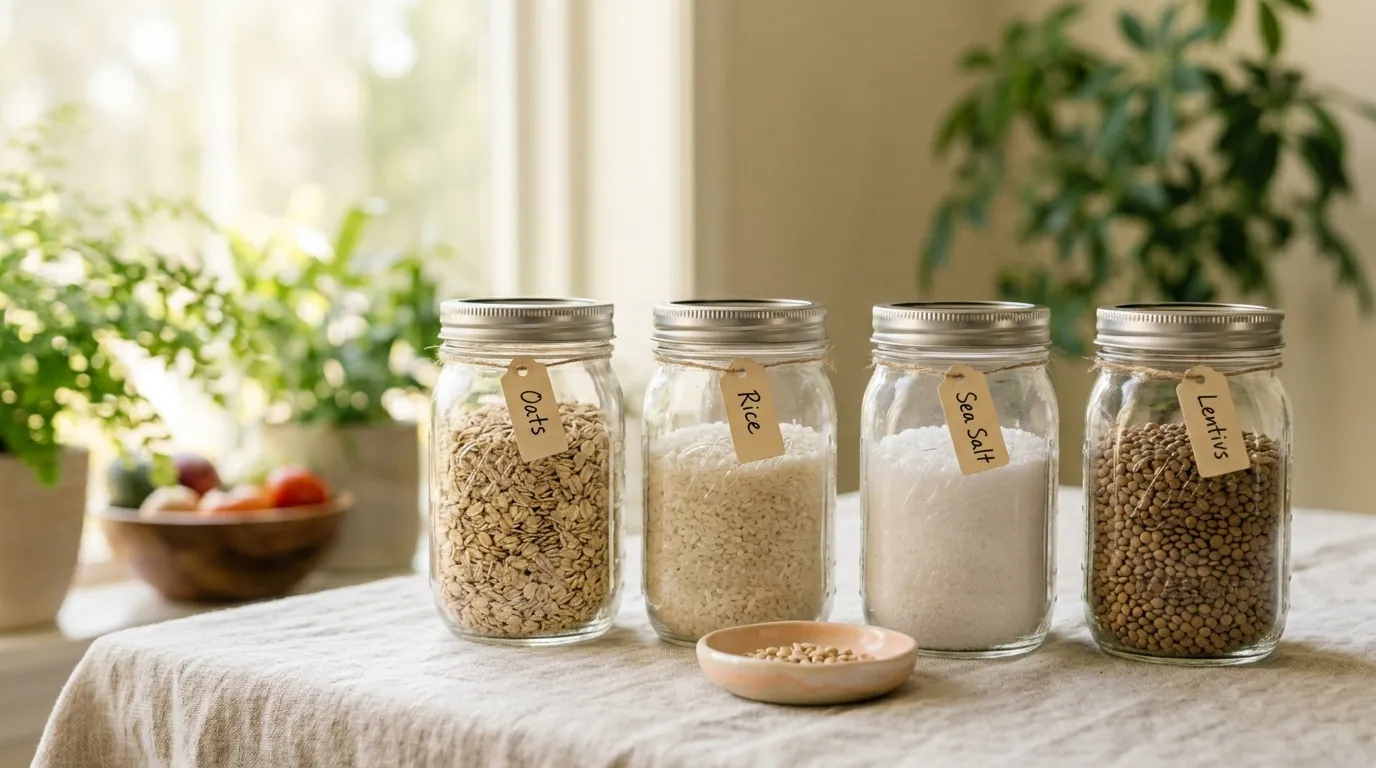
Protein powder is marketed as clean, optimized, and performance-grade. But most tubs are plastic, the scoop is plastic, the shaker bottle is plastic, and the powder sits in that packaging for months in a warm garage or pantry. The question isn't whether protein powder is bad. It's how to lower avoidable packaging exposure in a routine that's otherwise meant to support health.
| Format | Typical packaging | Microplastic exposure |
|---|---|---|
| Protein powder in plastic tub + plastic scoop + plastic shaker | PET / HDPE tub + PP scoop + PP shaker | Highest, three plastic contact points + daily use |
| Protein powder in plastic tub + glass / stainless shaker | PET / HDPE tub + glass shaker | Lower, eliminates shaker-side shedding |
| Protein powder transferred to glass jar + metal scoop | Glass + stainless | Lowest, eliminates storage and scoop exposure |
| Single-serve protein sachets | Multi-layer plastic-foil sachets | Medium, short contact but plastic-on-powder for shelf life |
| Capsules in plastic bottle | HDPE / PET bottle | Low, gelcap / cellulose capsules are inert; plastic bottle is brief contact |
| Capsules in glass bottle | Glass + paper liner | Lowest for capsules |
| Gummies in soft pouch | Multi-layer plastic pouch + gummies sticky to plastic | Medium-high, sticky contact + warm storage |
| Liquid supplement (e.g., omega-3) in plastic bottle | HDPE plastic bottle | Medium, fatty liquid + plastic + light exposure |
| Liquid supplement in glass bottle | Amber glass + metal cap | Lowest for liquids |
Key Takeaways
- Protein powder packaging exposure is real but lower than hot-food plastic exposure, the powder is dry and cold.
- The daily-use and yearlong storage adds up. Two scoops a day for a year = ~700 interactions with a plastic scoop and scratched lid.
- Glass jar + metal scoop + glass / stainless shaker eliminates almost all the packaging exposure for under $50.
- Capsules generally have lower exposure than powders or gummies because contact is brief.
- “Tested for heavy metals” ≠ tested for microplastics. Most third-party purity certifications don't cover packaging-derived microplastics.
- NSF Certified for Sport and Informed Sport address banned substances and contaminants, not microplastic-specific shedding.
Where the exposure actually comes from
- The tub. PET or HDPE walls in contact with powder for the months between bottling and your last scoop. Long shelf time + warm storage increases plasticiser migration.
- The seal and threads. Friction every time you open and close releases small particles into the powder surface.
- The scoop. A scratched PP scoop drags across the powder daily, and once it's scratched, it sheds more with each use.
- The shaker bottle. Vigorous shaking with a metal wire ball against a PP or Tritan wall is mechanical friction in action. Scratched shakers shed more.
- Heat from mixing. Some pre-workout and collagen products are mixed into hot drinks. Hot liquid in a plastic shaker is the worst-case scenario.
- Sachet linings. Single-serve packets are multi-layer plastic with a foil layer. Short contact, but months-long pre-purchase storage.
Capsules vs powders vs gummies, clean math
| Format | Pros | Cons | Best for |
|---|---|---|---|
| Capsules in glass bottle | Lowest plastic exposure | More expensive; harder to find | Anything available in caps (vitamins, fish oil, magnesium) |
| Capsules in plastic bottle | Capsule is inert; brief plastic contact | Plastic bottle still contributes some exposure | Most daily vitamins; common at retail |
| Powder in glass jar (after transfer) | No plastic-on-powder contact | Transfer step required | Protein powder, collagen, creatine, greens |
| Powder in plastic tub (as sold) | Convenient; cheap | Plastic tub + scoop + months of contact | Short-term use; transfer for long-term |
| Gummies in soft pouch | Pleasant; kid-friendly | Sticky contact + plastic pouch + warm storage | Avoid when capsules or powders exist |
| Single-serve sachets | Travel-friendly | Multi-layer plastic + foil per dose | Occasional travel use; not daily |
| Liquid in glass bottle | Glass eliminates plastic contact | Heavier; needs refrigeration after open | Fish oil, vitamin D drops, tinctures |
Cleaner protein powder + supplement habits
- Transfer powder to a glass jar on day one. A 64oz Le Parfait or Weck jar runs $15-20; clean Mason jars work too. Use a stainless or wood scoop ($5-10).
- Switch to a glass or stainless shaker bottle. KleanShaker (stainless), Voyager Glass Protein Bottle, or a plain wide-mouth Mason jar with a stainless lid.
- Store the protein tub in a cool dark pantry, not a hot garage or by a sunny window.
- Don't mix powders into hot liquids in a plastic shaker. Mix in a glass jar or ceramic mug if going hot.
- Buy capsules over gummies when both formats exist (vitamins, magnesium, omega-3, B-complex).
- Buy liquids in glass bottles when available, especially fish oil and vitamin D drops.
- Skip single-serve sachets for daily use. Use a refillable container.
- Don't reuse a scratched plastic scoop for a year. Replace with metal or wood; they don't scratch.
Specific picks: glass / stainless protein gear
| Item | Pick | Price |
|---|---|---|
| Large glass storage jar (for powder) | Le Parfait Super Jar 1L / 2L, Weck Mold Jar, Anchor Hocking 64oz | $15-25 |
| Stainless or wood scoop | Norpro stainless cookie scoop or generic wood spoon | $5-10 |
| Stainless shaker bottle | Klean Kanteen Insulated TKWide 20oz + KleanShaker insert | $35-45 |
| Glass shaker bottle | Voyager Glass Protein Bottle, OXO Good Grips Borosilicate Bottle | $25-35 |
| Glass-stored supplement (capsules) | Pure Encapsulations, Thorne (some), Designs for Health (some) | Varies |
| Refillable supplement subscription (glass) | Ritual (some), Care/of (verify packaging) | $15-40/month |
| Liquid omega-3 in glass | Nordic Naturals, Carlson Labs, Pure Encapsulations | $20-40 |
What the MicroPlastics app checks
- Supplement packaging. PET / HDPE tub, glass bottle, multi-layer pouch, foil sachet.
- Scoop material, plastic vs metal vs included scoop type.
- Container condition signals, scratches, fade, warping from photo.
- Brand and product line, clean / verified brands flagged separately.
- Use-context flags you log, storage temperature, age of tub, shaker reuse.
- Cited research and certifications backing the 0–100 risk score.
Use the App
Scan supplements before the subscription auto-renews
Snap your protein tub, vitamin bottle, omega-3, pre-workout. The app weighs material + brand + storage and suggests cleaner-packaged alternatives in the same supplement category.
Scan supplements in the appRelated reading: microplastics in protein powder (deep dive), vitamins & supplements, bottled water microplastics, best plastic-free food storage, check before you buy.
Frequently Asked Questions
Does protein powder contain microplastics?
Are protein tubs BPA-free?
Should I transfer protein powder to a glass jar?
Are plastic shaker bottles bad?
Are capsules safer than powders?
What about supplement gummies?
Are "tested for heavy metals" protein brands also tested for microplastics?
What about pre-workout? It dissolves in water, does that matter?
Sources
- Hussain KA, Romanova S, Okur I, et al. (2023). Assessing the Release of Microplastics and Nanoplastics from Plastic Containers and Reusable Food Pouches. Environmental Science & Technology.
- Bandyopadhyay J, Sinha SK (2024). Migration of microplastics from plastic food contact materials. Journal of Food Engineering.
- Clean Label Project (2024). Protein Powder Purity Study. Clean Label Project.
- NSF International (2024). NSF Certified for Sport program. NSF.
- WHO (2022). Dietary and inhalation exposure to nano- and microplastic particles. World Health Organization.
Audit your whole pantry, not just the 5 foods in this article
The app keeps a running scan history for every packaged food you own, every brand swap you make, and every reformulation a brand quietly pushes. The article is a snapshot. The app is the trend line.
Download on the App Store- Free on iOS
- 3 free scans
- No sign-up
- Result in seconds
“Really cool to scan stuff around the kitchen and see what's actually in it. The swaps it suggests are realistic.” App Store review · 5.0★
Android · early access
Get the launch email the day Android opens.
One email. No spam. We send when the Android app is in the Play Store, and never again unless you opt in.
Related Research
Does Trident Gum Have Microplastics? Yes — It's in the Gum Base (2026)
Yes. Trident’s “gum base” is a synthetic petroleum-based plastic, and a 2025 UCLA study found chewing gum sheds 100–600 microplastic particles per gram of saliva. The honest catch: natural gum shed similar amounts.
Read moreDoes Orbit Gum Have Microplastics? The Synthetic-Base Verdict (2026)
Yes. Orbit uses a synthetic petroleum-based gum base, and a 2025 UCLA study found chewing gum sheds 100–600 microplastic particles per gram. Sugar-free does not mean plastic-free, here is the honest verdict.
Read moreDoes Simply Gum Have Microplastics? The Honest Chicle Verdict (2026)
Simply Gum uses a chicle (tree-sap) base with no synthetic plastic, a real ingredient upgrade over Trident or Orbit. But the 2025 UCLA study found natural gums shed microplastics at similar levels. The nuanced verdict.
Read moreDo Coffee Filters Have Microplastics? Paper vs Plastic vs Mesh (2026)
Paper coffee filters are mostly cellulose and low-risk, the real plastic contact is the dripper, the machine brew basket, and nylon mesh reusable filters steeping in hot water. The cleanest setup, ranked.
Read moreMicroplastics in Coffee Creamer: It's the Packaging, Not the Cream (2026)
No study measures microplastics in creamer itself, the exposure is packaging. Single-serve cups (polystyrene) topped with hot coffee are the worst, PET bottles next. The cleaner swaps, ranked.
Read moreDo Keurig Coffee Makers Have Microplastics? The Honest Answer (2026)
Yes, but far less than the internet claims. A Keurig heats water through a polypropylene pod and its own plastic reservoir and tubing. The one study that measured capsule-brewed coffee found about ten microplastic particles per mug, not the billions spread online. The honest evidence, the machine vs the pod, and the swaps that actually cut it.
Read more