Microplastics in Plastic Wrap (Cling Film): Is It Safe?
Last reviewed: by the MicroPlastics Research Desk. Submit a correction or see our editorial standards.
Quick Answer
Different container in your kitchen? Review its confirmed or estimated material and Product Contact Signal, then compare a lower-contact option.
Scan my product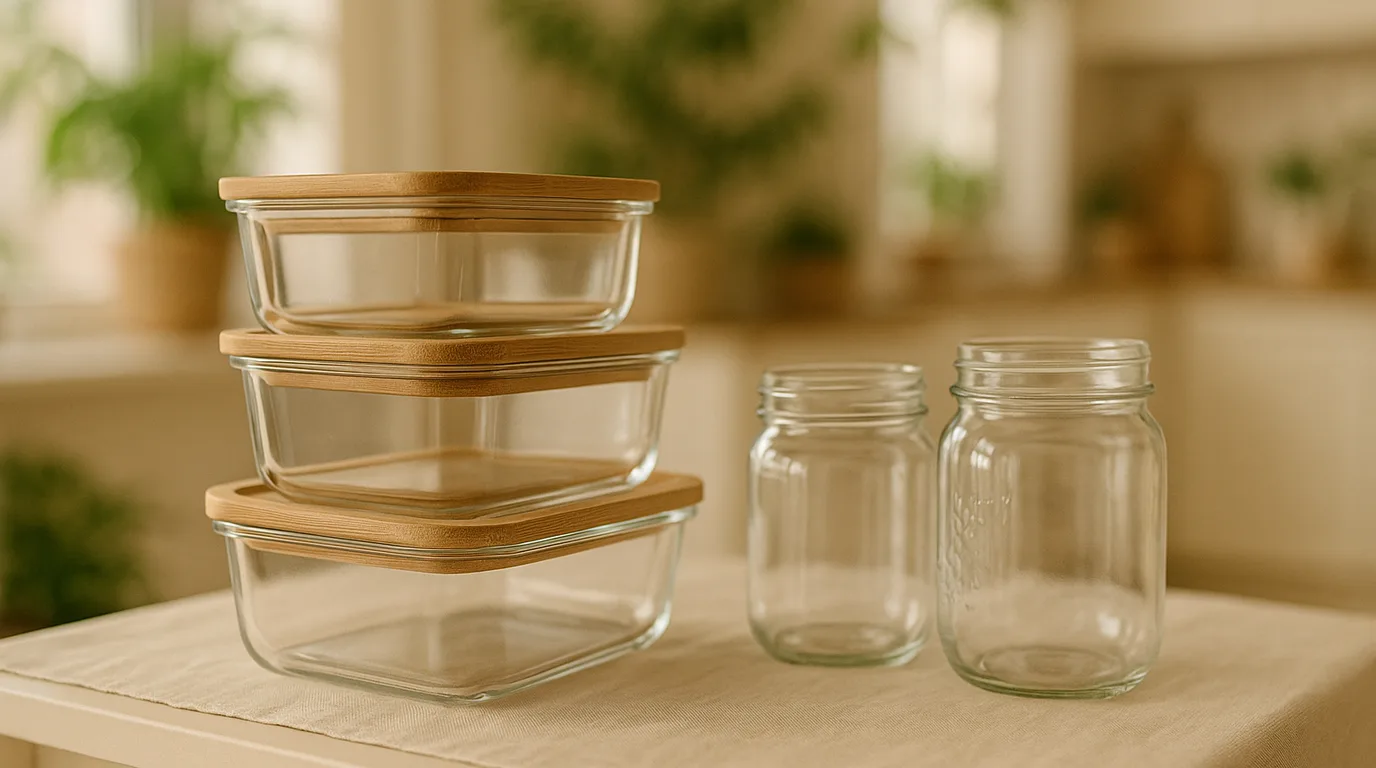
Key Takeaways
- US/UK consumer plastic wrap is mostly LDPE (#4). Commercial “food service” wrap and some imported brands still use PVC.
- PVC plastic wrap contains phthalate plasticisers (often DEHA or DEHP), these migrate into fatty foods within minutes of contact.
- Never microwave food covered with plastic wrap touching the surface, direct heat releases millions of particles per square cm (Hussain 2023).
- The biggest exposure scenarios: wrapping hot leftovers, microwaving with wrap, wrapping cheese for storage, takeaway food wrapped in plastic.
- Beeswax wraps (Bee's Wrap, Abeego), silicone stretch lids (Food Huggers, Charles Viancin), and glass containers eliminate this exposure entirely.
What plastic wrap is actually made of
Two polymers dominate the category:
- LDPE (Low-Density Polyethylene, #4), most US consumer wraps, Stretch-Tite, Glad ClingWrap, Saran (post-2004). Lower chemical leaching but still sheds microplastic with heat and friction.
- PVC (Polyvinyl Chloride, #3), most commercial food service wraps, some imported brands, deli/butcher counter wrap. Requires plasticisers (DEHA, DEHP, others) to be flexible, and these plasticisers migrate into food.
- PVDC (Polyvinylidene Chloride), the original Saran formula until 2004. Reformulated to LDPE for environmental reasons.
The fatty-food / acidic-food problem
Plasticisers in PVC wrap are lipophilic, they preferentially migrate into fats and oils. Multiple FDA and EFSA studies have documented meaningful phthalate migration when PVC wrap contacts:
- Cheese (especially aged cheese)
- Meat and fish
- Butter and oils
- Pizza, sandwiches, and other prepared foods with fat
- Acidic foods (tomatoes, citrus, vinaigrettes)
Heat magnifies this dramatically. A 2023 University of Nebraska study found that microwaving plastic-covered food can release millions of microplastic particles per square centimetre of plastic surface.
Plastic wrap alternatives ranked
| Option | Microplastic safety | Best for | Cost |
|---|---|---|---|
| Glass container with snap lid | Zero release | Leftovers, meal prep, fridge storage | $25-80 / 6-pc set |
| Beeswax wrap (Bee's Wrap, Abeego) | Zero plastic; some wrap can have synthetic component (check label) | Cheese, sandwich, bowl covers | $15-25 / 3-pack |
| Silicone stretch lid (Food Huggers, Charles Viancin) | Very low (medical silicone) | Bowls, plates, cut produce | $15-30 / set |
| Reusable cotton bowl cover | Zero plastic | Bread, mixing bowls | $10-20 |
| Waxed paper (Reynolds Cut-Rite, If You Care) | Low (paper + natural wax) | Wrapping sandwiches, separating layers | $3-6 / roll |
| Parchment paper | Low (silicone-treated paper) | Oven cooking, freezer wrapping | $3-7 / roll |
| LDPE cling wrap (Glad ClingWrap) | Moderate; better than PVC | Last resort cold storage | $3-5 / roll |
| PVC cling wrap (commercial food service) | Worst; plasticiser leaching | Avoid | $5-15 / roll |
The 5 changes that eliminate cling-film exposure
- Replace cling film with glass containers for all leftovers. Pyrex Simply Store, Anchor Hocking, or Glasslock.
- Use beeswax wraps for cheese and bowls. Reusable for 1+ year, biodegradable, washable.
- Silicone stretch lids for cut produce halves (avocados, lemons), bowls without lids.
- Never microwave with plastic wrap touching the food. Use a glass or ceramic plate to cover.
- If you must use plastic wrap, choose LDPE not PVC. Major US consumer brands are LDPE now.
- Skip the deli counter wrap when possible, bring your own glass container or beeswax wrap.
See related: microplastics in plastic containers, best plastic-free food storage, and reduce microplastics in your kitchen.
What the MicroPlastics app checks
- Material, stainless, glass, ceramic, cast iron, plastic (PE / PP / PS / PVC), silicone, wood.
- Visible condition, scratches, chips, warping, fade.
- Brand and product line, flags for non-stick / PFAS-treated items.
- Use-context flags you log, heat exposure, dishwasher cycles, contact with hot or fatty food.
- Cited published research behind the 0–100 risk score.
Use the App
Scan kitchen and household products before buying
Cookware, food storage, cutting boards, accessories. The app weighs material, condition, brand, and use-context to give a 0–100 risk score per item.
Scan household items in the appFrequently Asked Questions
Is plastic wrap safe for food?
What kind of plastic wrap is in the US?
Can I microwave food covered in plastic wrap?
Are beeswax wraps actually safer than plastic wrap?
What is the best alternative to plastic wrap?
Sources
- Hussain KA, Romanova S, Okur I, et al. (2023). Assessing the release of microplastics from plastic containers and reusable food pouches. Environmental Science & Technology.
- European Food Safety Authority (2019). Update of the risk assessment of di-butylphthalate (DBP), butyl-benzyl-phthalate (BBP), bis(2-ethylhexyl)phthalate (DEHP), di-isononylphthalate (DINP) and di-isodecylphthalate (DIDP) for use in food contact materials. EFSA Journal.
- US Food and Drug Administration (2024). CFR Title 21 - Plastic packaging and food-contact materials. FDA.
- Zangmeister CD, Radney JG, Benkstein KD, Kalanyan B (2022). Common single-use consumer plastic products release trillions of submicron microparticles. Environmental Science & Technology.
Compare your kitchen contact pattern over time
The app turns saved scans into a modeled household contact pattern based on what you cooked in, stored in, and heated this month. The trend describes the assessed mix, not health or bodily exposure.
Download on the App Store- Free on iOS
- 3 free scans
- No sign-up
- Result in seconds
“Really cool to scan stuff around the kitchen and see what's actually in it. The swaps it suggests are realistic.” App Store review · 5.0★
Android · early access
Get the launch email the day Android opens.
One email. No spam. We send when the Android app is in the Play Store, and never again unless you opt in.
Related Research
Microplastics in Pillows and Mattresses: What You Breathe All Night
You spend a third of your life on a mattress and pillow. Polyester, polyurethane foam, and flame retardants release microplastics and chemicals you inhale for 8+ hours nightly.
Read moreMicroplastics in Laundry & Dishwasher Pods: The PVA Problem
A 2021 Arizona State study found 77% of PVA plastic from laundry & dishwasher pods enters the environment intact. Liquid detergents are the lower-plastic-contact alternative.
Read moreMicrowaving Plastic Containers: What Happens in 5 Minutes
A 2023 study found microwaving plastic releases up to 4.22 million microplastic particles per cm² in 3 minutes. "Microwave-safe" does not mean particle-free.
Read morePlastic Cutting Boards and Microplastics: Switch to Wood?
A 2023 study estimated up to 50g of microplastic per person per year from polyethylene cutting boards. Wood and bamboo alternatives ranked.
Read moreBlack Plastic Kitchen Utensils: Should You Replace Them?
The viral 2024 study found brominated flame retardants in ~85% of black plastic kitchen items tested, apparently from recycled e-waste. The math correction explained, plus replacement priorities.
Read morePlastic Wrap vs Ziploc Bags: Microplastic Risk Compared (2026)
PVC cling wrap, LDPE plastic wrap, and Ziploc bags compared head-to-head for microplastic release. Which is worst with hot food, fatty food, acidic food, and reuse: plus the lower-plastic-contact comparison for each use case.
Read more