Microplastics in Pregnancy by Trimester: A Week-by-Week Guide

Last reviewed: by the MicroPlastics Research Desk. Submit a correction or see our editorial standards.
Quick Answer
Different bottle, pouch, or wipe? Review its confirmed or estimated material and compare contact conditions, not safety.
Scan my product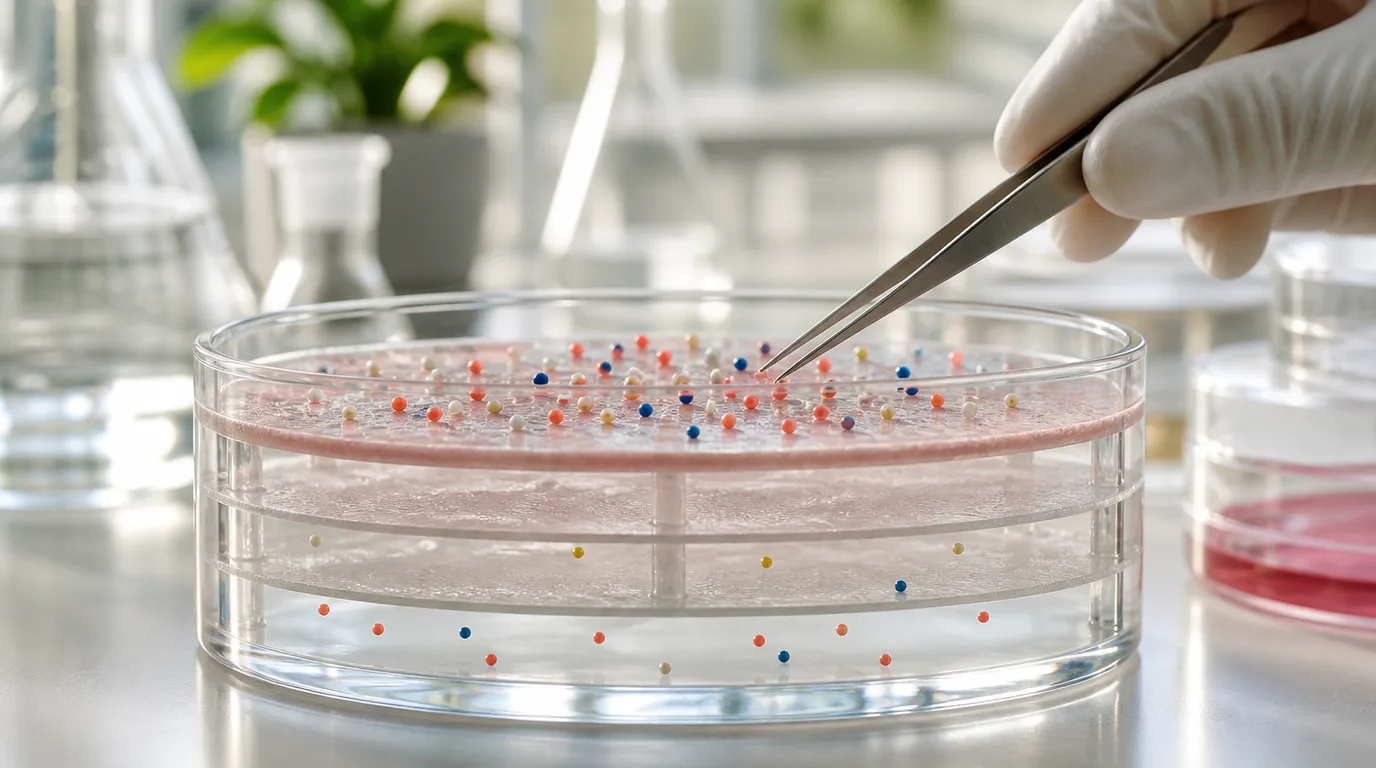
Key Takeaways
- Microplastics cross the placental barrier, confirmed in 2021 by Ragusa et al. and replicated in every subsequent placenta study.
- First trimester (1–13 weeks): organ and neural-tube formation; chemical disruption has the largest developmental effect.
- Second trimester (14–27): thyroid and brain development continue; reducing endocrine-disrupting chemical exposure matters most here.
- Third trimester (28–40): rapid growth + placental accumulation; nursery prep window.
- Across all trimesters, the three changes that matter most are filtered water, no plastic food storage or heating, and natural-fibre bedding.
What the placenta studies show
Antonio Ragusa and colleagues at the San Giovanni Calibita Hospital in Rome published the first detection of microplastics in human placenta in Environment International in 2021. They examined six placentas from healthy pregnancies and found microplastic particles in four of them, including pigmented fragments consistent with synthetic dyes used in cosmetics and packaging.
Subsequent studies have replicated the finding and detected microplastics in amniotic fluid (Halfar et al. 2023), breast milk (Ragusa et al. 2022), and cord blood(multiple 2024 studies). The maternal–fetal barrier does not effectively filter microplastic particles.
First trimester (weeks 1–13): when it matters most
This is when the neural tube closes, the heart begins to beat, and organ systems form. Endocrine disruption during these weeks has the largest developmental impact per microgram of exposure. Priorities:
| Priority | Why now | Action |
|---|---|---|
| 1. Switch all drinking water to filtered tap | Bottled water averages 240,000 nanoparticles/L (PNAS 2024) | RO or NSF 401 carbon-block filter |
| 2. Eliminate plastic food storage | 4M particles per microwave cycle (Hussain 2023) | Glass containers throughout |
| 3. Stop using canned food | Can liners are major BPA/BPS source | Fresh or frozen alternatives |
| 4. Replace non-stick cookware | PFAS exposure during cooking | Cast iron or stainless steel |
| 5. Review prenatal vitamins | Some capsules use plastic polymers (HPMC, PEG) | See linked guide below |
| 6. Skip thermal receipts | BPA absorbs through skin | Decline paper receipts; ask for email |
| 7. Avoid hot drinks in paper cups | 25,000 particles per 15 min (Ranjan 2022) | Bring ceramic mug or stainless travel cup |
Second trimester (weeks 14–27): supporting brain & thyroid development
Fetal thyroid is forming and maternal thyroid hormones remain critical through ~20 weeks. Brain development continues at rapid pace. Iodine, omega-3s, and choline become especially important.
- Maintain all first-trimester changes as foundations.
- Choose glass-bottled or carton-only beverages over plastic.
- Use a HEPA air purifier in the bedroom, indoor air contains 3-15× more microplastics than outdoor.
- Switch to natural-fibre clothing, phthalates and brominated flame retardants in synthetics affect maternal thyroid.
- Choose plastic-free personal care, check moisturisers, sunscreens, lip products for PEG, polyethylene, acrylates copolymer, carbomer. See our polymer-free toothpaste guide.
- Choose glass-jarred yogurt if you eat dairy regularly. Greek yogurt's acidity accelerates leaching from PS/PP cups.
- Maintain adequate iodine intake (150-220 µg/day from prenatal + diet), counters environmental thyroid disruption.
Third trimester (weeks 28–40): growth, placenta, nursery
Fetal growth is rapid (the baby roughly triples in weight). Placental microplastic load tends to accumulate over the pregnancy. This is nursery-preparation time and breast-feeding-prep time.
- Set up a microplastic-aware nursery. Wood crib, organic cotton bedding, no synthetic carpets, HEPA filter. See our microplastic-free nursery guide.
- Choose baby bottles ahead of time. Glass or silicone, never PP for primary feeding. See best baby bottles without microplastics.
- If formula-feeding, source it now. European glass-bottled brands need lead time to ship.
- Stock plastic-free food storage for the postpartum period, you'll be reheating leftovers and storing milk.
- Buy natural-fibre swaddles and sleep sacks, organic cotton, bamboo, or merino wool.
- Consider an air purifier for the nursery in addition to the bedroom.
The 5-minute trimester checklist
| Item | T1 (1–13) | T2 (14–27) | T3 (28–40) |
|---|---|---|---|
| Filter drinking water (RO or NSF 401) | ✓ | ✓ | ✓ |
| Eliminate plastic food storage | ✓ | ✓ | ✓ |
| Avoid canned food | ✓ | ✓ | ✓ |
| Replace non-stick cookware | ✓ | ✓ | ✓ |
| Glass-jarred yogurt/dairy | — | ✓ | ✓ |
| Natural-fibre clothing & bedding | — | ✓ | ✓ |
| HEPA bedroom air filter | — | ✓ | ✓ |
| Polymer-free personal care | — | ✓ | ✓ |
| Source baby bottles | — | — | ✓ |
| Source baby formula (if needed) | — | — | ✓ |
| Microplastic-aware nursery | — | — | ✓ |
See related pregnancy/baby guides: microplastics in pregnancy, BPA-free pregnancy guide, microplastics in breast milk, and microplastics in prenatal vitamins.
What the MicroPlastics app checks
- Baby/kid product material, glass, stainless, silicone, polypropylene, PPSU.
- Packaging type, jar vs pouch vs multi-layer plastic.
- Brand and product line, clean certifications flagged.
- Use-context flags you log, sterilization heat, dishwasher cycles, age.
- Cited published research behind each 0–100 score.
Use the App
Scan baby gear and pregnancy products before buying
Bottles, sippy cups, baby food pouches, cosmetics. The app weighs material + brand + condition and suggests cleaner-packaged alternatives.
Scan baby gear in the appFrequently Asked Questions
Do microplastics cross the placenta?
Which trimester is most important for reducing microplastic exposure?
What is the safest pregnancy diet for microplastic reduction?
Do I need to worry about microplastics in the third trimester?
Can I detox microplastics during pregnancy?
Sources
- Ragusa A, Svelato A, Santacroce C, et al. (2021). Plasticenta: First evidence of microplastics in human placenta. Environment International.
- Ragusa A, Notarstefano V, Svelato A, et al. (2022). Raman microspectroscopy detection and characterisation of microplastics in human breastmilk. Polymers.
- Halfar J, Čabanová K, Vávra K, et al. (2023). Microplastics and additives in patients with preterm birth: The first evidence in human amniotic fluid. Chemosphere.
- World Health Organization (2022). Dietary and inhalation exposure to nano- and microplastic particles. WHO.
- Gore AC, Chappell VA, Fenton SE, et al. (2015). EDC-2: The Endocrine Society Scientific Statement on Endocrine-Disrupting Chemicals. Endocrine Reviews.
Build your nursery + pregnancy product audit
Save baby-product assessments and get an alert when a saved product gets new research. The app remembers the product context; it does not measure pregnancy or infant exposure.
Download on the App Store- Free on iOS
- 3 free scans
- No sign-up
- Result in seconds
“Really cool to scan stuff around the kitchen and see what's actually in it. The swaps it suggests are realistic.” App Store review · 5.0★
Android · early access
Get the launch email the day Android opens.
One email. No spam. We send when the Android app is in the Play Store, and never again unless you opt in.
Related Research
Microplastics in Baby Formula: What Every Parent Should Know
Infants fed formula in plastic bottles ingest 1.6 million microplastic particles per day. Powdered vs ready-to-feed, container choice, and what to do.
Read moreBest Baby Bottles Without Microplastics: 2026 Parent’s Guide
A 2020 Nature Food study measured particle release from prepared polypropylene bottles. Compare glass, silicone, and steel by contact conditions and practical tradeoffs; this is not a baby-safety ranking.
Read moreMicroplastics in Semen: What 2024 Studies Found About Male Fertility
Two 2024 studies detected microplastics in every human semen sample tested: and linked higher concentrations to reduced sperm quality.
Read moreMicroplastics and Fertility: What Every Couple Should Know
Microplastics were found in 69% of follicular fluid and 55% of seminal fluid samples at ESHRE 2025. What the fertilization-rate correlation does and does not establish.
Read moreMicroplastics and Pregnancy: Risks Every Expecting Parent Should Know
A 2026 cohort of 1,750 mother-infant pairs linked higher placental microplastic content to lower birth weight, length and head circumference. What that means, and what it does not.
Read moreMicroplastics and Trying to Conceive: What Couples Need to Know
New ESHRE data found particles in both partners' reproductive fluids, led by PTFE. A practical 3-6 month preconception reduction plan for couples.
Read more