Setting Up a Microplastic-Free Nursery: The Complete Checklist
Last reviewed: by the MicroPlastics Research Desk. Submit a correction or see our editorial standards.
Quick Answer
Different bottle, pouch, or wipe? Review its confirmed or estimated material and compare contact conditions, not safety.
Scan my product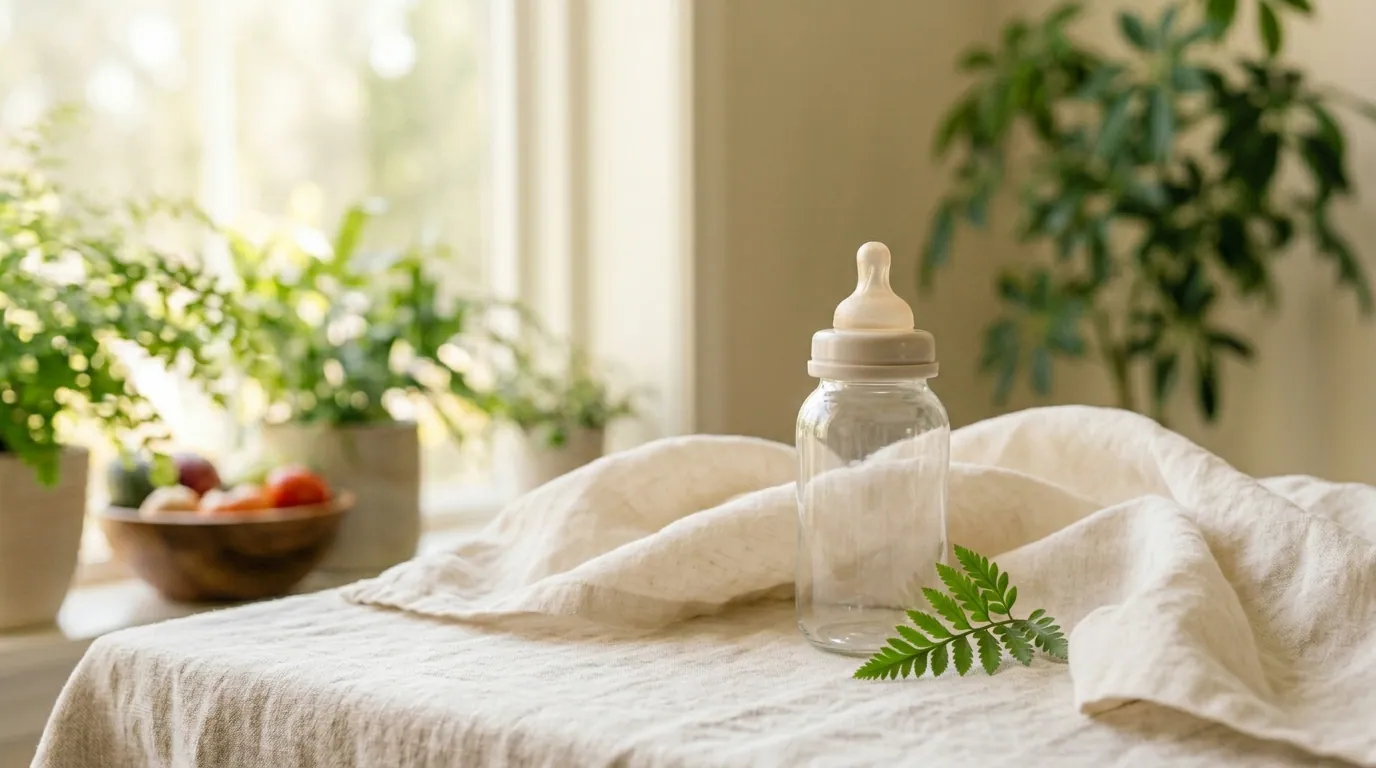
Key Takeaways
- Babies spend 12-16 hours/day in the nursery, the room's air and surfaces drive most exposure.
- Highest-priority swaps: natural-fibre crib mattress, cotton/wool bedding, hard floors.
- Add a HEPA 13+ air filter for continuous indoor-air filtration.
- Feeding: glass/silicone bottles, glass-jar baby food, no plastic pouches.
- Toys: wood, silicone, natural rubber; avoid PVC and black recycled plastics.
- 2026 reprioritisation: indoor air measures a median 528 lung-penetrating particles/m³, dominated by polyethylene, so air and soft furnishings outrank swapping individual plastic objects.
Why the Nursery Matters More Than Any Other Room
Your baby will spend more time in their nursery than in any other room during the first years of life. Between sleeping, feeding, diaper changes, and playtime, a newborn can easily clock 18 to 20 hours per day in this single space. Every surface they touch, every fiber they breathe in, and every object they put in their mouth is part of their microplastic exposure profile. And unlike adults, babies are uniquely vulnerable: their respiratory rates are faster, their skin-to-body-weight ratio is higher, and their organs are still developing, making them more susceptible to the endocrine-disrupting chemicals that microplastics carry.
A 2021 study published in Environmental Science & Technology Letters found that indoor environments contain significantly higher concentrations of microplastics than outdoor air, with synthetic textiles, carpeting, and plastic products being the primary sources. The average home contains an estimated 6,000 microplastic particles per cubic meter of indoor air. For a nursery filled with synthetic bedding, polyester clothing, and plastic toys, that number could be even higher.
The good news is that setting up a microplastic-free nursery does not require spending a fortune or sacrificing modern convenience. By making informed choices about materials at the outset, you can dramatically reduce your baby's exposure from day one. This guide covers every major category, from the crib mattress to the air they breathe.
2026: Two Findings That Should Reorder Your Nursery Priorities
Nursery guides tend to be long lists where every item feels equally urgent. Two 2026 measurements make it possible to rank them properly.
The first is that exposure begins before the nursery is ever used. A study in Ecotoxicology and Environmental Safety covering 1,750 mother-infant pairs found higher placental microplastic content associated with lower birth weight, length and head circumference (a 107.7 g birth-weight difference for total microplastics). Polyethylene dominated, at 98.4% of samples. Reducing exposure during pregnancy is upstream of everything on a nursery checklist.
The second reorders the checklist itself. Indoor-air measurements published in PLOS One found a median of 528 microplastic particles per cubic metre in homes -- with polyethylene the dominant indoor polymer -- when counting only the lung-penetrating 1--10 µm fraction. That makes air and soft furnishings, not bottles or toys, the largest controllable nursery exposure. A baby sleeps 14--17 hours a day, breathing the air immediately above a mattress, in a room typically full of synthetic textiles.
The practical reordering: HEPA filtration, hard flooring, and natural-fibre textiles (wool, cotton, linen) outrank swapping individual plastic objects. Vacuum with a sealed system, ventilate, and be sceptical of any recommendation to buy a lot of new synthetic items in the name of reducing plastic.
The Crib Mattress: Your Baby's Most Important Surface
Your baby will sleep on their crib mattress for approximately 12 to 17 hours per day during the first year of life. That makes the mattress the nursery item that matters most for microplastic exposure. Most conventional crib mattresses are made from polyester fiber fill, polyurethane foam, or vinyl (PVC) covers, all of which shed microplastic particles through friction, heat, and degradation over time.
Polyurethane foam is particularly concerning. It breaks down over time, releasing both microplastic particles and volatile organic compounds (VOCs). The waterproof covers on many crib mattresses are made from PVC or polyethylene film, which can release plasticizers like phthalates into the air and onto your baby's skin. A 2019 study in Environmental Science & Technology found that foam-based mattresses release significant quantities of microfibers during normal use, with the rate increasing as the mattress ages.
Better Alternatives
- Organic cotton mattresses with organic cotton or wool fill. Brands like Naturepedic, Nook, and Avocado offer GOTS-certified (Global Organic Textile Standard) crib mattresses that use no synthetic foams or plastic covers.
- Natural latex mattresses (made from rubber tree sap, not synthetic latex) offer firmness and durability without plastic. Look for GOLS (Global Organic Latex Standard) certification.
- Wool-filled mattresses are naturally fire-resistant (meeting federal flammability standards without chemical flame retardants), moisture-wicking, and completely free of synthetic fibers.
- For waterproofing, choose a wool mattress pad (wool naturally repels moisture) or a mattress protector made from organic cotton with a food-grade polyethylene backing, which is the least toxic plastic option and does not contain PVC or phthalates.
Bedding and Swaddling Materials
Crib sheets, blankets, and swaddles are in direct, prolonged contact with your baby's skin. Most conventional baby bedding is made from polyester, polyester-cotton blends, or microfiber, all of which shed microplastic fibers with every wash and through normal use. Microfiber blankets, despite their softness, are among the worst offenders: a single microfiber blanket can shed hundreds of thousands of synthetic fibers per wash cycle.
What to Choose
- 100% organic cotton (GOTS-certified) for crib sheets, swaddles, and blankets. Organic cotton is grown without synthetic pesticides and processed without plastic-based finishing chemicals.
- Muslin (a loosely woven cotton fabric) is excellent for swaddles and light blankets. It is breathable, soft, and entirely natural.
- Bamboo viscose is a popular alternative that is silky-soft and moisture-wicking. While the manufacturing process involves chemicals, the final fiber is cellulose-based and does not shed plastic microfibers. Look for OEKO-TEX certified bamboo fabrics.
- Merino wool is naturally temperature-regulating and antimicrobial, making it ideal for sleep sacks and heavier blankets. It contains zero synthetic fibers.
- Avoid anything labeled polyester, microfiber, fleece, or "plush." Even if it feels luxuriously soft, if it is synthetic, it is shedding microplastics onto your baby's skin and into the air.
Flooring: What Your Baby Crawls On
Once your baby starts crawling (typically between 6 and 10 months), the nursery floor becomes a primary exposure surface. Synthetic wall-to-wall carpet is one of the biggest sources of indoor microplastics. Most carpet is made from nylon, polyester, or polypropylene fibers bonded with synthetic latex backing. These fibers shed continuously through foot traffic, vacuuming, and general wear, settling as dust that babies crawl through and inevitably ingest. A study from the University of Plymouth found that synthetic carpets can shed millions of microfibers per square meter per year.
Better Flooring Options
- Hardwood floors (solid or engineered) are the cleanest option. They do not shed fibers, are easy to clean, and do not trap microplastic dust the way carpet does.
- Natural area rugs made from wool, organic cotton, jute, or sisal provide softness for crawling without synthetic fiber shedding. Secure them with a natural rubber rug pad (not synthetic foam).
- Cork flooring is naturally soft underfoot, antimicrobial, and free of synthetic fibers. It is an excellent nursery option.
- Avoid vinyl (LVP/LVT) flooring, foam play mats made from EVA (ethylene-vinyl acetate), and synthetic carpet tiles. EVA foam mats, while popular in nurseries, are made from plastic and release formamide and other chemicals.
- If you must use play mats, choose natural rubber mats or organic cotton quilted play mats instead of foam.
Paint and Wall Coverings
Most parents know to choose low-VOC or zero-VOC paint for the nursery, but few consider the microplastic angle. Conventional interior paint contains acrylic polymers, vinyl polymers, and polyurethane as binding agents. As paint ages, it can release microplastic particles through flaking, abrasion, and chalking. A 2023 study in Science of the Total Environment identified paint as a significant but overlooked source of indoor microplastics.
- Choose mineral-based paints (such as lime wash, milk paint, or clay paint) that use natural binders instead of plastic polymers. Brands like ROMABIO, Real Milk Paint Co., and BioShield offer non-toxic, plastic-free options.
- If using conventional paint, select a high-quality, zero-VOC latex paint and allow it to fully cure (at least 2 to 4 weeks) before the baby uses the room.
- Avoid vinyl wallpaper. It is made from PVC and can off-gas plasticizers. If you want wallpaper, choose paper-based or fabric-based options with non-toxic inks.
Baby Clothing: What Touches Skin All Day
Clothing is one of the largest sources of microplastic exposure for people of all ages, and babies are no exception. Most affordable baby clothing is made from polyester, nylon, acrylic, or poly-cotton blends. These synthetic fabrics shed microfibers both during wear (through friction with skin and movement) and during washing. A single load of synthetic baby laundry can release over 700,000 microfibers into wash water, many of which remain on the clothing as residue.
Choosing Safer Fabrics
- 100% organic cotton is the gold standard for baby clothing. It is soft, breathable, and produces only natural cellulose fibers when it sheds.
- Bamboo viscose/lyocell is a great option for sleepwear and base layers. It is temperature-regulating and produces no plastic microfibers.
- Merino wool is excellent for outerwear and cold-weather layers. It is naturally antibacterial and does not shed plastic.
- Linen (made from flax) is durable, naturally antimicrobial, and completely plastic-free.
- Avoid fleece, polyester, nylon, and anything labeled "moisture-wicking" or "quick-dry" for baby clothing, as these are synthetic fabrics designed to shed microfibers.
Diaper Choices: Plastic vs. Bamboo vs. Cloth
A baby goes through approximately 6,000 to 8,000 diapers before potty training. Conventional disposable diapers are made primarily from polypropylene (PP) and polyethylene (PE) plastics, combined with superabsorbent polymer (SAP) beads (sodium polyacrylate, a synthetic plastic). These materials are in direct contact with your baby's most sensitive skin for hours at a time, in a warm, moist environment that accelerates microplastic shedding.
Diaper Options Ranked
- Cloth diapers (organic cotton or hemp). The cleanest option by far. Modern cloth diapers with organic cotton inserts and natural rubber covers contain zero synthetic plastics. They require washing but eliminate thousands of plastic diapers from your baby's skin over the course of their diaper years.
- Bamboo disposable diapers. Brands like Eco by Naty, Dyper, and Kudos use bamboo and plant-based materials for the top sheet (the layer touching skin) and reduce plastic content by 40 to 80% compared to conventional diapers. They still contain some plastic in the absorbent core and waterproof backing, but the skin-contact layer is significantly cleaner.
- Conventional disposable diapers. The highest microplastic exposure. The polypropylene top sheet, plastic leg cuffs, and SAP beads all contribute to direct skin contact with synthetic polymers. A 2019 study in Environment International detected volatile chemicals including toluene and xylene in conventional disposable diapers.
The Changing Table Setup
The changing table area deserves special attention because your baby lies on it multiple times daily with exposed skin. Most changing pad covers are made from synthetic, wipeable materials (vinyl or polyester). Most disposable changing pads are plastic-backed.
- Choose a changing pad with an organic cotton cover instead of a vinyl one. Layer it with a washable organic cotton pad for easy cleanup.
- Use cloth wipes (organic cotton or bamboo) with warm water instead of disposable wipes, which often contain polyester fibers and plastic-based preservatives.
- If using disposable wipes, choose brands that are 99% water-based with plant-fiber cloths (not synthetic) such as WaterWipes or Naif.
Feeding Equipment: Bottles, Cups, and Beyond
We have covered baby bottles extensively in our guide to microplastics in baby products, but here is the nursery-specific summary:
- Glass baby bottles with silicone sleeves are the cleanest feeding option. They release zero microplastics even when heated.
- Stainless steel sippy cups and stainless steel straw cups are ideal for the transition to independent drinking. Brands like Pura Kiki and Klean Kanteen make baby-specific stainless steel options.
- For plates and bowls, choose stainless steel, bamboo, or food-grade silicone instead of plastic. Avanchy, Bambu, and ezpz offer non-plastic baby dishware.
- Avoid all plastic feeding equipment, especially for warm or hot foods and liquids. Never microwave food in plastic containers or heat bottles in plastic.
- For breast pump parts, silicone and glass components are available from several brands and eliminate plastic contact with expressed milk.
Toys: Wood, Silicone, and Natural Rubber vs. Plastic
Babies put everything in their mouths. Every toy is a potential source of microplastic ingestion. Most mainstream baby toys are made from ABS plastic, PVC, polypropylene, or polyethylene. As babies chew, suck, and manipulate these toys, microscopic plastic particles break off and are swallowed. PVC toys are the most concerning because they contain phthalate plasticizers that leach out through saliva.
Safer Toy Materials
- Untreated hardwood toys (maple, beech, walnut) finished with food-grade beeswax or plant oils. Brands like Grimm's, Hape, and PlanToys use sustainably sourced wood with non-toxic finishes.
- Natural rubber teethers and toys made from Hevea rubber tree sap. Brands like Hevea, CaaOcho, and Sophie la Girafe (which is made from natural rubber and food-grade paint) are popular choices.
- Food-grade silicone is not a "natural" material, but it is significantly safer than plastic. Silicone is made from silica (sand) and does not contain BPA, phthalates, or PVC. It does not degrade into microplastics the way petroleum-based plastics do. Look for "platinum-cured" silicone for the highest purity.
- Organic cotton stuffed animals and rattles, filled with organic cotton or wool batting instead of polyester fiberfill.
- Avoid PVC toys (rubbery plastic that smells strongly of "new plastic"), cheap imported plastic toys without safety certifications, and any toy with visible paint flaking or degradation.
Air Quality: Filtering Out Invisible Microplastics
Microplastics are airborne. They float in indoor air as tiny fibers shed from clothing, carpets, upholstery, and textiles. Every breath your baby takes pulls in some of these particles. A 2020 study found that the average person inhales approximately 16.2 bits of microplastic per hour, and indoor concentrations are consistently higher than outdoor ones.
Improving Nursery Air Quality
- Use a HEPA air purifier in the nursery. True HEPA filters capture particles down to 0.3 microns, which includes many airborne microplastic fibers. Run it continuously, especially during sleep. Models from Coway, Blueair, and Austin Air are well-reviewed for nursery use.
- Ventilate regularly. Open windows when weather permits to dilute indoor microplastic concentrations with cleaner outdoor air.
- Avoid synthetic air fresheners, plug-ins, and scented candles. Many contain plastic-derived fragrance carriers and can release microplastic particles when heated. If you want fragrance, use an essential oil diffuser with pure oils.
- Vacuum frequently with a vacuum that has a sealed HEPA filtration system. Standard vacuums can actually redistribute microplastic particles into the air. Dyson, Miele, and SEBO models with sealed HEPA systems are recommended.
- Damp mop hard floors rather than dry sweeping, which kicks microplastic dust into the air.
- Wash nursery textiles regularly in hot water to remove accumulated microplastic dust, but use a microfiber-catching laundry bag (like a Guppyfriend bag) if washing any synthetic items to capture shed fibers before they recirculate.
Washing Baby Clothes: First Wash Tips
New baby clothes, even those made from natural fibers, should always be washed before first use. Manufacturing processes leave chemical residues including formaldehyde-based wrinkle treatments and synthetic sizing agents. For clothes that do contain synthetic blends, the first several washes release the highest concentration of microfibers.
- Wash all new baby clothes at least twice before your baby wears them, using a fragrance-free, plant-based detergent.
- Use a Guppyfriend washing bag or Cora Ball to capture microfibers from any synthetic items in the load.
- Wash on cold or warm rather than hot when possible, as high heat increases microfiber shedding from synthetic fabrics.
- Line dry when possible instead of using a dryer, which generates additional microfiber shedding through tumbling friction.
- Choose a front-loading washing machine if buying new, as top-loaders with agitators cause significantly more microfiber release due to harsher mechanical action.
The Complete Microplastic-Free Nursery Checklist
Use this checklist when setting up or auditing your nursery:
Sleep Zone
- Organic cotton, wool, or natural latex crib mattress
- Organic cotton fitted sheets (GOTS-certified)
- Wool or organic cotton mattress protector (no PVC)
- Organic cotton or muslin swaddles and sleep sacks
- Wooden crib with non-toxic finish (no particleboard)
Floor and Walls
- Hardwood, cork, or natural tile flooring
- Natural fiber area rug (wool, cotton, jute) with natural rubber pad
- Natural rubber or organic cotton play mat (no EVA foam)
- Zero-VOC mineral-based or fully-cured latex paint
- Paper or fabric wallpaper (no vinyl)
Clothing and Textiles
- 100% organic cotton onesies, sleepers, and everyday wear
- Bamboo viscose or merino wool for temperature regulation
- Organic cotton or wool blankets (no polyester fleece)
- Guppyfriend bag for washing any synthetic items
Diapering Station
- Organic cotton or bamboo cloth diapers, or bamboo disposables
- Organic cotton changing pad cover
- Cloth wipes or 99% water-based plant-fiber disposable wipes
- Glass or stainless steel containers for creams and supplies
Feeding Area
- Glass baby bottles with silicone sleeves
- Stainless steel sippy cups and straw cups
- Bamboo, stainless steel, or silicone plates and bowls
- Wooden or silicone utensils
- Glass or stainless steel water pitcher with filter
Toys and Play
- Untreated hardwood toys with beeswax finish
- Natural rubber teethers and bath toys
- Food-grade platinum-cured silicone toys
- Organic cotton stuffed animals (wool or cotton fill)
- No PVC, no cheap imported plastic toys
Air Quality
- HEPA air purifier running continuously
- Sealed HEPA vacuum for regular cleaning
- Essential oil diffuser only (no synthetic air fresheners)
- Regular window ventilation
- Damp mopping instead of dry sweeping
Frequently Asked Questions
Is it really worth replacing synthetic carpet in the nursery?
Yes. Synthetic carpet is one of the largest single sources of indoor microplastics. It sheds millions of plastic fibers per square meter annually, and those fibers accumulate in the dust that your baby crawls through and inevitably ingests. If full replacement is not feasible, placing a large natural-fiber area rug over the synthetic carpet can reduce direct contact, and running a HEPA purifier can capture airborne fibers. But if you have the option during nursery setup, hard flooring with natural rugs is significantly cleaner.
Are foam play mats (EVA mats) safe for babies?
EVA (ethylene-vinyl acetate) foam mats are made from plastic and have been found to release formamide, a chemical classified as a reproductive toxicant in the EU. While some brands claim to be formamide-free, the base material is still a synthetic polymer that degrades over time. Better alternatives include natural rubber play mats, organic cotton quilted mats, or cork play tiles. If you already have EVA mats, ensure they are well-ventilated (air them out for several days before use) and replace them once they show signs of wear or crumbling.
Can I use silicone products in the nursery? Is silicone plastic?
Silicone is not a petroleum-based plastic. It is made from silica (sand) combined with oxygen, carbon, and hydrogen. It does not break down into microplastics, does not contain BPA or phthalates, and is highly stable even at extreme temperatures. Food-grade, platinum-cured silicone is considered one of the safest materials for baby products. It is an excellent choice for bottle nipples, teethers, bibs, and placemats. While it is technically a synthetic material, its safety profile is dramatically better than conventional plastics.
How do I know if baby clothes are truly 100% natural fiber?
Always check the fabric content label sewn into the garment, not just the marketing on the tag or website. Look for "100% organic cotton," "100% cotton," "100% wool," or "100% linen." Be wary of terms like "cotton-rich" or "cotton blend," which typically mean the garment contains polyester. Also check thread and stitching, as some garments use polyester thread even with cotton fabric. GOTS (Global Organic Textile Standard) certification is the most reliable indicator that the entire garment, including thread, dyes, and finishes, meets organic and non-toxic standards.
Do I need to worry about microplastics in nursery furniture?
Nursery furniture itself is a lower-risk category compared to textiles and flooring, but there are still considerations. Avoid furniture made from particleboard or MDF, which is bonded with formaldehyde-based resins and often wrapped in vinyl laminate. Choose solid wood furniture with non-toxic finishes (water-based polyurethane, natural oils, or beeswax). For upholstered items like gliders or nursing chairs, choose options with natural fabric upholstery (cotton, linen, wool) and natural latex or wool cushions instead of polyurethane foam with polyester fabric.
Check Your Products with the MicroPlastics App
Scan any product to instantly see its microplastic risk level. Start with 3 free scans.
Download Free on iOSWhat the MicroPlastics app checks
- Baby/kid product material, glass, stainless, silicone, polypropylene, PPSU.
- Packaging type, jar vs pouch vs multi-layer plastic.
- Brand and product line, clean certifications flagged.
- Use-context flags you log, sterilization heat, dishwasher cycles, age.
- Cited published research behind each 0–100 score.
Use the App
Scan baby gear and pregnancy products before buying
Bottles, sippy cups, baby food pouches, cosmetics. The app weighs material + brand + condition and suggests cleaner-packaged alternatives.
Scan baby gear in the appFrequently Asked Questions
What is the most important nursery purchase for microplastic safety?
Are synthetic carpets safe for a nursery?
Do I need an air filter in the nursery?
What kind of toys should I buy for a microplastic-safe nursery?
Sources
- Prospective cohort study (1,750 mother-infant pairs) (2026). Impact of placental microplastics on birth anthropometrics: A cross-sectional study. Ecotoxicology and Environmental Safety.
- Yakovenko N, et al. (2025). Human exposure to PM10 microplastics in indoor air. PLOS One.
- Garcia MA, Liu R, Nihart A, et al. (2024). Quantitation and identification of microplastics in human placental specimens. Toxicological Sciences.
- Li D, Shi Y, Yang L, et al. (2020). Microplastic release from polypropylene infant feeding bottles. Nature Food.
- Ragusa A, Notarstefano V, Svelato A, et al. (2022). Raman Microspectroscopy Detection and Characterisation of Microplastics in Human Breastmilk. Polymers.
- ACOG Committee Opinion 832 (2021). Reducing prenatal exposure to toxic environmental agents. American College of Obstetricians and Gynecologists.
- Leslie HA, van Velzen MJM, Brandsma SH, et al. (2022). Discovery and quantification of plastic particle pollution in human blood. Environment International.
Build your nursery + pregnancy product audit
Save baby-product assessments and get an alert when a saved product gets new research. The app remembers the product context; it does not measure pregnancy or infant exposure.
Download on the App Store- Free on iOS
- 3 free scans
- No sign-up
- Result in seconds
“Really cool to scan stuff around the kitchen and see what's actually in it. The swaps it suggests are realistic.” App Store review · 5.0★
Android · early access
Get the launch email the day Android opens.
One email. No spam. We send when the Android app is in the Play Store, and never again unless you opt in.
Related Research
Microplastics and Children: Why Kids Face the Greatest Risk
Kids carry a disproportionate microplastic burden. New 2026 data points at indoor and in-car air as the biggest controllable channel, not food.
Read moreHow to Protect Your Family from Microplastics: 5 Product Comparisons (2026)
Five family product and use-condition comparisons across water, food storage, heating, baby bottles, and indoor air, with research context and limitations.
Read moreMicroplastics in Baby Products: A Parent’s Complete Guide
Bottles, pouches, toys and sleep surfaces ranked by exposure, plus why the pregnancy window outranks every registry decision.
Read moreMicroplastics in Baby Food Pouches: Up to 11,000 Particles Per Pouch
A 2025 Greenpeace study found 5,000-11,000 microplastic particles in a single Gerber or Happy Baby Organics pouch. Glass jar alternatives ranked.
Read moreSynthetic Underwear, Microplastics & Male Fertility: The Connection
Polyester and synthetic underwear release microfibres directly onto reproductive skin. A 1993 Egyptian study linked polyester underwear to reduced fertility.
Read moreMicroplastics in Plastic Toys for Children: A Parent’s Guide
Plastic toys shed microplastics when chewed, scratched, or aged. Black recycled plastic toys contain brominated flame retardants. lower-plastic-contact wood, silicone & natural rubber picks.
Read more