Microplastics vs PFAS (Forever Chemicals): What's the Difference?
Introduction: Two Invisible Threats, Two Different Problems
Walk into any grocery store, pharmacy, or department store, and you are surrounded by products that contain invisible chemical contaminants. Two of the most talked-about categories are microplastics and PFAS (per- and polyfluoroalkyl substances), commonly called "forever chemicals." Both are pervasive. Both are linked to serious health concerns. And both are notoriously difficult to avoid in modern life.
Yet despite often appearing in the same headlines, microplastics and PFAS are fundamentally different pollutants with distinct chemical identities, sources, and health implications. Understanding what sets them apart, and where they overlap, is the first step toward protecting yourself and your family. In this guide, we break down everything you need to know about microplastics versus PFAS so you can make more informed choices about the products you buy and the water you drink.
What Are Microplastics?
Microplastics are tiny plastic particles measuring less than 5 millimeters in diameter, roughly the size of a sesame seed or smaller. Many are microscopic, invisible to the naked eye. They come in two forms: primary microplastics, which are manufactured small (like the microbeads in exfoliating face washes or the synthetic fibers shed from polyester clothing), and secondary microplastics, which result from the breakdown of larger plastic items such as bottles, bags, and packaging exposed to sunlight, heat, and mechanical wear.
Microplastics enter our bodies through multiple pathways. We ingest them in food and beverages, particularly processed foods and items stored in plastic packaging. We inhale them from household dust and synthetic textiles. We absorb them through cosmetics and personal care products applied to the skin. A 2019 study by the World Wildlife Fund estimated that the average person may consume about five grams of plastic per week, roughly the weight of a credit card.
Common sources of microplastic exposure include plastic food containers, bottled water, seafood, tea bags made of nylon or PET, synthetic clothing (polyester, nylon, acrylic), cosmetics with polyethylene microbeads, and tire dust washed into waterways. Because plastics are made from petroleum-based polymers, microplastics can carry a cocktail of chemical additives including plasticizers like phthalates, flame retardants, UV stabilizers, and colorants, many of which are known endocrine disruptors.
What Are PFAS (Forever Chemicals)?
PFAS stands for per- and polyfluoroalkyl substances, a family of over 14,000 synthetic chemicals characterized by extremely strong carbon-fluorine bonds. These bonds make PFAS virtually indestructible in the natural environment, which is why they have earned the nickname "forever chemicals." Once released into soil, water, or air, PFAS do not break down. They persist for decades or centuries, accumulating in the environment and in living organisms, including humans.
PFAS were first developed in the 1940s and quickly found widespread industrial and consumer applications thanks to their remarkable ability to repel water, oil, and grease. Today, PFAS are used in non-stick cookware (Teflon is a well-known PFAS-based coating), waterproof and stain-resistant clothing and fabrics, grease-resistant food packaging such as fast-food wrappers, pizza boxes, and microwave popcorn bags, firefighting foams (aqueous film-forming foam, or AFFF), cosmetics and personal care products, and industrial manufacturing processes.
PFAS contamination is staggeringly widespread. A 2023 U.S. Geological Survey study found PFAS in approximately 45% of tap water samples across the United States. They have been detected in the blood of 97% of Americans tested by the CDC. Unlike microplastics, which are particles, PFAS are dissolved chemical compounds. They leach into water from manufacturing sites, military bases where fire-fighting foam was used, landfills, and wastewater treatment plants that cannot effectively filter them out.
Key Differences Between Microplastics and PFAS
Chemical Composition
Microplastics are physical particles made from petroleum-based polymers such as polyethylene (PE), polypropylene (PP), polystyrene (PS), and polyethylene terephthalate (PET). They are solid fragments, fibers, or beads.
PFAS are synthetic chemical compounds defined by chains of carbon atoms bonded to fluorine atoms. They are molecular in nature, meaning they dissolve in water and cannot be seen or filtered out with conventional methods.
Size and Detectability
Microplastics range from 5 millimeters down to nanometer scale. Larger microplastics can sometimes be seen with the naked eye, and even smaller ones can be captured by specialized filters.
PFAS are individual molecules dissolved in water, food, and bodily fluids. They cannot be seen, filtered by standard water treatment, or removed by boiling. Detection requires sophisticated laboratory analysis using liquid chromatography-mass spectrometry.
Primary Sources
Microplastics primarily come from the degradation of plastic products, synthetic textiles, tire wear, cosmetic microbeads, and plastic packaging.
PFAS primarily come from industrial manufacturing, non-stick coatings, waterproofing treatments, food packaging coatings, firefighting foams, and certain cosmetics.
Environmental Persistence
Microplastics can persist in the environment for hundreds of years but do slowly degrade through UV exposure and mechanical breakdown, fragmenting into ever-smaller nanoplastics.
PFAS essentially never break down under natural conditions. The carbon-fluorine bond is one of the strongest in organic chemistry, making PFAS truly permanent environmental contaminants.
How They Enter the Body
Microplastics are primarily ingested through food, water, and inhaled dust. They are physical particles that can lodge in tissues.
PFAS are ingested through contaminated drinking water and food, absorbed through the skin from cosmetics, and inhaled from household products. As dissolved chemicals, they readily enter the bloodstream.
Where Microplastics and PFAS Overlap
Despite their differences, microplastics and PFAS share several troubling commonalities that make them a combined threat to public health.
- Both are found in drinking water. Municipal water systems can contain both microplastic particles and dissolved PFAS compounds. Standard water treatment removes neither effectively.
- Both contaminate food packaging. A single fast-food wrapper can contain PFAS-based grease-resistant coatings while also shedding microplastic particles from its plastic lining. Pizza boxes, takeout containers, and microwaveable packaging frequently contain both.
- Both are linked to serious health problems. While the mechanisms differ, both microplastics and PFAS are associated with hormonal disruption, inflammation, immune system effects, and potential cancer risk.
- Both are poorly regulated. Until very recently, neither microplastics nor PFAS had meaningful regulatory limits in most countries. Regulation is still fragmented and inconsistent.
- Both bioaccumulate. Microplastics accumulate in organs and tissues over time. PFAS accumulate in the blood and liver, with half-lives measured in years. Neither is easily eliminated by the body.
- Both are found in cosmetics and personal care products. Many beauty products contain both PFAS (for smooth application and water resistance) and microplastics (as fillers, exfoliants, and film-forming agents).
Health Effects Comparison
Both microplastics and PFAS are associated with a wide range of health concerns, though they affect the body through different mechanisms. Here is a side-by-side look at what current research tells us about each. For a deeper exploration of microplastic-specific health impacts, see our detailed guide on microplastics and health effects.
| Health Concern | Microplastics | PFAS |
|---|---|---|
| Hormonal / Endocrine Disruption | Yes. Plastic additives like phthalates and BPA mimic or block hormones, disrupting estrogen, testosterone, and thyroid function. | Yes. PFAS interfere with thyroid hormones, reproductive hormones, and metabolic regulation. |
| Cancer Risk | Under investigation. Some plastic additives (e.g., styrene, vinyl chloride) are classified carcinogens. Chronic inflammation from particle accumulation may also contribute. | Established link. PFOA and PFOS are classified as possible carcinogens by the IARC. Strong associations with kidney cancer, testicular cancer, and thyroid disease. |
| Immune System Effects | Emerging evidence. Micro and nanoplastic particles may trigger inflammatory immune responses and oxidative stress in tissues. | Well documented. PFAS reduce vaccine effectiveness in children and suppress immune response. The CDC considers this one of the most established PFAS health effects. |
| Reproductive Health | Linked to reduced sperm quality, hormonal imbalances, and potential fertility impacts through endocrine-disrupting additives. | Linked to reduced fertility, pregnancy-induced hypertension, low birth weight, and developmental effects in children. |
| Liver and Kidney | Nanoplastics have been detected in liver tissue. Long-term organ effects are still being studied. | PFAS accumulate heavily in the liver. Associated with liver damage, elevated cholesterol, and kidney cancer. |
| Cardiovascular | A 2024 study found microplastics in arterial plaque, associated with higher risk of heart attack and stroke. | PFAS exposure is associated with elevated cholesterol levels, a key cardiovascular risk factor. |
| Gut Health | Microplastics can disrupt the gut microbiome, cause intestinal inflammation, and potentially increase gut permeability ("leaky gut"). | PFAS may alter gut microbiome composition. Research in this area is still emerging. |
Where You Find Each: Products That Contain Microplastics, PFAS, or Both
Products Primarily Containing Microplastics
- Plastic water bottles and food containers
- Synthetic clothing (polyester, nylon, acrylic fleece)
- Exfoliating scrubs with microbeads
- Tea bags (nylon or PET mesh types)
- Plastic cutting boards
- Baby bottles and sippy cups (when heated)
- Plastic wrap and cling film
- Dryer sheets and fabric softeners
Products Primarily Containing PFAS
- Non-stick cookware (Teflon-coated pans)
- Waterproof jackets and outdoor gear (Gore-Tex, DWR coatings)
- Stain-resistant carpets and upholstery
- Dental floss (some brands use PFAS-based coatings)
- Ski wax
- Some contact lenses
- Firefighting foam (used near military bases and airports)
Products That May Contain Both
- Fast-food wrappers and takeout containers (PFAS coating + plastic lining)
- Microwave popcorn bags
- Cosmetics and makeup (foundations, concealers, mascaras)
- Pizza boxes and grease-proof food packaging
- Some sunscreens and moisturizers
- Disposable paper plates and cups with coatings
- Period products and menstrual cups
- Tap water and bottled water
Regulatory Status: Where Things Stand
Governments around the world are beginning to address both microplastics and PFAS, but regulation remains a patchwork of incomplete measures.
Microplastics Regulation
- European Union: In October 2023, the EU enacted a sweeping ban on intentionally added microplastics in products including cosmetics, detergents, paints, and sports field infill. The ban is being phased in over several years through 2035.
- United States: The Microbead-Free Waters Act of 2015 banned microbeads in rinse-off cosmetics, but no federal regulation addresses microplastics from other sources. Some states like California have introduced microplastic testing requirements for drinking water.
- Global: The UN is negotiating a global plastics treaty that may include provisions on microplastics. Several countries including South Korea, Canada, and the UK have implemented their own microbead bans.
PFAS Regulation
- European Union: In 2023, five EU member states proposed a comprehensive restriction on the manufacture, use, and sale of all PFAS, potentially the most far-reaching chemical regulation in history. If adopted, it could eliminate PFAS from thousands of consumer products.
- United States: In April 2024, the EPA finalized the first-ever national drinking water standards for six PFAS compounds, setting limits as low as 4 parts per trillion for PFOA and PFOS. Over a dozen states have enacted their own PFAS regulations for drinking water, food packaging, or firefighting foam.
- Global: The Stockholm Convention has listed PFOA and PFOS as persistent organic pollutants, restricting their production and use worldwide. However, thousands of other PFAS compounds remain largely unregulated.
How to Protect Yourself from Both
While it is impossible to completely eliminate exposure to microplastics and PFAS in modern life, you can significantly reduce your intake with practical everyday changes. For a comprehensive action plan on reducing microplastic exposure specifically, see our guide on how to avoid microplastics.
Water and Beverages
- Use a high-quality water filter that addresses both contaminants. Reverse osmosis systems remove up to 99% of PFAS and effectively filter microplastics. Activated carbon filters reduce PFAS levels significantly and catch larger microplastic particles.
- Avoid plastic water bottles when possible. Use glass or stainless steel containers instead.
- Do not microwave beverages in plastic containers, as heat accelerates microplastic release.
Food and Cooking
- Replace non-stick cookware with cast iron, stainless steel, or ceramic alternatives.
- Minimize fast food and takeout, which comes in PFAS-coated packaging and plastic containers.
- Store food in glass containers rather than plastic. Never heat food in plastic containers or with plastic wrap.
- Choose loose-leaf tea over plastic-mesh tea bags.
- Eat more whole, unprocessed foods. The more processing and packaging involved, the higher the contamination risk.
Personal Care and Household Products
- Check cosmetics and personal care products for ingredients like PTFE, perfluorooctyl, polyethylene, polypropylene, and nylon-12. These indicate PFAS or microplastic content.
- Choose "PFAS-free" labeled products when available for items like dental floss, cosmetics, and clothing.
- Opt for natural-fiber clothing (cotton, wool, linen, hemp) over synthetic fabrics when possible.
- Avoid stain-resistant and waterproof treatments on furniture, carpets, and clothing unless they are explicitly PFAS-free.
Use the MicroPlastics App
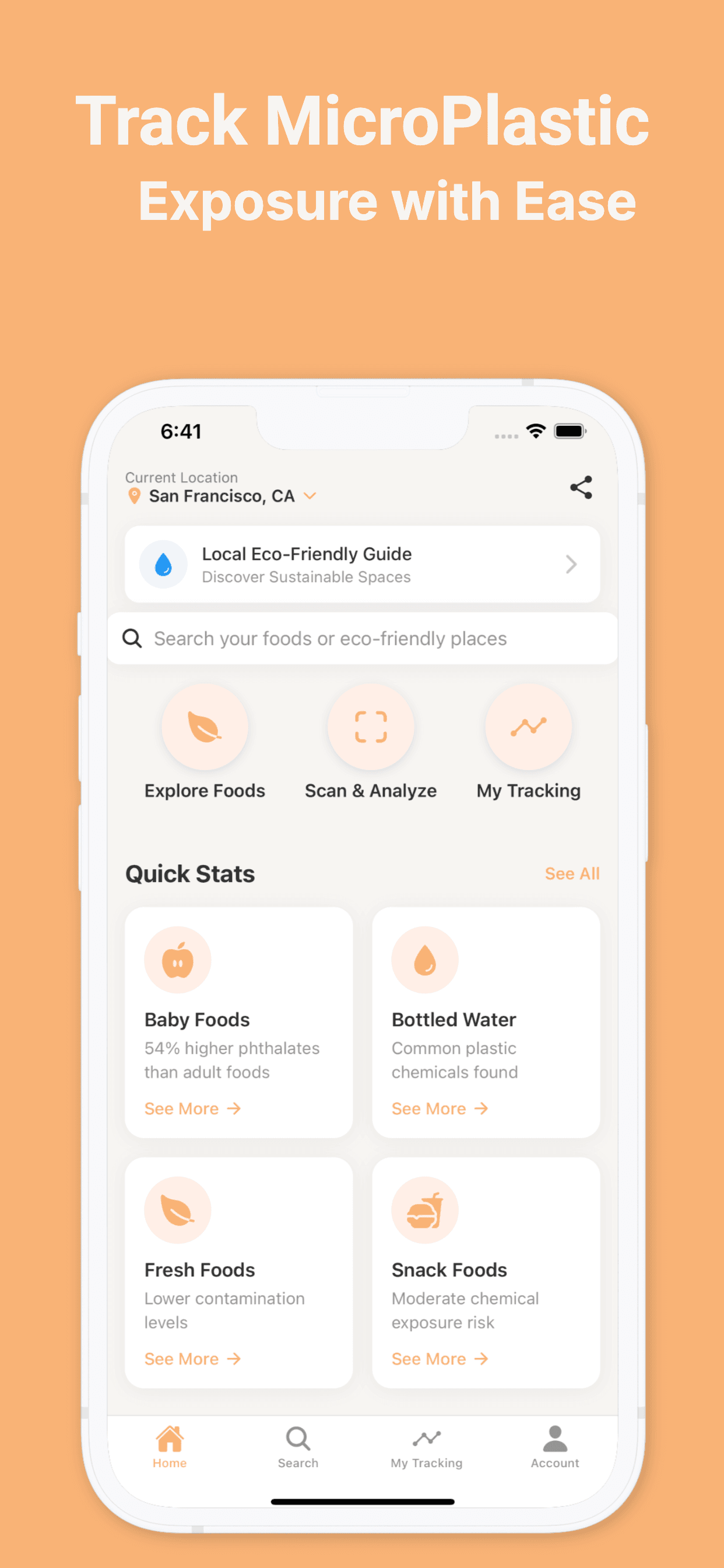
One of the easiest ways to protect yourself from both microplastics and PFAS is to scan the products you buy before you use them. The MicroPlastics app lets you scan barcodes or search for products to instantly see their contamination risk profile, covering both microplastic content and related chemical concerns including PFAS. Instead of spending hours researching every product, you get a clear, easy-to-understand score that helps you make better choices in seconds.
The Combined Exposure Problem: The Cocktail Effect
Perhaps the most concerning aspect of the microplastics and PFAS crisis is that we are not exposed to just one contaminant at a time. Every day, we encounter a complex mixture of microplastics, PFAS, heavy metals, pesticides, and other synthetic chemicals. Researchers call this the "cocktail effect" or "mixture toxicity", and it represents one of the biggest blind spots in chemical safety regulation.
Most safety assessments evaluate chemicals one at a time. A product might contain PFAS levels below the individual safety threshold and microplastic levels below a separate threshold. But the combined effect of both, along with all the other chemicals in your food, water, and environment, may be far greater than the sum of its parts. Studies have shown that chemicals which individually appear safe at low doses can have significant biological effects when combined.
Microplastics can actually amplify PFAS exposure. Research has found that microplastic particles can adsorb PFAS compounds onto their surfaces, essentially acting as tiny vehicles that carry forever chemicals deeper into the body. When you ingest microplastics contaminated with PFAS, you are getting a concentrated dose of both contaminants delivered together. This synergistic relationship means that addressing one problem without the other provides incomplete protection.
Children are particularly vulnerable to the cocktail effect. Their developing bodies are more sensitive to endocrine disruptors, they consume more food and water relative to their body weight, and they have decades of cumulative exposure ahead of them. Pregnant women also face elevated risk, as both microplastics and PFAS can cross the placental barrier and affect fetal development.
The Bottom Line
Microplastics and PFAS are two distinct but interconnected threats to human health. Microplastics are physical particles from the breakdown of plastic materials, while PFAS are dissolved synthetic chemicals engineered to last forever. Both are everywhere, both accumulate in our bodies, and both are linked to serious health concerns ranging from hormonal disruption to cancer risk.
The good news is that awareness is growing, regulation is accelerating, and practical tools exist to help you reduce your exposure starting today. By filtering your water, choosing safer cookware, reading product labels, and using the MicroPlastics app to scan products before you buy, you can take meaningful steps to protect yourself and your family from both of these invisible contaminants.
You do not have to become perfect overnight. Start with the changes that matter most: filter your drinking water, stop microwaving food in plastic, and begin scanning the products you use every day. Small, consistent choices add up to significantly lower exposure over time, and that makes a real difference for your long-term health.
Start Scanning Your Products Today
Download the MicroPlastics app and instantly check any product for microplastic content. Free to start with 5 scans.
Download for iOS